• HOME
  • NEWS
  • EXPLORE
    • CAREER
      • Companies
      • Jobs
    • EVENTS
    • iGEM
      • News
      • Team
    • PHOTOS
    • VIDEO
    • WIKI
  • BLOG
  • COMMUNITY
    • FACEBOOK
    • INSTAGRAM
    • TWITTER
Saturday, February 7, 2026
BIOENGINEER.ORG
No Result
View All Result
  • Login
  • HOME
  • NEWS
  • EXPLORE
    • CAREER
      • Companies
      • Jobs
        • Lecturer
        • PhD Studentship
        • Postdoc
        • Research Assistant
    • EVENTS
    • iGEM
      • News
      • Team
    • PHOTOS
    • VIDEO
    • WIKI
  • BLOG
  • COMMUNITY
    • FACEBOOK
    • INSTAGRAM
    • TWITTER
  • HOME
  • NEWS
  • EXPLORE
    • CAREER
      • Companies
      • Jobs
        • Lecturer
        • PhD Studentship
        • Postdoc
        • Research Assistant
    • EVENTS
    • iGEM
      • News
      • Team
    • PHOTOS
    • VIDEO
    • WIKI
  • BLOG
  • COMMUNITY
    • FACEBOOK
    • INSTAGRAM
    • TWITTER
No Result
View All Result
Bioengineer.org
No Result
View All Result
Home NEWS Science News Biology

Animals retain long-term memory of the biggest and best sources of food

Bioengineer by Bioengineer
February 9, 2018
in Biology
Reading Time: 2 mins read
0
Share on FacebookShare on TwitterShare on LinkedinShare on RedditShare on Telegram
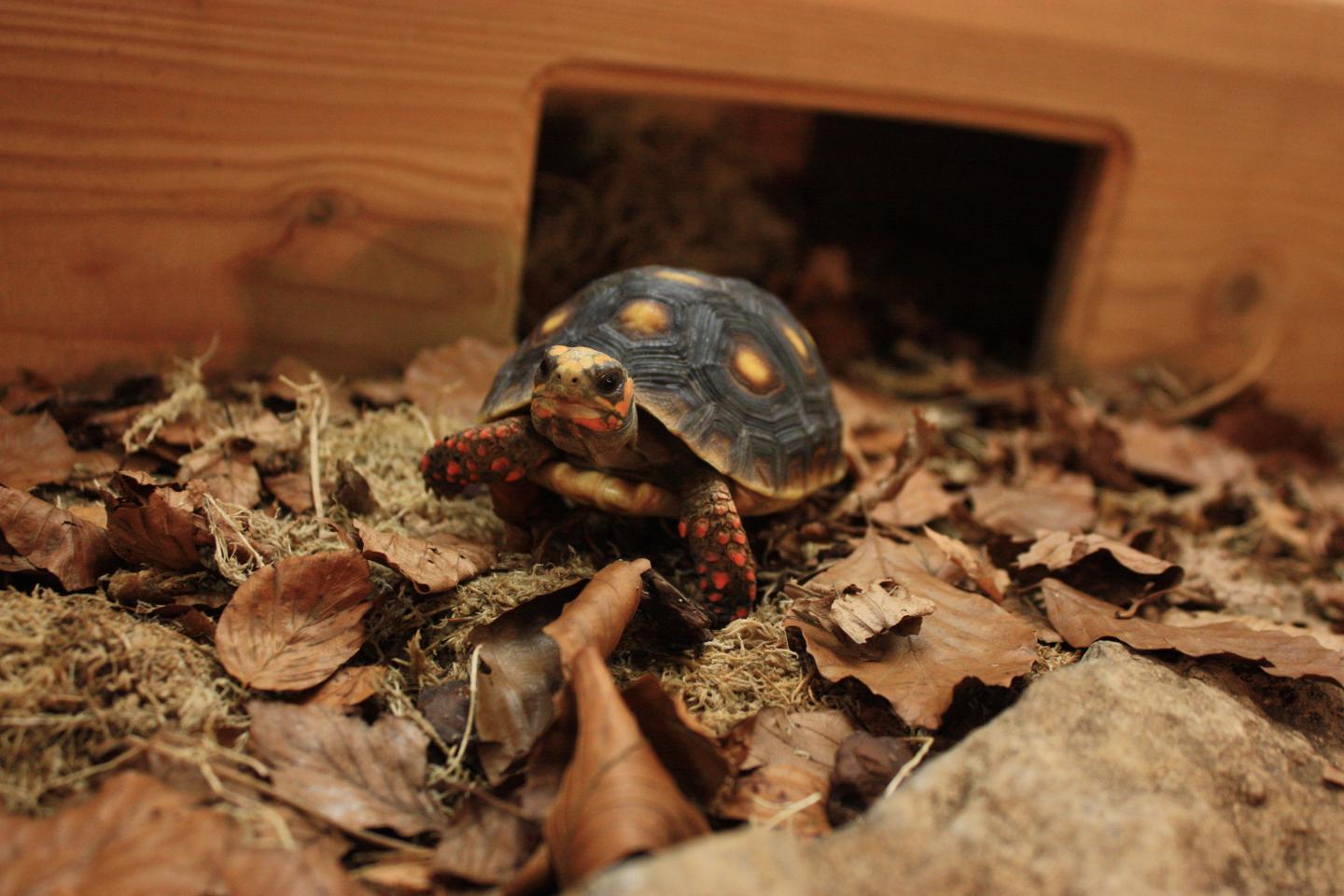
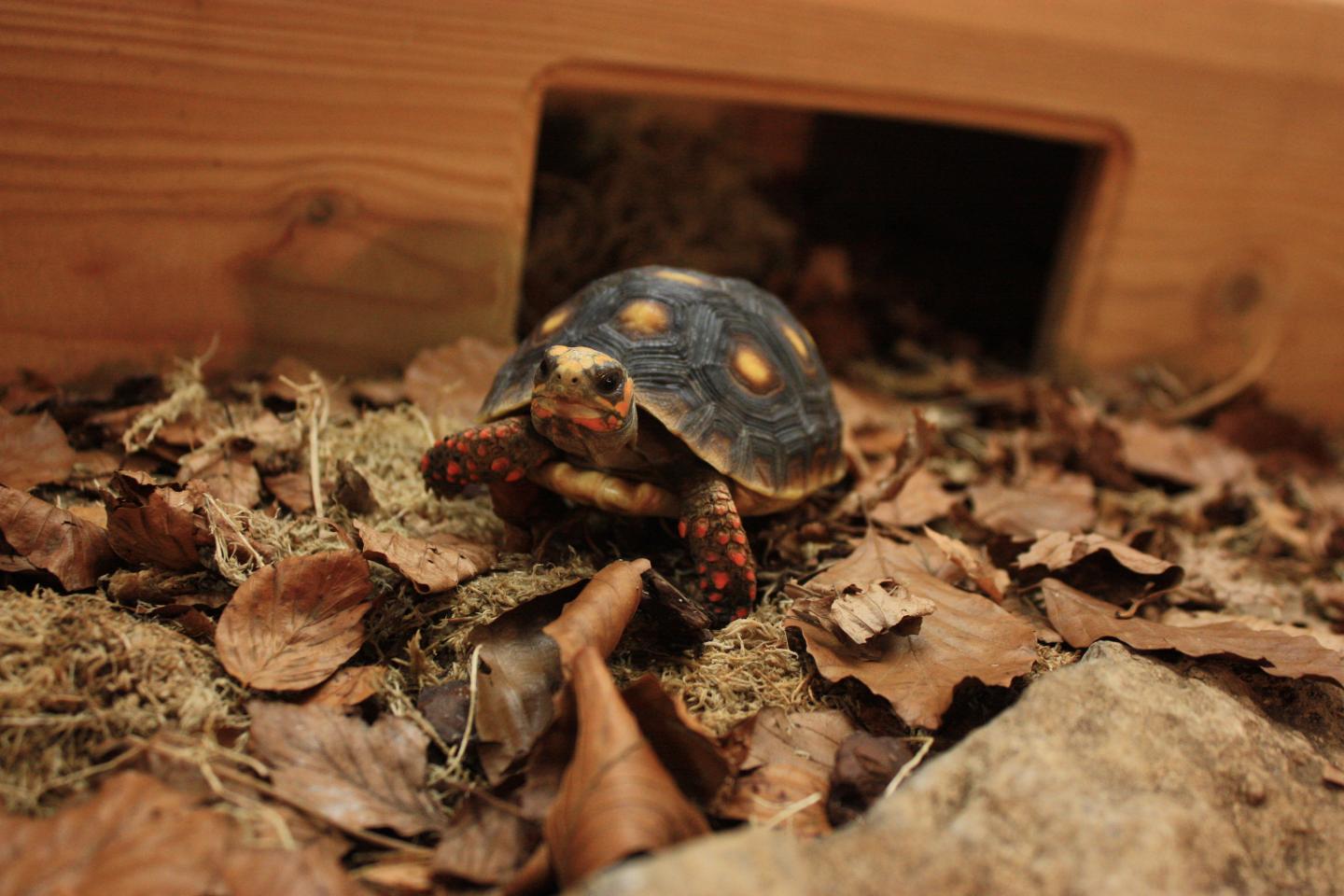
IMAGE

Credit: Sophie Moszuti

New research shows that red-footed tortoises can remember the location of their favourite food sources and the biggest stashes for at least 18 months.

When animals are making decisions in their environment, it is important that they remember not only the location of key food sources but also where the best or the most food is likely to be. The new findings from researchers at the University of Lincoln, UK, suggest these reptiles have an even greater long-term memory than previously thought.

Earlier studies have shown that animals remember the location of food, but this new research reveals for the first time that they are also able to exercise judgements about quality and quantity and retain this vital information for a long period of time.

The findings are published today (1st February 2017) in the Royal Society journal Biology Letters.

"Long-term memory is an important characteristic for animals which live for a long time, particularly if they inhabit environments where resources are patchily distributed like forests," explained Dr Anna Wilkinson, from the School of Life Sciences at the University of Lincoln. "A long-term memory enables them to retain information that is crucial for survival, such as the appearance and location of key resources.

"Our study shows us that they can in fact remember visual cues associated with different reward values over a period of at least 18 months, demonstrating a significant memory for different quantities and qualities of food. They are able to remember much more than just the presence or absence of food."

Dr Libby John, another author of the study, said: "This is an important distinction to make because, in nature, decisions are rarely clear cut so it is helpful to be able to evaluate the relative benefits of different resources."

As part of the research, red-footed tortoises were trained to associate visual cues (coloured sheets) with specific qualities of food (a preferred mango-flavoured jelly and a less-preferred apple-flavoured jelly) and different quantities. The animals learned which colours were associated with which type and quantity of food, and when they were shown the same cues 18 months later, they remembered their preferences.

The researchers conclude that this long-term memory is likely to impact directly on an animal's foraging decisions. The retention of this information could also improve fitness, as it would make foraging more efficient by eliminating the need to re-evaluate different food sources during each season and reduce the risk of re-visiting inadequate locations.

This new findings suggest that plants which provide better fruit in terms of quality or quantity may receive more visits in a given season, and may also receive repeat visits in successive fruiting seasons. The researchers suggest that this pattern could also have implications for ecological interactions such as herbivory and the dispersal of seeds.

The full paper is now available to read online.

###

Media Contact

Elizabeth Allen
[email protected]
01-522-837-650
@unilincoln

http://www.lincoln.ac.uk/home/

Share12Tweet8Share2ShareShareShare2

Related Posts

Florida Cane Toad: Complex Spread and Selective Evolution

Florida Cane Toad: Complex Spread and Selective Evolution

February 7, 2026
New Study Uncovers Mechanism Behind Burn Pit Particulate Matter–Induced Lung Inflammation

New Study Uncovers Mechanism Behind Burn Pit Particulate Matter–Induced Lung Inflammation

February 6, 2026

DeepBlastoid: Advancing Automated and Efficient Evaluation of Human Blastoids with Deep Learning

February 6, 2026

Navigating the Gut: The Role of Formic Acid in the Microbiome

February 6, 2026
Please login to join discussion

POPULAR NEWS

  • Robotic Ureteral Reconstruction: A Novel Approach

    Robotic Ureteral Reconstruction: A Novel Approach

    82 shares
    Share 33 Tweet 21
  • Digital Privacy: Health Data Control in Incarceration

    63 shares
    Share 25 Tweet 16
  • Study Reveals Lipid Accumulation in ME/CFS Cells

    57 shares
    Share 23 Tweet 14
  • Breakthrough in RNA Research Accelerates Medical Innovations Timeline

    53 shares
    Share 21 Tweet 13

About

We bring you the latest biotechnology news from best research centers and universities around the world. Check our website.

Follow us

Recent News

Boosting Remote Healthcare: Stepped-Wedge Trial Insights

Barriers and Boosters of Seniors’ Physical Activity in Karachi

Evaluating Pediatric Emergency Care Quality in Ethiopia

Subscribe to Blog via Email

Enter your email address to subscribe to this blog and receive notifications of new posts by email.

Join 73 other subscribers
  • Contact Us

Bioengineer.org © Copyright 2023 All Rights Reserved.

Welcome Back!

Login to your account below

Forgotten Password?

Retrieve your password

Please enter your username or email address to reset your password.

Log In
No Result
View All Result
  • Homepages
    • Home Page 1
    • Home Page 2
  • News
  • National
  • Business
  • Health
  • Lifestyle
  • Science

Bioengineer.org © Copyright 2023 All Rights Reserved.