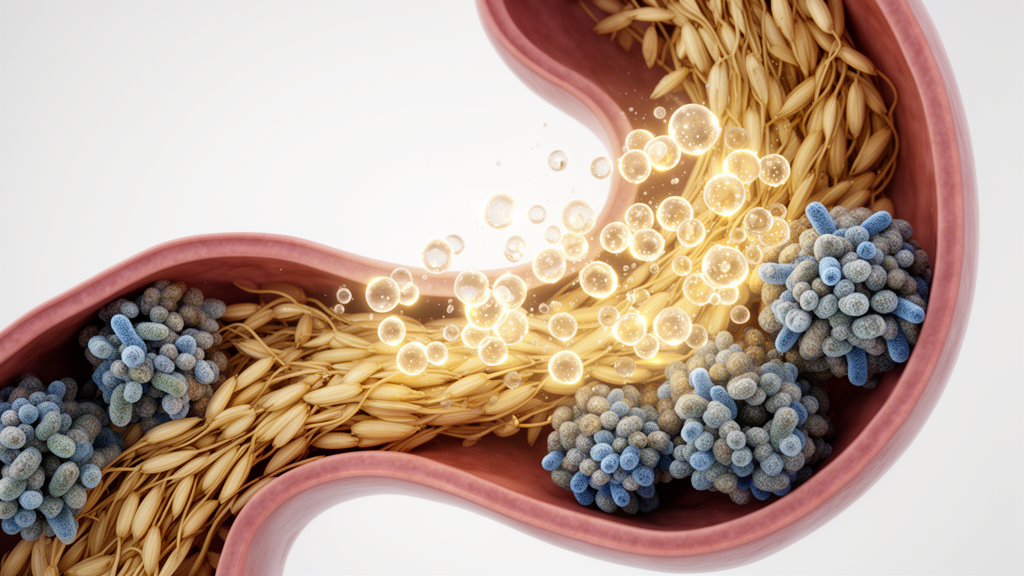
Dietary supplementation with oat beta-glucan significantly modifies the cecal microbial community and elevates the concentrations of critical fermentation products in weaned rabbits, according to experimental findings published in Frontiers in Microbiology. Researchers investigating the upstream digestive mechanisms of young New Zealand White rabbits observed that daily oral administration of this soluble dietary fiber drove notable metabolic shifts within the cecum, which serves as the primary site for fiber fermentation in the leporine digestive system. Rather than causing widespread structural disruption across the intestinal ecosystem, the four-week dietary intervention triggered targeted compositional adjustments, significantly increasing short-chain fatty acid synthesis while selectively modulating key bacterial taxa associated with host metabolic efficiency and inflammatory regulation.
The study was designed to bridge a crucial physiological gap identified in prior research, which had established that oat beta-glucan improved overall growth performance, enhanced body weight gain, and diminished systemic inflammatory markers in weaned rabbits by modulating the colonic environment. Because the cecum functions upstream of the colon as the major microbial fermentation chamber responsible for breaking down complex structural carbohydrates, researchers evaluated whether local microecological adaptations in this organ could provide mechanistic insight into these previously documented phenotypic gains. To achieve this, the investigative team allocated twenty-four three-week-old female weaned rabbits into two equal experimental cohorts, maintaining them under strictly controlled environmental settings with standardized lighting, temperature, and basal feed access across a four-week feeding trial.
Animals assigned to the experimental intervention received oat beta-glucan with a certified purity of 88.69 percent, dosed daily at 200 milligrams per kilogram of body weight dissolved in twenty milliliters of drinking water, followed by ad libitum access to fresh water once consumed. The control animals received identical basal rations alongside equivalent volumes of plain water devoid of fiber supplementation. At the conclusion of the twenty-eight-day trial, the researchers conducted detailed histomorphological evaluations, 16S ribosomal RNA gene sequencing, and targeted gas chromatography–time-of-flight mass spectrometry to quantify microbial community alterations and short-chain fatty acid concentrations from collected cecal tissues and digesta samples.
Histological examinations revealed that oat beta-glucan supplementation preserved the structural integrity of the intestinal mucosal lining without inducing adverse morphological changes. Mid-cecal tissue sections stained with hematoxylin and eosin as well as periodic acid-Schiff indicated comparable architectural parameters between cohorts. Measurements of villus height averaged 168.43 micrometers in supplemented animals compared to 158.14 micrometers in control animals, while crypt depth was recorded at 62.40 micrometers versus 64.90 micrometers, respectively. Muscular layer thickness was measured at 208.96 micrometers in the fiber-treated group against 187.98 micrometers in the controls, alongside goblet cell counts of 73.00 compared to 66.50. Although the ratio of villus height to crypt depth displayed an upward tendency in supplemented rabbits, reaching 2.97 compared to 2.55 in controls with a p-value of 0.07, these morphometric contrasts did not reach formal statistical significance, demonstrating that the biological effects of the fiber operated primarily at the biochemical and microbial levels rather than altering physical tissue architecture.
High-throughput profiling of the bacterial 16S rRNA V3 to V4 hypervariable regions demonstrated that oat beta-glucan did not compromise microbial ecological balance or significantly alter alpha or beta diversity metrics. Community richness estimators, including Chao1 and Ace indices, alongside diversity measures such as Shannon and Simpson indices, remained statistically indistinguishable between the treated and untreated cohorts. Similarly, principal coordinate analysis derived from Bray-Curtis dissimilarity matrices revealed overlapping clusters without significant divergence in overall community taxonomic structuring. Across both groups, the cecal microflora was overwhelmingly dominated by two foundational mammalian gut phyla, Firmicutes and Bacteroidetes, which collectively comprised more than 95 percent of the total microbial population, maintaining stable relative abundances and an unaltered Firmicutes-to-Bacteroidetes ratio throughout the trial period.
Despite this broader structural stability, beta-glucan supplementation stimulated distinct, statistically significant compositional reorganizations among specific bacterial phyla and genera. Most prominently, the relative abundance of the phylum Proteobacteria increased significantly in supplemented rabbits, rising to 0.39 percent compared to 0.32 percent in control animals. While expansions in Proteobacteria are frequently described in scientific literature as markers of microbial dysbiosis, the authors underscored that in this context, the increase occurred alongside enhanced growth and reduced inflammation, indicating a substrate-driven enrichment rather than a pathological event. Conversely, environmental and less abundant taxa, including members of the phyla Chloroflexi and Entotheonellaeota, showed significantly lower abundance in the supplemented group relative to the control animals.
At the genus level, microbial sequencing identified 198 distinct genera, among which the Ruminococcaceae NK4A214 group and the Christensenellaceae R-7 group remained the predominant taxa across both groups. Dietary supplementation with oat beta-glucan drove a statistically significant expansion of Odoribacter and Anaerofilum, while precipitating a notable decline in several other bacterial genera, including Bradyrhizobium, Blastococcus, Pedomicrobium, Pseudarthrobacter, Butyricicoccus, Candidatus Methylopumilus, and Collinsella. The reduction in typically soil- or environment-derived microbes like Bradyrhizobium and Blastococcus, combined with the reduction of Collinsella—a genus often associated with inflammatory processes and metabolic disturbances—is consistent with a shift toward a more stable, host-adapted digestive microbiota configuration under fiber supplementation.
Metabolomic quantification of organic acids through gas chromatography–time-of-flight mass spectrometry confirmed that dietary beta-glucan significantly augmented fermentative output in the cecal lumen. Total short-chain fatty acid concentrations in cecal contents expanded markedly to 17.14 micromoles per gram in the supplemented cohort, compared to 10.52 micromoles per gram in the unsupplemented controls. Significant individual elevations were documented for propionic acid, which reached 1.76 micromoles per gram versus 1.27 micromoles per gram, valeric acid at 0.45 micromoles per gram versus 0.39 micromoles per gram, and hexanoic acid at 0.37 micromoles per gram versus 0.33 micromoles per gram. Butyric acid also exhibited a substantial upward trend, averaging 4.33 micromoles per gram in supplemented rabbits compared to 1.67 micromoles per gram in controls with a p-value of 0.052, while the ratio of acetic acid to propionic acid remained stable across groups.
Statistical correlation analyses, controlled using the Benjamini–Hochberg false discovery rate procedure, established explicit associations linking the enriched bacterial taxa with elevated short-chain fatty acids and broader physiological performance. The abundance of Odoribacter demonstrated a significant positive correlation with cecal butyric acid concentrations, yielding a correlation coefficient of 0.66 at a false discovery rate q-value of 0.024. In parallel, Proteobacteria abundance was positively correlated with propionic acid concentrations, exhibiting a correlation coefficient of 0.62 and a q-value of 0.006. Furthermore, phenotypic integration revealed that Proteobacteria correlated negatively with circulating lipopolysaccharide concentrations, Odoribacter correlated negatively with serum tumor necrosis factor-alpha, and Blastococcus correlated negatively with average daily gain, confirming consistent statistical alignments between microbial abundance and host health markers.
Mantel tests further demonstrated that global dissimilarities in cecal microbial community composition were significantly coupled with variations in host phenotypes, plasma metabolomic profiles, and cecal organic acid signatures. Significant correlation coefficients exceeding 0.2 were recorded between overall community structures and specific circulating lipid species, such as 1-palmitoyl-2-thiopalmitoyl phosphatidylcholine, N-(octadecanoyl)sphing-4-enine-1-phosphocholine, and 1-palmitoyl-2-myristoyl-sn-glycero-3-phosphocholine. Reductions in these modified phosphatidylcholines and sphingolipids coincided with attenuated systemic inflammatory indicators in supplemented animals, supporting a coordinated metabolic network wherein hindgut fiber fermentation interfaces with systemic host lipid homeostasis and immune function.
When evaluated alongside previous colonic findings from the same cohort, the results indicate coordinated physiological responses across distinct segments of the rabbit hindgut. While increases in propionic and valeric acids occurred in both gut regions, the overall rise in total short-chain fatty acids was substantially more pronounced in the cecum, reflecting its greater fermentative capacity and microbial density. Inter-segmental correlation analyses identified cross-tissue relationships, such as a significant negative correlation between cecal Blastococcus and colonic Lactobacillus, alongside positive correlation tendencies linking cecal Odoribacter with colonic beneficial taxa. These observations suggest that the cecum and colon function as an integrated, dynamic continuum rather than isolated physiological compartments.
The study authors explicitly highlighted several interpretive constraints, emphasizing that the cross-sectional statistical associations observed cannot demonstrate direct causal relationships. The reliance on 16S rRNA amplicon sequencing limits taxonomic identification to broad profiles and precludes strain-level functional characterization. Additionally, the experimental evaluations did not include covariate-adjusted correlation models or direct cellular intervention techniques, such as germ-free animal colonization, fecal microbiota transplantation, or isolated organic acid infusions. Consequently, the researchers concluded that while oat beta-glucan clearly stimulates beneficial metabolic and microbial reorganizations in the weaned rabbit cecum, establishing definitive causal mechanisms will require further interventional studies to validate these functional pathways.
Subject of Research: Cecal microbiota and fatty acid profile alterations following dietary oat beta-glucan supplementation in weaned rabbits
Article Title: Oat β-glucan modulates the cecal microbiota and fatty acid profile, providing insights into gut microbiota-mediated growth promotion in weaned rabbits
Article References: Huang, Y., Huang, H., Luo, Z., Ma, L., Wu, D., Wang, D., Long, Y., Yao, X., Shen, L., Yu, S., & Cao, S. (2026). Oat β-glucan modulates the cecal microbiota and fatty acid profile, providing insights into gut microbiota-mediated growth promotion in weaned rabbits. Frontiers in Microbiology, 17, Article 1964478. https://doi.org/10.3389/fmicb.2026.1964478
Image Credits: AI Generated
DOI: 10.3389/fmicb.2026.1964478
Keywords: oat beta-glucan, weaned rabbits, cecal microbiota, short-chain fatty acids, propionic acid, butyric acid, hexanoic acid, valeric acid, Odoribacter, Proteobacteria, Blastococcus, fermentation, hindgut metabolism, animal nutrition, gut microbiome, systemic inflammation, growth performance, 16S rRNA sequencing
News Source: Morgan Morrow. (November 26, 2026). Oat Beta-Glucan Reshapes Cecal Microbes and Elevates Fermentation Acids in Rabbits. Scienmag.