• HOME
  • NEWS
  • EXPLORE
    • CAREER
      • Companies
      • Jobs
    • EVENTS
    • iGEM
      • News
      • Team
    • PHOTOS
    • VIDEO
    • WIKI
  • BLOG
  • COMMUNITY
    • FACEBOOK
    • INSTAGRAM
    • TWITTER
Saturday, February 7, 2026
BIOENGINEER.ORG
No Result
View All Result
  • Login
  • HOME
  • NEWS
  • EXPLORE
    • CAREER
      • Companies
      • Jobs
        • Lecturer
        • PhD Studentship
        • Postdoc
        • Research Assistant
    • EVENTS
    • iGEM
      • News
      • Team
    • PHOTOS
    • VIDEO
    • WIKI
  • BLOG
  • COMMUNITY
    • FACEBOOK
    • INSTAGRAM
    • TWITTER
  • HOME
  • NEWS
  • EXPLORE
    • CAREER
      • Companies
      • Jobs
        • Lecturer
        • PhD Studentship
        • Postdoc
        • Research Assistant
    • EVENTS
    • iGEM
      • News
      • Team
    • PHOTOS
    • VIDEO
    • WIKI
  • BLOG
  • COMMUNITY
    • FACEBOOK
    • INSTAGRAM
    • TWITTER
No Result
View All Result
Bioengineer.org
No Result
View All Result
Home NEWS Science News Biology

Benefits of taking the natural pigment astaxanthin

Bioengineer by Bioengineer
February 9, 2018
in Biology
Reading Time: 2 mins read
0
Share on FacebookShare on TwitterShare on LinkedinShare on RedditShare on Telegram
IMAGE

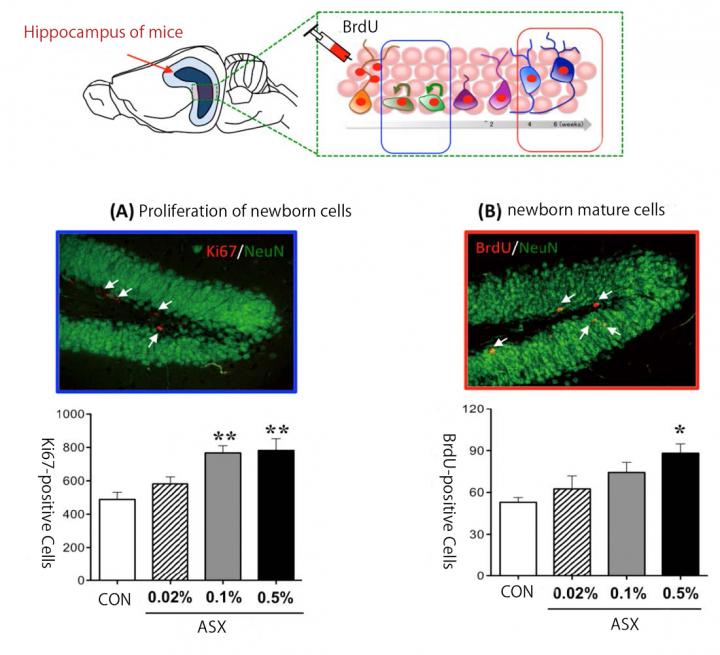
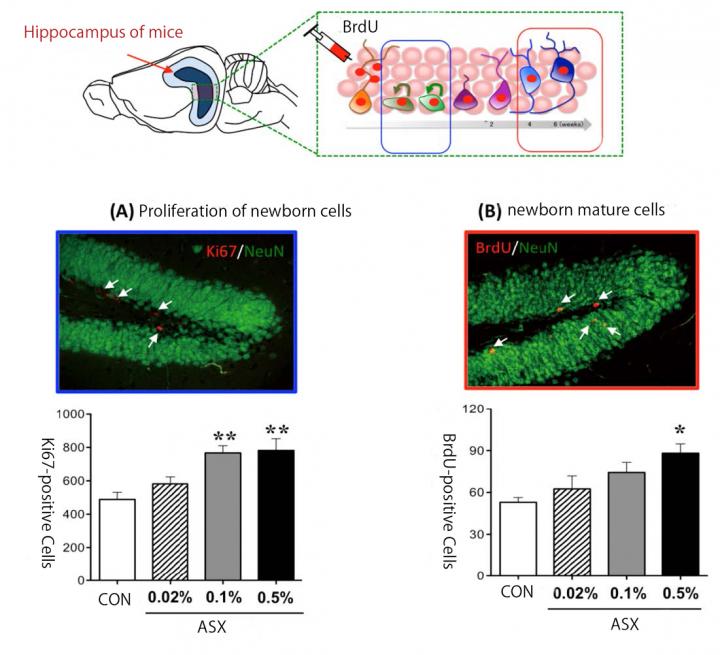
A research group led by University of Tsukuba Professor Hideaki Soya and Professor Randeep Rakwal has investigated the effect on hippocampal function of the naturally derived pigment ASX, which is believed to have the most powerful antioxidant activity among carotenoids. Their results showed for the first time that giving ASX to mice for four weeks promoted neurogenesis in the hippocampus in a concentration-dependent manner, and elevated the learning and memory capacity of the hippocampus.

With the recent rise in popularity of naturally-derived supplements to maintain a healthy body, there has been a great deal of attention toward development of the so-called "brain foods", which can enhance brain function. Of particular importance is the natural red pigment astaxanthin (ASX) abundant in both salmon and in crustaceans such as shrimp and crab. ASX has a powerful antioxidant effect, and it holds promise as a next-generation natural supplement. ASX is capable of penetrating the blood-brain barrier,entering the brain, where it acts directly on nerve cells. ASX is also known to have a neuroprotective effect in neurological animal disease model. However, there are many unanswered questions as to the effects of ASX on hippocampal function, especially whether or not it can increase the neuroplasticity of the hippocampus.

A research group led by University of Tsukuba Faculty of Health and Sport Sciences Professor Hideaki Soya and Professor Randeep Rakwal has investigated the effect on hippocampal function of the naturally-derived pigment ASX, which is believed to have the most powerful antioxidant activity among carotenoids. Their results showed for the first time that giving ASX to mice for four weeks promoted neurogenesis in the hippocampus in a concentration-dependent manner, and elevated the learning and memory capacity of the hippocampus. Furthermore, when the team investigated the molecular mechanism of the ASX activity on the hippocampus using high-throughput DNA microarray technology and bioinformatics analyses such as IPA, it brought to the fore specific molecular pathways that could contribute to improved memory capacity.

By conducting future targeting experiments on the molecular mechanism behind ASX action, as hypothesized from these bioinformatics analyses, aimed at hippocampal tissues and cells with gene deletion methods or specific inhibitors, researchers may be able to clarify the mechanism in greater detail, which could help target mechanisms in the development of medical foods and new drugs.

###

Media Contact

Masataka Watanabe
[email protected]
81-298-532-039

Share12Tweet7Share2ShareShareShare1

Related Posts

Florida Cane Toad: Complex Spread and Selective Evolution

Florida Cane Toad: Complex Spread and Selective Evolution

February 7, 2026
New Study Uncovers Mechanism Behind Burn Pit Particulate Matter–Induced Lung Inflammation

New Study Uncovers Mechanism Behind Burn Pit Particulate Matter–Induced Lung Inflammation

February 6, 2026

DeepBlastoid: Advancing Automated and Efficient Evaluation of Human Blastoids with Deep Learning

February 6, 2026

Navigating the Gut: The Role of Formic Acid in the Microbiome

February 6, 2026
Please login to join discussion

POPULAR NEWS

  • Robotic Ureteral Reconstruction: A Novel Approach

    Robotic Ureteral Reconstruction: A Novel Approach

    82 shares
    Share 33 Tweet 21
  • Digital Privacy: Health Data Control in Incarceration

    63 shares
    Share 25 Tweet 16
  • Study Reveals Lipid Accumulation in ME/CFS Cells

    57 shares
    Share 23 Tweet 14
  • Breakthrough in RNA Research Accelerates Medical Innovations Timeline

    53 shares
    Share 21 Tweet 13

About

We bring you the latest biotechnology news from best research centers and universities around the world. Check our website.

Follow us

Recent News

Digital Health Perspectives from Baltic Sea Experts

Florida Cane Toad: Complex Spread and Selective Evolution

Exploring Decision-Making in Dementia Caregivers’ Mobility

Subscribe to Blog via Email

Enter your email address to subscribe to this blog and receive notifications of new posts by email.

Join 73 other subscribers
  • Contact Us

Bioengineer.org © Copyright 2023 All Rights Reserved.

Welcome Back!

Login to your account below

Forgotten Password?

Retrieve your password

Please enter your username or email address to reset your password.

Log In
No Result
View All Result
  • Homepages
    • Home Page 1
    • Home Page 2
  • News
  • National
  • Business
  • Health
  • Lifestyle
  • Science

Bioengineer.org © Copyright 2023 All Rights Reserved.