Credit: Melissa Fabrizio
(Edmonton, AB) An experimental therapy being tested by University of Alberta scientists that targets the spinal cord may one day be key to spurring on enhanced recovery for stroke victims.
By injecting a drug called chondroitinase ABC (ChABC) into the spinal cord of rats 28 days after they suffered a stroke, researchers found they were able to enhance recovery by inducing amplified rewiring of circuits connecting the brain to the spinal cord. When they also combined the spinal therapy with rehabilitative training, recovery amplified further.
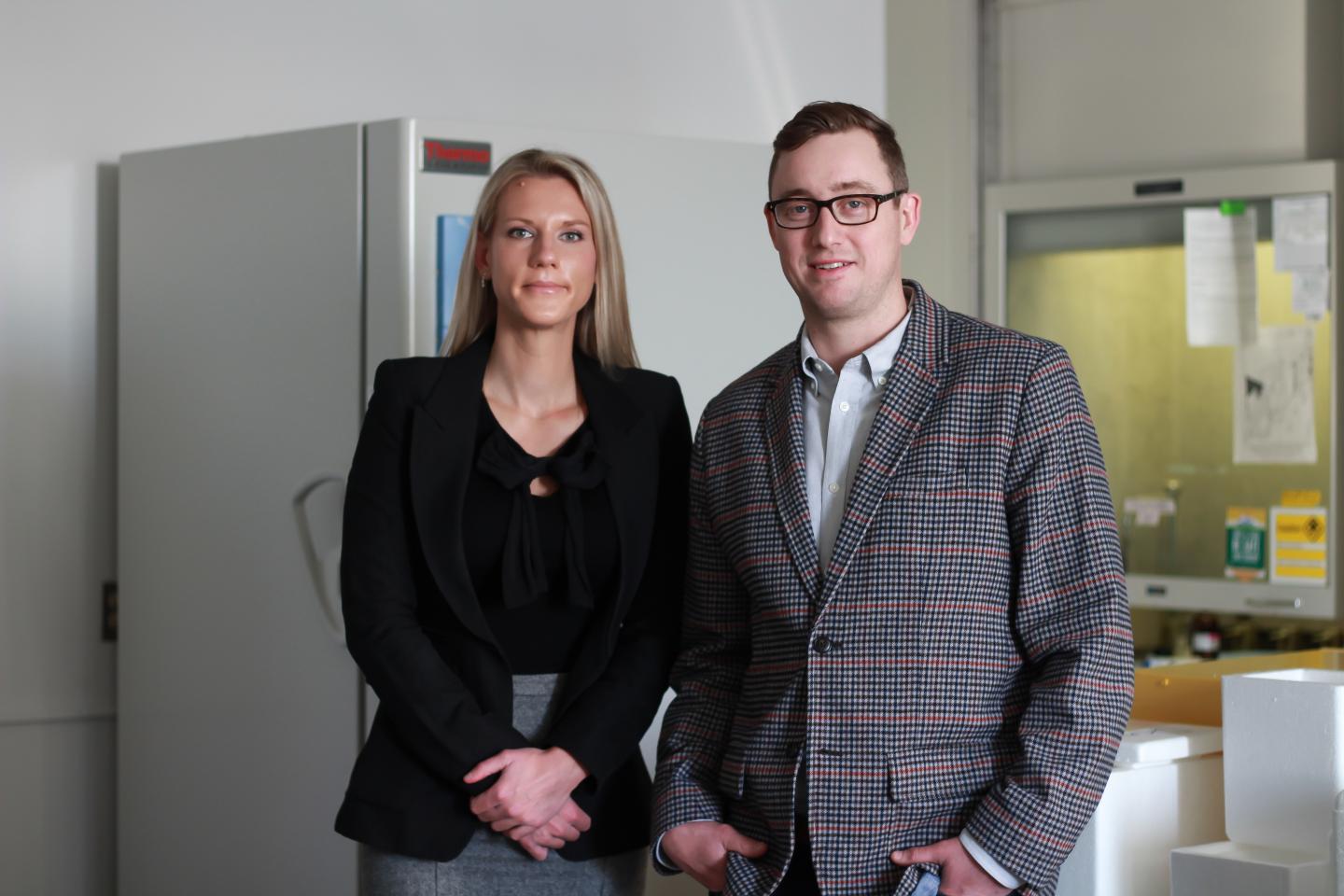
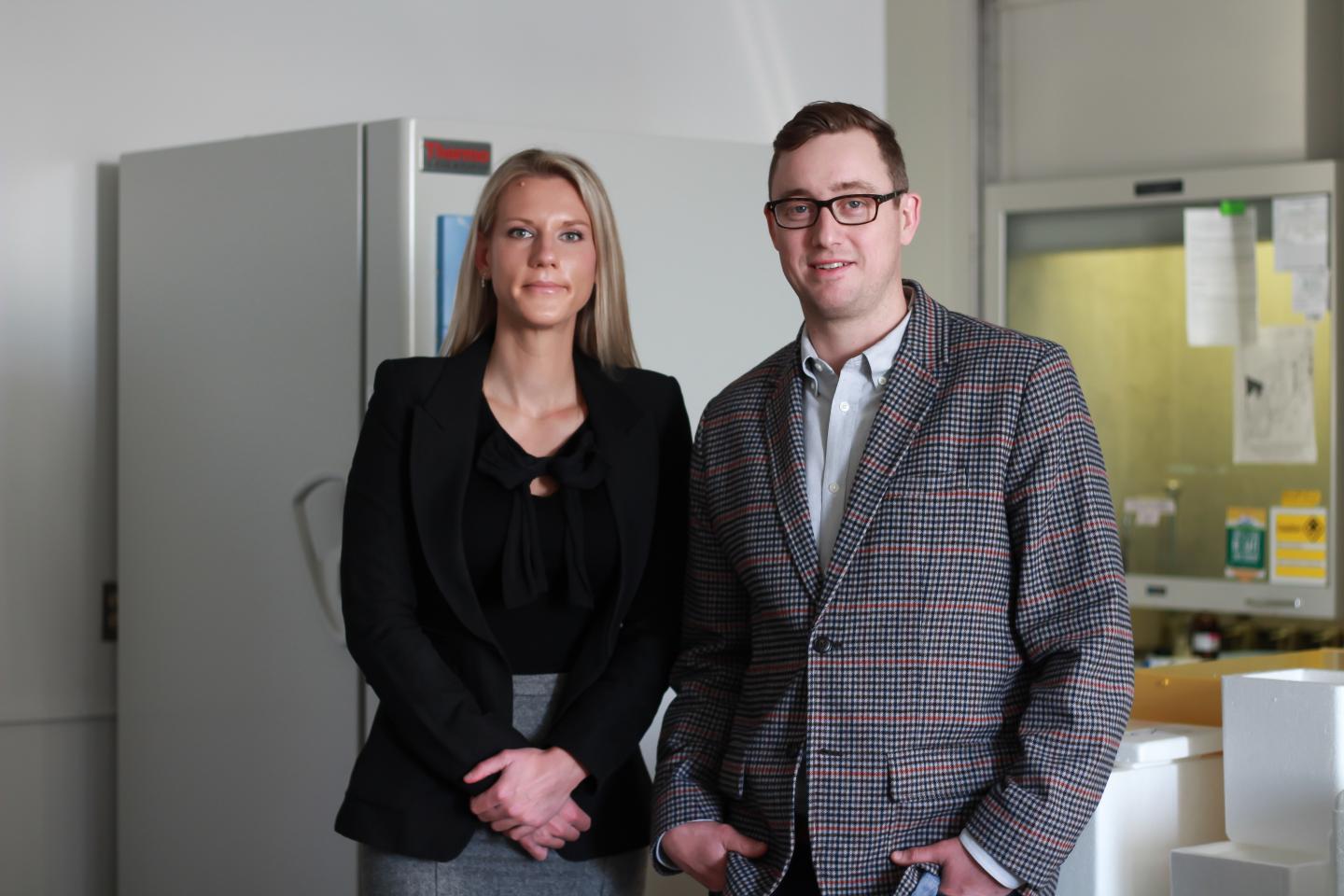
"This gives us real evidence that there are things we can do for people with a permanent physical disability–such as paralysis or having difficulty controlling movements–after a stroke," said Ian Winship, an associate professor of psychiatry at the U of A. "There is hope that eventually we might have a therapy that can help somebody with a deficit that is really affecting their quality of life, even years after the stroke."
"These are deficits that previously have been thought to be untreatable and people just learned to live with them," added Anna Wiersma, lead author of the study and a recent PhD graduate at the U of A's Neuroscience and Mental Health Institute. "The fact that these might not actually be untreatable and that we have an opportunity to help patients who are in the chronic stages of stroke is really exciting."
Stroke is the most common cause of adult disability in Canada. Currently more than 400,000 Canadians are living with the effects of stroke. The typical path of recovery involves intensive rehabilitation therapy. In the first few weeks following a stroke, patients experience gains as the brain rewires itself, but they will eventually plateau and rarely regain full capacity–even with ongoing rehabilitation.
In the study, the scientists explored the impact of injecting ChABC into the spinal cord. The drug acts on components that surround the cells of the nervous system and prevent growth of new connections. It also removed the inhibition of growth, allowing for new connections between the unaffected motor areas in the brain and the spinal networks that control movement.
The researchers found that injecting ChABC a month after suffering a stroke and without rehabilitative training led to moderate improvements of sensorimotor deficits. When combining both spinal therapy and rehabilitative therapy, they found that their subjects recovered better and were able to perform some sensorimotor tasks at pre-stroke levels.
"The idea here is there is still something we can potentially do for people that would give them a second wave of recovery," said Winship. "That's pretty exciting because (rehabilitation efforts) have a ceiling effect. You can only achieve so much recovery. This drug could remove that ceiling."
The researchers acknowledge there are barriers to overcome before the work could be tested and applied in humans. The major drawback is that injected ChABC only extends a small distance and acts for a finite period of time–both of which would be challenging in a human spinal cord, which is much larger than that of a rat. Time of recovery in a human is also much longer, meaning multiple injections would likely be needed, increasing the risk of infection or injury.
Winship and Wiersma speculate one solution may be to introduce the drug through another way than through injection. They believe using a viral vector could make cells genetically express ChABC instead of having it injected directly. The solution would allow for longer-lasting expression and greater spread within the spinal cord.
"The potential is there but at this point we need a lot more evidence that this is going to be something that is truly effective," said Winship. "This approach is still a long way from the clinic, but this gives us real evidence that there are things we can do for people with permanent disability after a stroke."
###
The research was funded by the Heart and Stroke Foundation and Alberta Innovates. The study was published in the Journal of Neuroscience.
Media Contact
Ross Neitz
[email protected]
780-492-5986
@ualberta_fomd
http://www.med.ualberta.ca
Related Journal Article
http://dx.doi.org/10.1523/JNEUROSCI.0770-17.2017