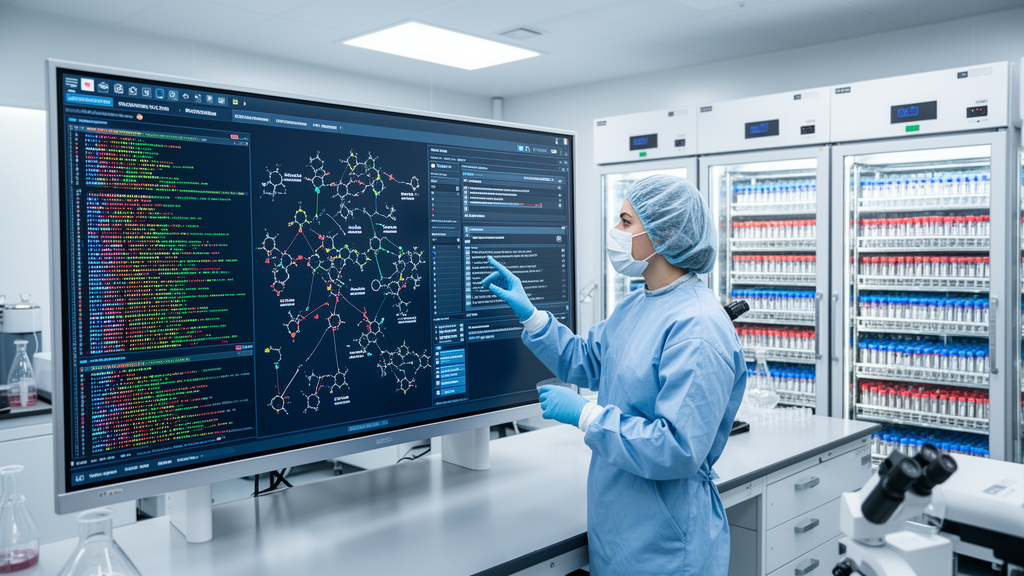
Centralized institutional repositories for research data management struggle to satisfy practical laboratory expectations without continuous, discipline-specific human assistance, according to a perspective published in Bioprocess and Biosystems Engineering. Researchers Martina Rehnert and Ralf Takors evaluated an institutional repository deployed across an international use case of fifty cross-discipline biotechnology scientists. Although centralized, top-down infrastructures established the technical foundation for managing data according to the FAIR principles—findable, accessible, interoperable, and reusable—the authors observed that standardized repository workflows failed to entirely meet researchers’ practical expectations.
The perspective highlights data stewards as vital intermediaries operating between institutional requirements and daily research practice. By engaging directly within active laboratories, data stewards provide valuable insights into the practical challenges of implementing sustainable research data management. These professionals help optimize institutional repository support structures, ensuring technical frameworks adapt to the evolving needs of researchers working in complex real-world biotechnology environments.
In the analyzed use case involving fifty international, cross-discipline biotechnology researchers, an institutional repository was used to manage heterogeneous data formats, including experimental records, computer-aided modeling outputs, and process engineering data. Coordinating these disparate records in accordance with the FAIR principles proved challenging within the repository’s existing centralized infrastructure. While top-down repository systems supplied the technical foundation for data handling, researchers required workflows tailored to their practical research applications.
Furthermore, archiving and storage of heterogeneous, often proprietary data formats, alongside subject-specific ontologies in cross-domains, pose persistent challenges for research data management. Biotechnology data management must also resolve complex operational hurdles surrounding metadata complexity, data protection standards, and institutional governance requirements. Generic repository frameworks struggled to resolve these multi-layered factors without ongoing, domain-aware intervention.
These management pressures arise in the context of rapid global growth in biotechnology, an interconnected and globally significant field exerting expanding impact on commercial industries, healthcare systems, and the bioeconomy. The associated rapid increase in data generation requires effective research data management to maintain compliance with the FAIR principles. However, centralized top-down infrastructures alone cannot bridge the gap between institutional mandates and specialized research practices.
To overcome these structural limitations, the authors emphasize that generic repository frameworks and standardized workflows require continuous, discipline-specific, and human-mediated support integrated directly into everyday research routines. Rather than treating digital archiving as a standalone technical task, sustainable research data management in biotechnology depends on data stewards who continuously align institutional repository capabilities with practical experimental needs.
Subject of Research: Research data management and data stewardship in biotechnology
Article Title: Managing complexity in research data management for heterogeneous biotechnological data: a perspective on interacting as data steward
Article References: Rehnert, M., & Takors, R. (2026). Managing complexity in research data management for heterogeneous biotechnological data: a perspective on interacting as data steward. Bioprocess and Biosystems Engineering, 49(9), 2321-2331. https://doi.org/10.1007/s00449-026-03380-0
Image Credits: AI Generated
DOI: 10.1007/s00449-026-03380-0
Keywords: research data management, data stewardship, biotechnology, FAIR principles, institutional repositories, heterogeneous data, metadata complexity, data protection, governance requirements, process engineering data, computer-aided modeling, experimental data, subject-specific ontologies, proprietary data formats, centralized infrastructure, bioeconomy, workflow integration
News Source: Gregory Coleman. (November 26, 2026). Biotechnology Repositories Require Human Data Stewards for Practical Workflows. Scienmag.