• HOME
  • NEWS
  • EXPLORE
    • CAREER
      • Companies
      • Jobs
    • EVENTS
    • iGEM
      • News
      • Team
    • PHOTOS
    • VIDEO
    • WIKI
  • BLOG
  • COMMUNITY
    • FACEBOOK
    • INSTAGRAM
    • TWITTER
Saturday, May 16, 2026
BIOENGINEER.ORG
No Result
View All Result
  • Login
  • HOME
  • NEWS
  • EXPLORE
    • CAREER
      • Companies
      • Jobs
        • Lecturer
        • PhD Studentship
        • Postdoc
        • Research Assistant
    • EVENTS
    • iGEM
      • News
      • Team
    • PHOTOS
    • VIDEO
    • WIKI
  • BLOG
  • COMMUNITY
    • FACEBOOK
    • INSTAGRAM
    • TWITTER
  • HOME
  • NEWS
  • EXPLORE
    • CAREER
      • Companies
      • Jobs
        • Lecturer
        • PhD Studentship
        • Postdoc
        • Research Assistant
    • EVENTS
    • iGEM
      • News
      • Team
    • PHOTOS
    • VIDEO
    • WIKI
  • BLOG
  • COMMUNITY
    • FACEBOOK
    • INSTAGRAM
    • TWITTER
No Result
View All Result
Bioengineer.org
No Result
View All Result
Home NEWS Science News Biology

Lighter weights just as effective as heavier weights to gain muscle,…

Bioengineer by Bioengineer
February 9, 2018
in Biology
Reading Time: 2 mins read
0
Share on FacebookShare on TwitterShare on LinkedinShare on RedditShare on Telegram
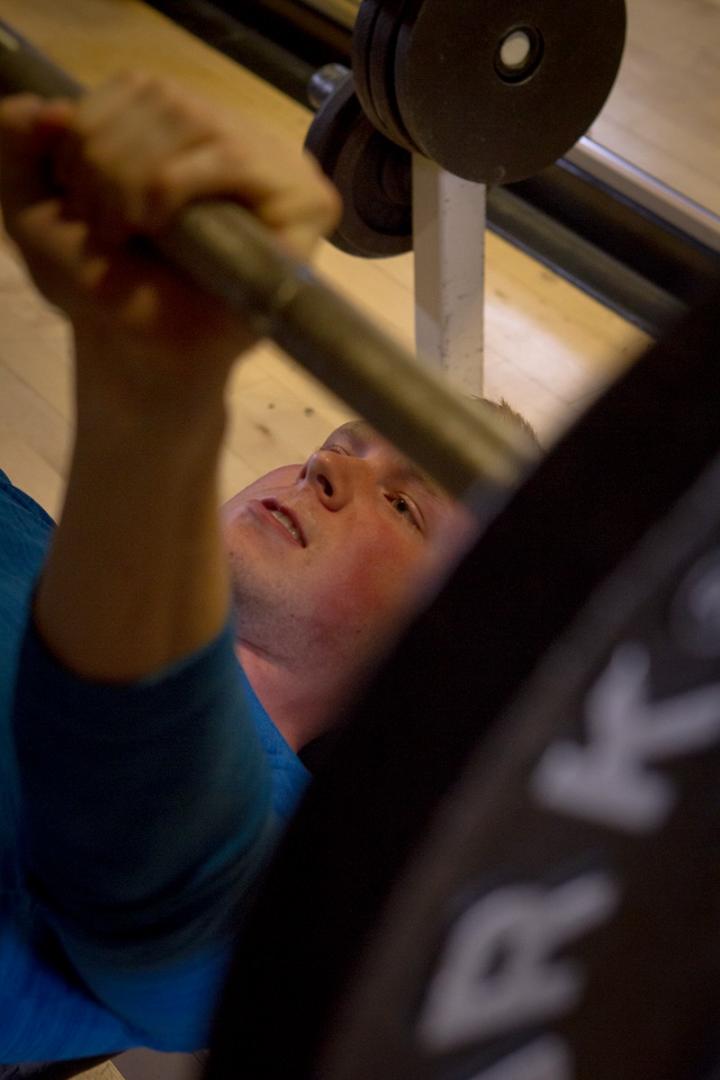
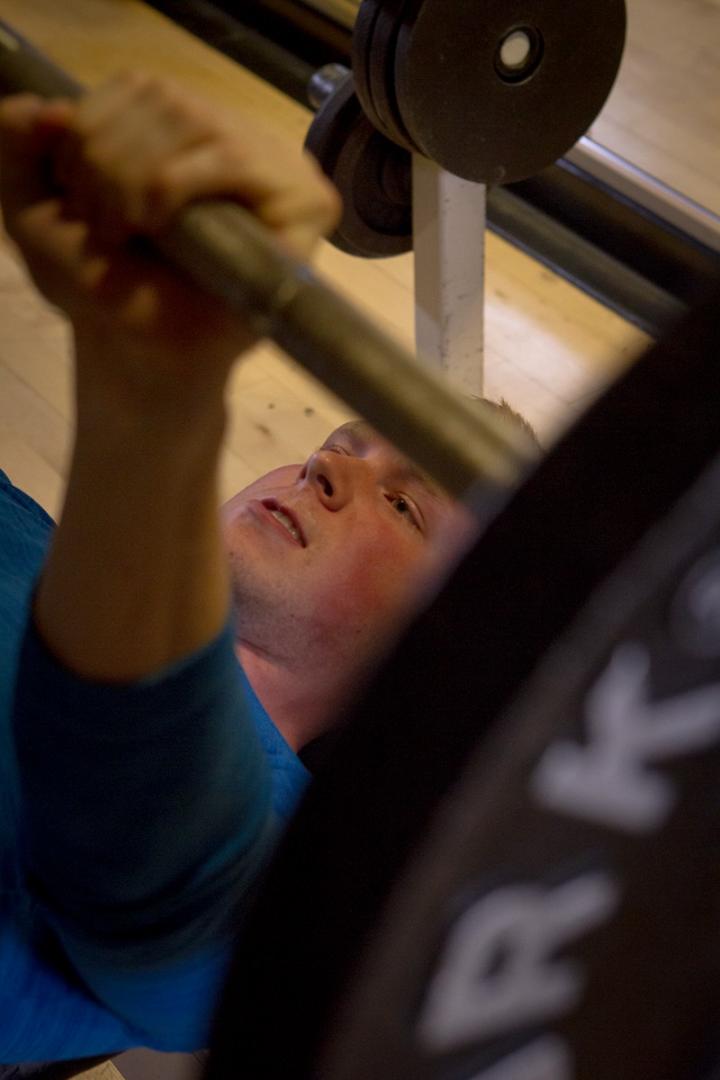
IMAGE

New research from McMaster University is challenging traditional workout wisdom, suggesting that lifting lighter weights many times is as efficient as lifting heavy weights for fewer repetitions.

It is the latest in a series of studies that started in 2010, contradicting the decades-old message that the best way to build muscle is to lift heavy weights.

"Fatigue is the great equalizer here," says Stuart Phillips, senior author on the study and professor in the Department of Kinesiology. "Lift to the point of exhaustion and it doesn't matter whether the weights are heavy or light."

Researchers recruited two groups of men for the study–all of them experienced weight lifters–who followed a 12-week, whole-body protocol. One group lifted lighter weights (up to 50 per cent of maximum strength) for sets ranging from 20 to 25 repetitions. The other group lifted heavier weights (up to 90 per cent of maximum strength) for eight to 12 repetitions. Both groups lifted to the point of failure.

Researchers analyzed muscle and blood samples and found gains in muscle mass and muscle fibre size, a key measure of strength, were virtually identical.

"At the point of fatigue, both groups would have been trying to maximally activate their muscle fibres to generate force," says Phillips, who conducted the work with graduate students and co-authors Rob Morton and Sara Oikawa.

While researchers stress that elite athletes are unlikely to adopt this training regime, it is an effective way to get stronger, put on muscle and generally improve health.

"For the 'mere mortal' who wants to get stronger, we've shown that you can take a break from lifting heavy weights and not compromise any gains," says Phillips. "It's also a new choice which could appeal to the masses and get people to take up something they should be doing for their health."

Another key finding was that none of the strength or muscle growth were related to testosterone or growth hormone, which many believe are responsible for such gains.

"It's a complete falsehood that the short-lived rise in testosterone or growth hormone is a driver of muscle growth," says Morton. "It's just time to end that kind of thinking."

Researchers suggest, however, that more work remains to be done in this area, including what underlying mechanisms are at work and in what populations does this sort of program work.

The findings are published online in the Journal of Applied Physiology.

###

A full copy of the study can be found at http://jap.physiology.org/content/jap/121/1/129.full.pdf

McMaster provides a high definition broadcast studio that can connect with any television broadcaster around the world. To book an interview please contact:

Michelle Donovan
Manager, Media Relations
McMaster University
905-525-9140, ext. 22869
(905) 512-8548 (cell)
[email protected]

Media Contact

Michelle Donovan
[email protected]
905-525-9140
@mcmasteru

Home

Share12Tweet8Share2ShareShareShare2

Related Posts

Uncovering C. elegans Immunity via Genetic Screens — Biology

Uncovering C. elegans Immunity via Genetic Screens

May 16, 2026
Single mother must adapt swiftly — the survival of her colony depends on it — Biology

Single mother must adapt swiftly — the survival of her colony depends on it

May 15, 2026

Why Are Nearly Everyone Right-Handed? It Might Be Linked to How We Learned to Walk

May 15, 2026

Excessive Neuronal Activity Initiates Severe Autoimmune Brain Disorder

May 15, 2026
Please login to join discussion

POPULAR NEWS

  • Research Indicates Potential Connection Between Prenatal Medication Exposure and Elevated Autism Risk

    844 shares
    Share 338 Tweet 211
  • New Study Reveals Plants Can Detect the Sound of Rain

    730 shares
    Share 291 Tweet 182
  • Salmonella Haem Blocks Macrophages, Boosts Infection

    62 shares
    Share 25 Tweet 16
  • Breastmilk Balances E. coli and Beneficial Bacteria in Infant Gut Microbiomes

    58 shares
    Share 23 Tweet 15

About

We bring you the latest biotechnology news from best research centers and universities around the world. Check our website.

Follow us

Recent News

New Blood Test Detects Tumor DNA to Guide Treatment in Advanced Cancer Cases

Transitional Care Boosts Heart Failure Outcomes in Elders

Low-Power Enhanced I2C Controller: RTL to GDSII

Subscribe to Blog via Email

Enter your email address to subscribe to this blog and receive notifications of new posts by email.

Join 82 other subscribers
  • Contact Us

Bioengineer.org © Copyright 2023 All Rights Reserved.

Welcome Back!

Login to your account below

Forgotten Password?

Retrieve your password

Please enter your username or email address to reset your password.

Log In
No Result
View All Result
  • Homepages
    • Home Page 1
    • Home Page 2
  • News
  • National
  • Business
  • Health
  • Lifestyle
  • Science

Bioengineer.org © Copyright 2023 All Rights Reserved.