• HOME
  • NEWS
  • EXPLORE
    • CAREER
      • Companies
      • Jobs
    • EVENTS
    • iGEM
      • News
      • Team
    • PHOTOS
    • VIDEO
    • WIKI
  • BLOG
  • COMMUNITY
    • FACEBOOK
    • INSTAGRAM
    • TWITTER
Saturday, May 16, 2026
BIOENGINEER.ORG
No Result
View All Result
  • Login
  • HOME
  • NEWS
  • EXPLORE
    • CAREER
      • Companies
      • Jobs
        • Lecturer
        • PhD Studentship
        • Postdoc
        • Research Assistant
    • EVENTS
    • iGEM
      • News
      • Team
    • PHOTOS
    • VIDEO
    • WIKI
  • BLOG
  • COMMUNITY
    • FACEBOOK
    • INSTAGRAM
    • TWITTER
  • HOME
  • NEWS
  • EXPLORE
    • CAREER
      • Companies
      • Jobs
        • Lecturer
        • PhD Studentship
        • Postdoc
        • Research Assistant
    • EVENTS
    • iGEM
      • News
      • Team
    • PHOTOS
    • VIDEO
    • WIKI
  • BLOG
  • COMMUNITY
    • FACEBOOK
    • INSTAGRAM
    • TWITTER
No Result
View All Result
Bioengineer.org
No Result
View All Result
Home NEWS Science News Biology

Changing temperatures and precipitation may affect living skin of…

Bioengineer by Bioengineer
February 9, 2018
in Biology
Reading Time: 2 mins read
1
Share on FacebookShare on TwitterShare on LinkedinShare on RedditShare on Telegram
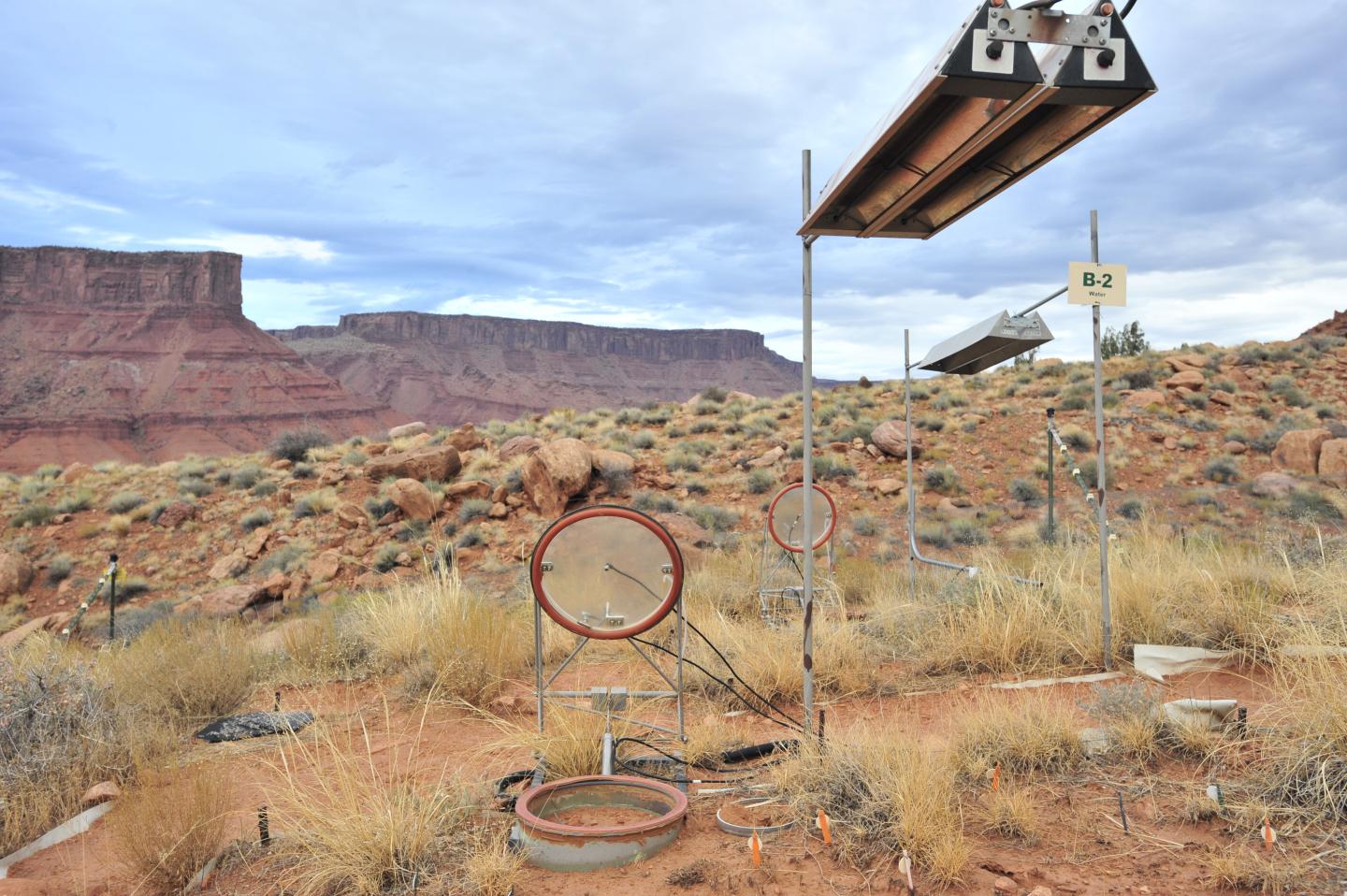
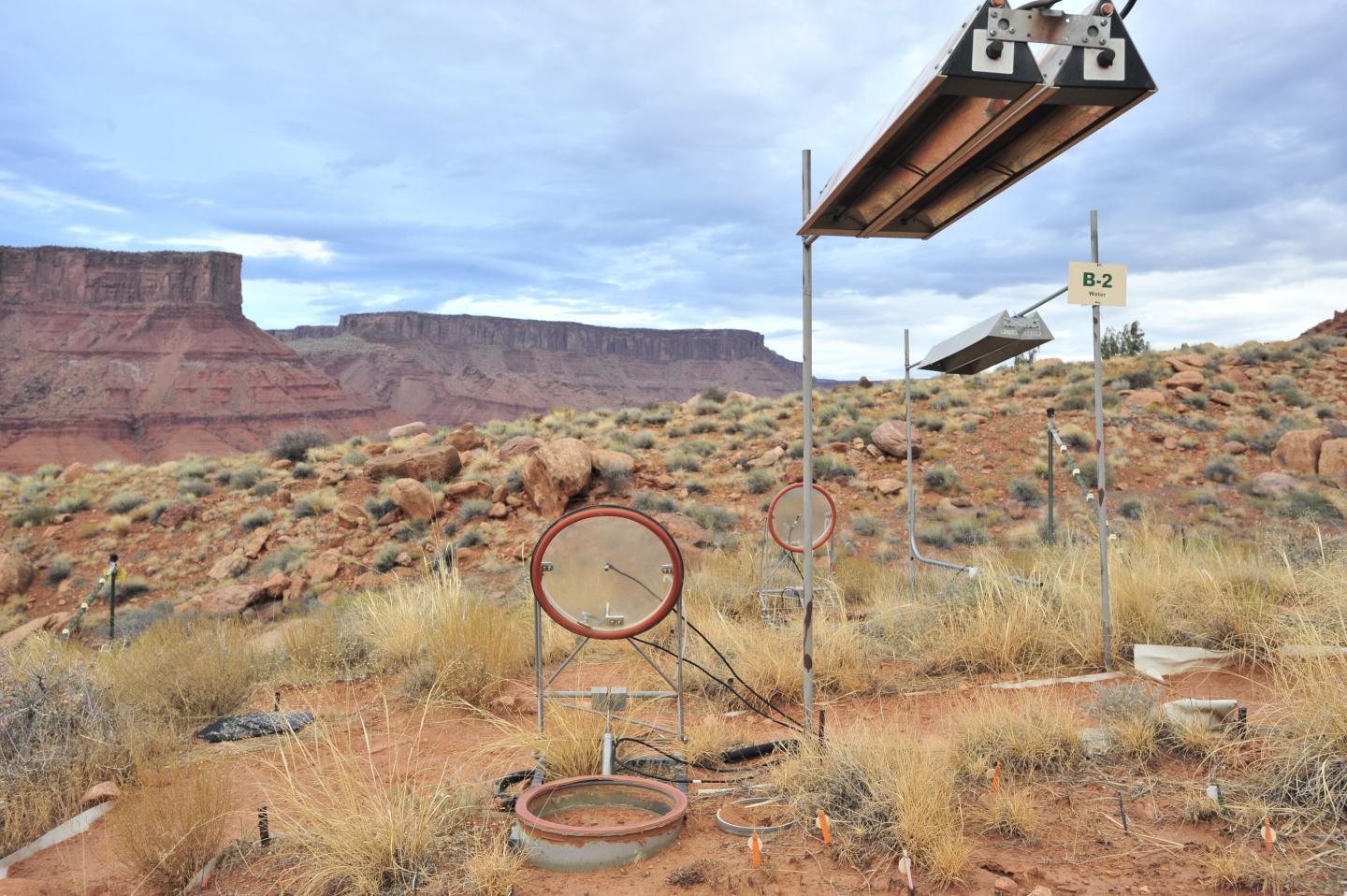
IMAGE

Credit: Jennifer LaVista, USGS Public domain

Arid and semiarid ecosystems are expected to experience significant changes in temperature and precipitation patterns, which may affect soil organisms in ways that cause surfaces to become lighter in color and thus reflect more sunlight, according to a new U.S. Geological Survey study.

This change will bounce more energy back into the atmosphere, which can alter global climate.

Drylands make up more than 40 percent of the earth's land surface. The living skin of the desert, called biological soil crusts or biocrusts, is a community of mosses, lichens and/or cyanobacteria that is critical to human and ecosystem health and climate in the Southwest and other dryland areas.

"The discovery that climate change impacts on biocrusts could feedback to future climate is a critical factor that hasn't been considered in the past," said Austin Rutherford, lead author of the new USGS study. "This information is an important step in understanding climate, and may be helpful in developing future global climate models."

USGS scientists created outdoor testing plots located on the Colorado Plateau, where large squares of biocrusts were exposed to different warming and precipitation factors over time. Researchers not only looked at how the biocrusts responded, but also measured the amount of energy that the different biocrust communities reflected back into the atmosphere relative to how much energy came in from the sun. This effect is known as albedo.

Warming and watering treatments had large impacts on biocrust communities, transforming them from the dark to light-colored communities, and causing energy that was previously absorbed by the dark surfaces to reflect back into the atmosphere. These factors led to large increases in albedo and may represent a previously unidentified effect on future climate by slowing how fast the earth warms.

The replacement of biocrust mosses and lichens with light-colored cyanobacteria may also result in increased soil erosion, decreased soil fertility and decreased removal of the greenhouse gas carbon dioxide from the air.

Biocrusts provide soil stability and prevent erosion, and could help prevent the large dust storms that move through big southwestern cities such as Phoenix. Dust storms are a human health issue, as airborne particles can cause lung cancer, asthma and other respiratory problems.

Many human activities can be unintentionally harmful to biological crusts. The biocrusts are no match for the compressional stress caused by footprints of livestock or people or the tracks from vehicles.

"Our study shows that effects of human activity may not only alter soil stability and fertility, but also the way energy is exchanged between the planet and its atmosphere," Rutherford said.

###

For more information on biocrusts, please visit the USGS Canyonlands Research Station soil crust website.

Media Contact

Jennifer LaVista
[email protected]
720-480-7875
@USGS

http://www.usgs.gov

Share12Tweet8Share2ShareShareShare2

Related Posts

Uncovering C. elegans Immunity via Genetic Screens — Biology

Uncovering C. elegans Immunity via Genetic Screens

May 16, 2026
Single mother must adapt swiftly — the survival of her colony depends on it — Biology

Single mother must adapt swiftly — the survival of her colony depends on it

May 15, 2026

Why Are Nearly Everyone Right-Handed? It Might Be Linked to How We Learned to Walk

May 15, 2026

Excessive Neuronal Activity Initiates Severe Autoimmune Brain Disorder

May 15, 2026
Please login to join discussion

POPULAR NEWS

  • Research Indicates Potential Connection Between Prenatal Medication Exposure and Elevated Autism Risk

    844 shares
    Share 338 Tweet 211
  • New Study Reveals Plants Can Detect the Sound of Rain

    730 shares
    Share 291 Tweet 182
  • Salmonella Haem Blocks Macrophages, Boosts Infection

    62 shares
    Share 25 Tweet 16
  • Breastmilk Balances E. coli and Beneficial Bacteria in Infant Gut Microbiomes

    58 shares
    Share 23 Tweet 15

About

We bring you the latest biotechnology news from best research centers and universities around the world. Check our website.

Follow us

Recent News

New Blood Test Detects Tumor DNA to Guide Treatment in Advanced Cancer Cases

Transitional Care Boosts Heart Failure Outcomes in Elders

Low-Power Enhanced I2C Controller: RTL to GDSII

Subscribe to Blog via Email

Enter your email address to subscribe to this blog and receive notifications of new posts by email.

Join 82 other subscribers
  • Contact Us

Bioengineer.org © Copyright 2023 All Rights Reserved.

Welcome Back!

Login to your account below

Forgotten Password?

Retrieve your password

Please enter your username or email address to reset your password.

Log In
No Result
View All Result
  • Homepages
    • Home Page 1
    • Home Page 2
  • News
  • National
  • Business
  • Health
  • Lifestyle
  • Science

Bioengineer.org © Copyright 2023 All Rights Reserved.