• HOME
  • NEWS
  • EXPLORE
    • CAREER
      • Companies
      • Jobs
    • EVENTS
    • iGEM
      • News
      • Team
    • PHOTOS
    • VIDEO
    • WIKI
  • BLOG
  • COMMUNITY
    • FACEBOOK
    • INSTAGRAM
    • TWITTER
Thursday, November 26, 2026
BIOENGINEER.ORG
No Result
View All Result
  • Login
  • HOME
  • NEWS
  • EXPLORE
    • CAREER
      • Companies
      • Jobs
        • Lecturer
        • PhD Studentship
        • Postdoc
        • Research Assistant
    • EVENTS
    • iGEM
      • News
      • Team
    • PHOTOS
    • VIDEO
    • WIKI
  • BLOG
  • COMMUNITY
    • FACEBOOK
    • INSTAGRAM
    • TWITTER
No Result
View All Result
Bioengineer.org
No Result
View All Result
Home NEWS Science News Technology

Light and Redox Responsive Nanoparticles Trigger Controlled Anticancer Drug Release

by
November 26, 2026
in Technology
Reading Time: 2 mins read
0
Light and Redox Responsive Nanoparticles Trigger Controlled Anticancer Drug Release

Light and Redox Responsive Nanoparticles Trigger Controlled Anticancer Drug Release

Share on FacebookShare on TwitterShare on LinkedinShare on RedditShare on Telegram

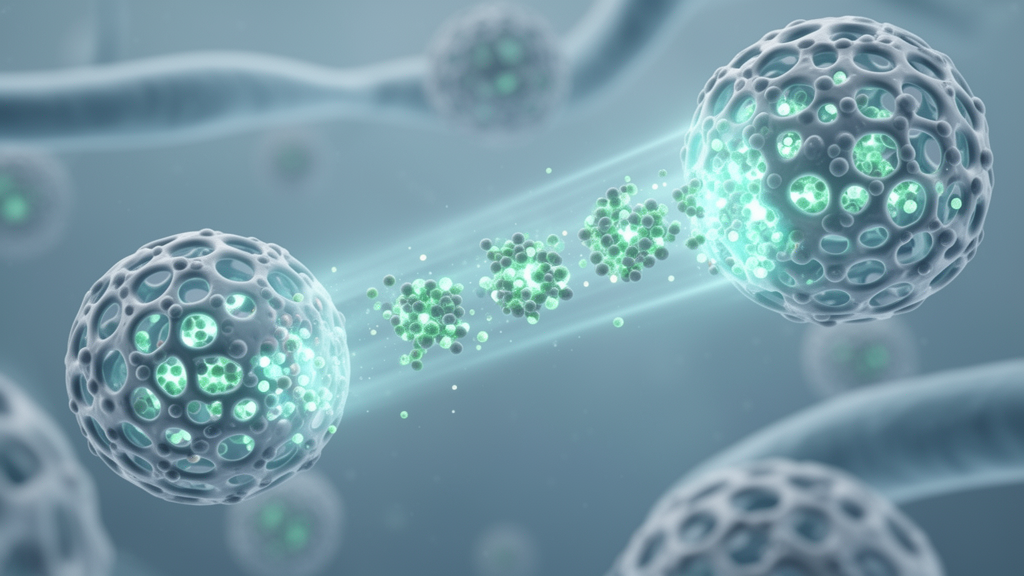
Researchers have developed a composite nanoparticle delivery platform designed to achieve controlled release of anticancer therapeutics by responding to both light and redox stimuli. In designing responsive drug carriers for controlled release, achieving a balance between low toxicity and high release efficiency is essential. The platform couples an upconversion nanoparticle core capable of near-infrared excitation with an organosilica shell engineered for responsive drug deployment.

The delivery system relies on core upconversion nanoparticles that absorb 808-nanometer near-infrared light and convert it into emitted ultraviolet and visible wavelengths. Using a sol–gel process, the investigators coated each core uniformly with a mesoporous organosilica shell embedded with disulfide bonds.

To introduce optical responsiveness, the researchers grafted a photoresponsive azobenzene derivative onto the exterior surface of the nanocarriers. Because this grafted azobenzene derivative responds to both ultraviolet and visible light, the internal light emission from the core upon near-infrared excitation directly triggers conformational rearrangements in the shell-bound molecules.

In laboratory testing under neutral conditions at pH 7.0, the nanocarriers demonstrated a loading capacity of 12.2 weight percent for the anticancer drug doxorubicin hydrochloride. Minimal drug leakage was observed under neutral conditions.

Controlled breakdown of the delivery vehicles in response to redox conditions was systematically quantified using a molybdenum blue assay, tracking nanocarrier degradation induced by glutathione. When exposed to 808-nanometer near-infrared irradiation, conformational changes in the grafted photoresponsive moiety effectively initiated release of the encapsulated doxorubicin, while the highest overall drug release occurred under combined stimulation.

To quantitatively evaluate release mechanisms across varying conditions, the investigators modeled diffusion coefficients using the Baker–Lonsdale equation. In vitro cell assays subsequently verified that combining near-infrared light exposure with an acidic environment and elevated glutathione levels stimulated controlled doxorubicin release via endocytic cellular pathways, effectively eliminating tumor cells in culture.

Subject of Research: Dual-responsive upconversion organosilica nanoparticles for controlled anticancer drug delivery

Article Title: Preparation and controlled release of 808-nm excited upconversion/organic porous silicon composite nanoparticles

Article References: Wang, X., Zhao, N., Liao, Y., Tang, C.-Y., & Law, W.-C. (2026). Preparation and controlled release of 808-nm excited upconversion/organic porous silicon composite nanoparticles. Journal of Nanoparticle Research, 28(12), Article 315. https://doi.org/10.1007/s11051-026-06820-w

Image Credits: AI Generated

DOI: 10.1007/s11051-026-06820-w

Keywords: upconversion nanoparticles, controlled drug release, near-infrared light, organosilica nanocarriers, azobenzene derivatives, disulfide bonds, glutathione degradation, doxorubicin hydrochloride, photoresponsive nanomaterials, redox-responsive delivery, mesoporous organosilica, cancer nanomedicine, sol-gel process, molybdenum blue assay, Baker-Lonsdale model, in vitro assays

News Source: Denise Maddox. (November 26, 2026). Light and Redox Responsive Nanoparticles Trigger Controlled Anticancer Drug Release. Scienmag.


Tags: azobenzene derivativesBaker-Lonsdale modelCancer Nanomedicinecontrolled drug releasedisulfide bondsdoxorubicin hydrochlorideglutathione degradationin vitro assaysmesoporous organosilicamolybdenum blue assaynear-infrared lightorganosilica nanocarriersphotoresponsive nanomaterialsredox-responsive deliverysol-gel processupconversion nanoparticles
Share12Tweet7Share2ShareShareShare1

Related Posts

Large Language Model Review Sentiment Improves Amazon Product Sales Forecasting Accuracy

Large Language Model Review Sentiment Improves Amazon Product Sales Forecasting Accuracy

November 26, 2026
Optimized Neural Network Detects Oral Cancer With High Accuracy in Image Tests

Optimized Neural Network Detects Oral Cancer With High Accuracy in Image Tests

November 26, 2026

Survey Finds Physicians’ AI Drug Interaction Expectations Correlate Weakly With Knowledge

November 26, 2026

Injectable Recombinant Keratin Microspheres Show Preclinical Promise in Osteoarthritis Cartilage Repair

November 26, 2026

POPULAR NEWS

  • Large Language Model Review Sentiment Improves Amazon Product Sales Forecasting Accuracy

    Large Language Model Review Sentiment Improves Amazon Product Sales Forecasting Accuracy

    29 shares
    Share 12 Tweet 7
  • Pluripotent Stem Cell Exosomes Enter Clinical Trials Challenging Mesenchymal Benchmarks

    29 shares
    Share 12 Tweet 7
  • Webinar Attendees in Ukraine Report High Confidence Applying Pediatric Mental Health Training

    29 shares
    Share 12 Tweet 7
  • Two-Probe Digital PCR Identifies Authentic Arnebia euchroma and Counterfeit Herbal Preparations

    29 shares
    Share 12 Tweet 7

About

We bring you the latest biotechnology news from best research centers and universities around the world. Check our website.

Follow us

Recent News

Large Language Model Review Sentiment Improves Amazon Product Sales Forecasting Accuracy

Pluripotent Stem Cell Exosomes Enter Clinical Trials Challenging Mesenchymal Benchmarks

Webinar Attendees in Ukraine Report High Confidence Applying Pediatric Mental Health Training

Subscribe to Blog via Email

Enter your email address to subscribe to this blog and receive notifications of new posts by email.

Join 89 other subscribers
  • Contact Us

Bioengineer.org © Copyright 2023 All Rights Reserved.

Welcome Back!

Login to your account below

Forgotten Password?

Retrieve your password

Please enter your username or email address to reset your password.

Log In
No Result
View All Result
  • Homepages
    • Home Page 1
    • Home Page 2
  • News
  • National
  • Business
  • Health
  • Lifestyle
  • Science

Bioengineer.org © Copyright 2023 All Rights Reserved.