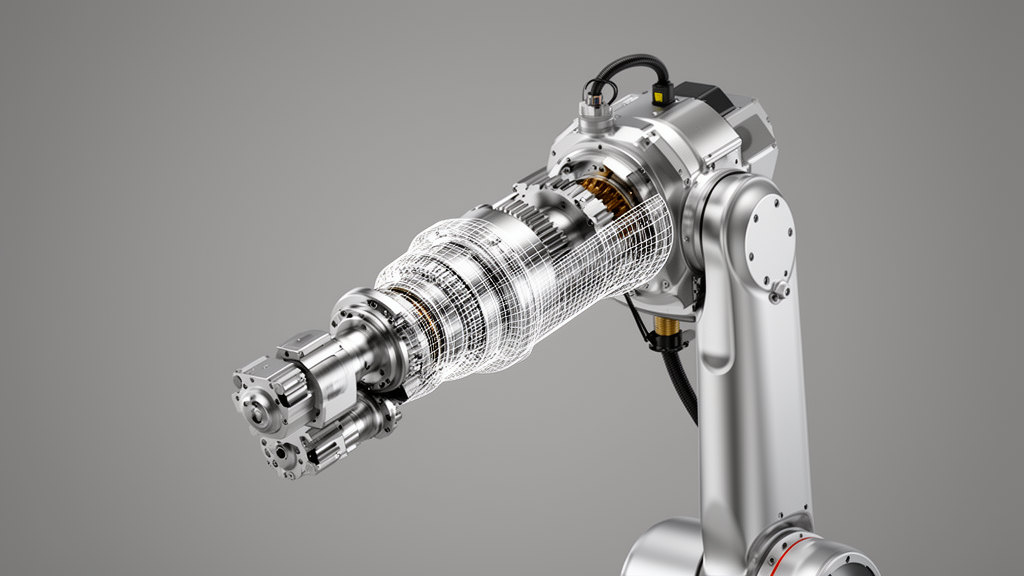
A comprehensive systematic review examining industrial mechatronics reveals that standardized simulation models face an unresolved execution gap when transitioning from desktop design environments to deterministic embedded hardware. Published in Archives of Computational Methods in Engineering, the investigation evaluates the Functional Mock-up Interface across actuator-centric control workflows, establishing that tool interoperability achieved during model exchange does not automatically translate into deterministic execution on real-time targets. Industrial actuators have transformed from passive mechanical hardware into software-defined electromechanical subsystems that tightly integrate power electronics, physical dynamics, and microsecond-sensitive digital control algorithms. While engineering teams routinely construct high-fidelity simulation artifacts using specialized tools, deploying these identical models onto resource-bounded microcontrollers, electronic control units, and programmable logic controllers introduces severe numerical, timing, and schedulability mismatches. The researchers highlight that this architectural division prevents validated simulation assets from running reliably inside physical control loops without structural redesign, threatening closed-loop stability margins, tracking precision, and functional safety compliance.
The authors formally define this systemic engineering bottleneck as the embedded execution gap, representing the persistent structural mismatch between validated high-fidelity simulation models and their deterministic, resource-bounded, and certifiable execution on industrial embedded platforms. In desktop simulation workflows, solvers operate with abundant memory, dynamic step adjustments, flexible floating-point precision, and unconstrained execution durations. In stark contrast, embedded industrial platforms impose strict physical boundaries, including static memory allocation rules, limited processor throughput, hard sampling deadlines, and rigorous real-time operating system task models. When engineers transfer validated plant models into embedded contexts, differences in numerical solver availability, scheduling assumptions, and communication step policies alter the actual closed-loop response. For industrial actuators operating at high frequencies across hundreds of hertz or kilohertz rates, minor timing variations such as task execution jitter, phase lag introduced by solvers, or delayed event detection can rapidly destabilize motion profiles, cause constraint violations, and compromise critical safety envelopes.
Actuator-specific modeling demands exceptional physical fidelity that directly aggravates computational complexity and numerical sensitivity within digital controllers. High-fidelity actuator representations must faithfully capture non-negligible physical nonlinearities, including dead zones, backlash, saturation, and friction phenomena, which frequently trigger self-sustained limit cycles and tracking degradation when left uncompensated. Furthermore, compliant mechanisms found in series elastic actuators and variable stiffness actuators introduce pronounced mechanical resonances, creating distinct multi-scale dynamics that make mathematical differential equations numerically stiff. Multi-domain electrical and thermal effects, such as pulse-width modulation losses, current limitations, and temperature coupling, introduce multi-rate dynamics requiring specialized partition handling. The review emphasizes that actuator fidelity represents an inseparable computational vector spanning physical nonlinearities, numerical stiffness, event density, and timing semantics. In simulation, abrupt contact events and friction mode switches generate discontinuous right-hand equations, leading to frequent state re-evaluations and substantial computational overhead that can exceed embedded execution budgets during fast sampling intervals.
To investigate how standardized interfaces navigate these severe execution constraints, the researchers executed a structured literature review employing an adapted PRISMA-lite methodology tailored for engineering disciplines. The selection protocol systematically interrogated major technical databases, including Web of Science, Scopus, IEEE Xplore, SpringerLink, MDPI, and Google Scholar, identifying records published from 2015 to early 2026. This timeline captured the operational maturity of version 2.0 alongside emerging developments surrounding version 3.0 and embedded initiatives. The researchers maintained a rigorous procedural boundary separating normative specification standards, implementer guides, and industrial tool documentation from the peer-reviewed empirical corpus. Applying strict inclusion criteria focused exclusively on actuator-centric dynamics, real-time stepping semantics, and embedded platform implementations, the authors screened retrieved records through multi-stage title, abstract, and full-text evaluations, culminating in a focused peer-reviewed research synthesis corpus comprising thirty-six methodologically qualified studies evaluated across standardized scoring criteria.
A critical contribution of the review centers on a rigorous empirical audit of the thirty-six included peer-reviewed papers, exposing a stark deficiency in complete real-time quantitative validation. Of the analyzed studies, twenty-one focus primarily on desktop simulation environments, domain-specific co-simulation toolchains, or exploratory prototype integrations, while seven investigations represent conceptual architectures, taxonomies, or formal specification surveys. Only eight studies provide direct evidence involving embedded microcontrollers, hardware-in-the-loop benches, real-time operating systems, or code-generation pipelines. Most notably, exactly zero studies within the entire peer-reviewed corpus report the complete actuator-relevant metric tuple combining timing jitter, worst-case execution time, and memory footprint under realistic embedded workloads. Furthermore, while fifteen papers cite compatibility with recent specification updates, only two investigate timing semantics conceptually, and zero empirical studies test version 3.0 clocks or Scheduled Execution on physical embedded actuators, demonstrating that practical verification remains largely unaddressed in published engineering literature.
Analyzing the widely established version 2.0 standard, the authors clarify the computational mechanisms governing Model Exchange and Co-Simulation paradigms in industrial automation. In Model Exchange, the imported model delivers differential-algebraic equations while delegating numerical integration entirely to the host environment, granting custom solver flexibility but leaving execution determinism dependent on external solver selection. In Co-Simulation, the component encapsulates its own internal numerical solver, facilitating multi-domain tool composition and intellectual property protection across supply tiers. However, Co-Simulation relies on an external master algorithm to synchronize data exchange, handle discontinuities, and extrapolate inputs across discrete communication intervals. In stiff, event-dense actuator systems, naive master orchestrations frequently generate numerical drift, step synchronization errors, and coupling-induced oscillations that do not occur in monolithic integration. Crucially, version 2.0 provides no native semantic interfaces for real-time task priority, deterministic task activation, or bounded memory allocations, treating execution behavior as an unstandardized host implementation responsibility.
To overcome these architectural limitations, the standard introduced version 3.0, incorporating dedicated clocks, clocked variables, and an explicit Scheduled Execution interface designed to align simulation models with embedded real-time task models. Clocks provide formalized semantic representations of periodic sampling intervals, aperiodic interrupts, and event-driven triggers within the functional unit itself. The Scheduled Execution interface partitions internal model computations into distinct calculation blocks whose execution timing is delegated to an external real-time operating system scheduler or cyclic executive. This structure allows software architects to map computational tasks directly to periodic control threads or sporadic handlers. Nevertheless, the review cautions that these specification enhancements act strictly as semantic hooks rather than standalone real-time guarantees. Scheduled Execution does not inherently establish worst-case execution time bounds, enforce bounded dynamic memory constraints, or ensure schedulability, requiring developers to implement enforceable platform contracts to prevent task deadline misses during realistic industrial operation.
The review identifies and synthesizes two distinct engineering trajectories that have emerged to bridge this gap, contrasting runtime-constrained component execution against analyzable code-generation pipelines. In the first trajectory, lightweight software wrappers, such as the micro-controller framework ufmu utilizing MicroPython on ESP32 microcontrollers, execute compiled model units directly within firmware for rapid prototyping, diagnostic tracking, and soft real-time supervision. However, these runtime engines remain restricted to non-stiff dynamics with minimal event density due to execution-time variability and memory overhead. In the second trajectory, deployment-oriented standards like Embedded Functional Mock-up Interface utilize an intermediate language called GALEC to generate deterministic, analyzable source code directly from physical models. Developed specifically for safety-critical microcontrollers and electronic control units conforming to ISO 26262 and IEC 61508, this code-generation approach eliminates runtime interpretation, enforces static memory layouts, facilitates worst-case execution time analysis, and enables direct integration into standard AUTOSAR software components.
To provide industrial practitioners and software architects with concrete evaluation criteria, the authors synthesize operational readiness levels alongside four functional deployment archetypes. Toolchain maturity is structured across four progressive tiers: Level R0 represents basic model exchange for desktop engineering; Level R1 provides integration-ready stepping controls and solver disclosures; Level R2 introduces timing-aware clock semantics and task partitioning; and Level R3 delivers qualification-ready code generation with bounded resource usage for safety-critical systems. Similarly, embedded utilization is categorized into distinct archetypes ranging from on-device reference oracles for hardware-in-the-loop validation (A1) and soft real-time diagnostic observers (A2), to edge-based controller-in-the-loop nodes (A3) and fully compiled, certifiable closed-loop embedded control functions (A4). This structured framing clarifies that basic model packaging compatibility cannot justify claims of hard real-time execution feasibility unless the underlying engineering pipeline satisfies the specific execution, memory, and timing contracts required by the target operating tier.
Addressing the technical barriers identified across the ecosystem, the review outlines an actionable research agenda emphasizing standardized execution contracts, systematic model reduction, and rigorous benchmark suites. Moving forward, engineering workflows must require explicit reporting checklists documenting sampling periods, maximum allowable jitter, worst-case execution time envelopes, and high-water memory allocations under heavy computational interference. Furthermore, robust multi-fidelity modeling frameworks must emerge, allowing high-order nonlinear models used in offline verification to be systematically transformed into reduced-order variants that preserve passivity, energy bounds, and thermal limits on constrained microcontrollers. The authors conclude that while modern specification updates establish the necessary semantic vocabulary for real-time coordination, establishing dependable industrial actuator control requires closing the empirical evidence deficit through open-source benchmark suites, standardized schedulability profiles, and toolchain qualification protocols that rigorously prove execution determinism in production environments.
Subject of Research: Systematic review of the Functional Mock-up Interface for embedded industrial actuator control
Article Title: Bridging the Embedded Execution Gap: A Review of the Functional Mock-up Interface for Actuator-Centric Execution Workflows in Industrial Embedded Systems
Article References: Rojas-Ordoñez, S., Segura, M., Yarza, I., & Zulueta, E. (2026). Bridging the Embedded Execution Gap: A Review of the Functional Mock-up Interface for Actuator-Centric Execution Workflows in Industrial Embedded Systems. Archives of Computational Methods in Engineering, 33(10), 14777-14820. https://doi.org/10.1007/s11831-026-10715-3
Image Credits: AI Generated
DOI: 10.1007/s11831-026-10715-3
Keywords: Functional Mock-up Interface, Embedded execution gap, Industrial actuators, Real-time control, Scheduled Execution, Embedded FMI, GALEC, Worst-Case Execution Time, Timing jitter, Bounded memory, Co-simulation master algorithms, PRISMA methodology, Actuator compliance, Hardware-in-the-loop, AUTOSAR integration, Toolchain readiness, Software determinism
News Source: Denise Maddox. (November 26, 2026). Review Identifies Critical Execution Gaps in Embedded Industrial Actuator Simulation Standards. Scienmag.