A systematic experimental study has demonstrated that the specific choice of electrical pulse waveform and electrode polarity orientation fundamentally dictates the therapeutic efficacy of electroacupuncture in repairing injured peripheral nerves. Investigating adult male mice subjected to sciatic nerve crush trauma, researchers discovered that delivering a bidirectional asymmetric sparse-dense wave produced the most pronounced overall functional recovery, outperforming continuous and intermittent wave modes across sensory, motor, and neuroelectrophysiological metrics. The researchers also confirmed that positioning the electrode carrying higher positive-pulse energy at the proximal acupoint significantly accelerated axonal repair and glial cell activation compared to reversing the electrical poles. These observations directly address a longstanding clinical dilemma in integrative medicine, where commercial electroacupuncture stimulators routinely generate diverse alternating current pulses without standardized operational guidelines or visual confirmation of their electrical trajectories. By using digital oscilloscope technology to map pulse morphology in real time, the study revealed that positive phases output steep rectangular waves that deliver robust tissue stimulation, whereas negative phases generate exponentially decaying spike waves that closely mirror endogenous neurophysiological action potentials, providing a measurable biophysical basis for optimizing nerve rehabilitation protocols.
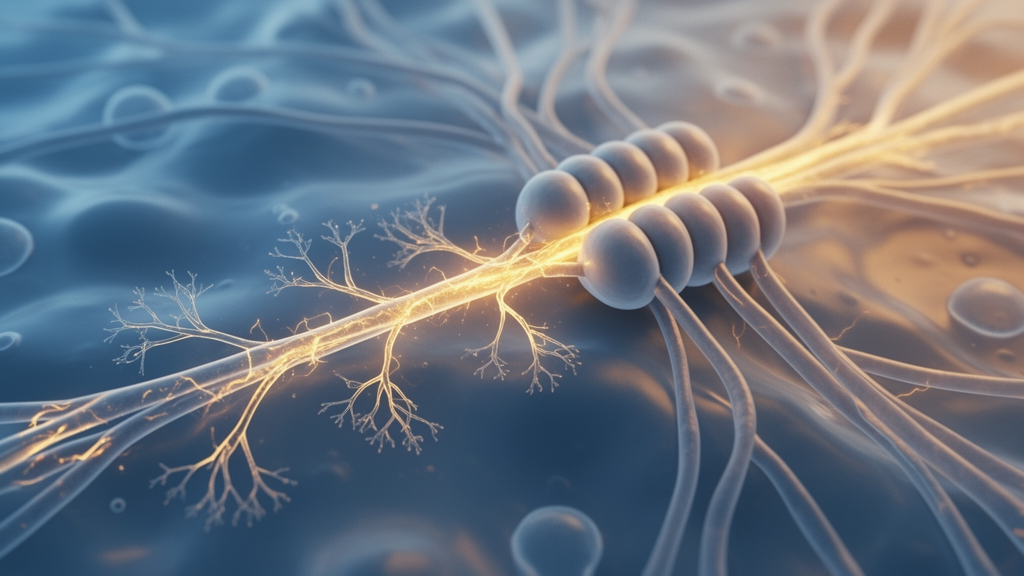
Peripheral nerve injuries represent a widespread and debilitating clinical challenge that frequently leaves patients with enduring sensory deficits, motor impairment, and persistent chronic disability. While the peripheral nervous system retains an innate capacity for self-repair unlike the central nervous system, unassisted recovery is typically incomplete and vulnerable to secondary complications. Following mechanical trauma such as a nerve crush, the isolated distal segment undergoes Wallerian degeneration, a complex pathological cascade marked by extensive axonal breakdown, structural disintegration of the protective myelin sheath, and neurilemmal hyperplasia. In this degenerative microenvironment, Schwann cells serve as the primary cellular orchestrators of endogenous repair. Upon receiving traumatic stress signals, differentiated Schwann cells rapidly dedifferentiate, re-enter the active cell cycle to proliferate, and align longitudinally to form organized cellular tracks known as Büngner bands. These living cellular scaffolds clear necrotic axonal debris through phagocytic cooperation and secrete supportive biochemical cues that guide regrowing axonal sprouts toward their original muscular and cutaneous targets, making the modulation of Schwann cell kinetics a paramount goal for non-pharmacological interventions like electroacupuncture.
To investigate whether specific electrical parameters influence these biological reparative processes, the investigative team established a standardized sciatic nerve crush model in adult male C57BL/6 mice weighing approximately twenty grams. Isoflurane anesthesia was induced at two and a half percent and maintained at two percent while the left sciatic nerve was surgically exposed through a lateral midthigh incision. A three-millimeter segment of the exposed nerve was crushed twice with forceps for fifteen seconds per compression, while the uncrushed contralateral nerve served as an internal control. Starting on the second postoperative day, the animals received daily ten-minute sessions of electroacupuncture six times per week using sterile stainless steel needles inserted into two recognized murine hindlimb acupoints: Huantiao, designated as Gallbladder 30, and Yanglingquan, designated as Gallbladder 34. Using an SDZ-V clinical apparatus delivering a constant one-milliampere current, the mice were allocated to receive either sparse-dense waveforms alternating between two and ten hertz, continuous waveforms fixed at two hertz, or intermittent waveforms oscillating between two and zero hertz. A sham control group received identical electrical pulses delivered to a non-meridian, non-nerve control locus on the tail.
Behavioral assessments demonstrated that the distinct waveforms exerted divergent temporal effects on sensory restoration, as quantified by thermal quantitative sensory testing. Using a specialized radiant heat apparatus to measure hindpaw withdrawal latency from an infrared thermal emitter, researchers tracked the reversal of injury-induced abnormal pain sensitivity over a three-week therapeutic window. At the two-week mark, mice treated with either sparse-dense or continuous waveforms exhibited statistically significant improvements in paw withdrawal latencies compared to sham-treated control animals. In sharp contrast, the intermittent wave group failed to show significant sensory improvement over controls at this intermediate evaluation point, with sparse-dense and continuous treatments demonstrating clear statistical superiority over intermittent pulses. By the conclusion of the third post-injury week, all three active waveform modalities achieved meaningful therapeutic gains in thermal sensory thresholds relative to sham stimulation. While sparse-dense and continuous wave protocols maintained slightly superior numerical values over intermittent waves at three weeks, the performance gaps between the active electrical modalities narrowed, indicating that rhythmic frequency modulation accelerates the early timeline of sensory recovery.
Motor functional recovery was rigorously tracked at three weeks post-injury using automated CatWalk gait analysis systems and invasive neuroelectrophysiological measurements. Dynamically recording footprint footprints across an illuminated walkway equipped with infrared pressure sensing modules, researchers extracted total toe spread, intermediate toe spread, and print length parameters to calculate the Sciatic Function Index, a standard metric scaling from zero for uninjured gait to negative one hundred for complete hindlimb paralysis. Quantitative gait scoring revealed that mice treated with sparse-dense and continuous waveforms attained significantly greater Sciatic Function Index improvements than animals receiving intermittent stimulation. Electrophysiological testing further established the underlying neurological basis of this locomotor restoration: applying five-milliampere testing stimuli to both proximal and distal nerve stumps elicited compound muscle action potentials from the gastrocnemius muscle. Electroacupuncture substantially elevated peak compound muscle action potential amplitudes compared to non-acupoint sham controls, with the sparse-dense wave regimen eliciting the highest electrical amplitudes, thereby underscoring its distinct capacity to re-establish rapid, synchronized axonal electrical signal transmission across previously traumatized peripheral nerve fibers.
The therapeutic divergent patterns extended beyond neurological conduction to microvascular perfusion within the injured nerve trunk and structural protection of downstream musculature. Non-invasive laser Doppler perfusion imaging conducted one week after crush surgery revealed that all three electroacupuncture waveforms significantly augmented localized blood perfusion within the injured sciatic nerve compared to untreated injury models. However, intermittent waves and sparse-dense waves demonstrated significantly more pronounced microvascular enhancements than continuous waveforms, with intermittent stimulation proving particularly potent at boosting regional microcirculatory volume. Histopathological evaluation of the target gastrocnemius muscle using hematoxylin and eosin staining illustrated that severe nerve crush trauma caused substantial muscle fiber atrophy in the unmanaged model cohort, as reflected by a marked reduction in mean muscle cross-sectional area. Daily intervention with sparse-dense and continuous waveforms significantly prevented this denervation-induced wasting, preserving muscle fiber cross-sectional area, with sparse-dense stimulation outperforming continuous current. Conversely, intermittent wave stimulation failed to produce a statistically significant preservation of gastrocnemius fiber cross-sectional area over the injured model controls, underscoring divergent downstream physiological responses.
Molecular profiling of local tissues and systemic circulation clarified how varying electrical regimens modulate neuroinflammation and neurotrophic factor transcription. Real-time quantitative polymerase chain reaction and enzyme-linked immunosorbent assays revealed an intriguing biological dichotomy: at the local needle insertion sites within the acupoints, electrical stimulation elevated expression of interleukin-6 and interleukin-1 beta, with intermittent waveforms triggering the strongest local pro-inflammatory cytokine accumulation, followed by continuous waves. In stark contrast, within the traumatized sciatic nerve itself, all three electroacupuncture waveforms significantly suppressed the expression of interleukin-6, interleukin-1 beta, and tumor necrosis factor-alpha. The sparse-dense wave demonstrated the most potent anti-inflammatory action, a finding confirmed in systemic circulation where serum enzyme-linked immunosorbent assays verified the greatest downregulation of circulating tumor necrosis factor-alpha and interleukin-6 in sparse-dense treated animals. Concurrently, the researchers discovered that electroacupuncture substantially upregulated critical neurotrophic repair molecules—nerve growth factor, brain-derived neurotrophic factor, and insulin-like growth factor-1—in the injured nerve tissue, with sparse-dense stimulation driving the most robust transcriptional increases across all three regenerative proteins.
Complementing in vivo rodent observations, an extensive series of in vitro assays on cultured RSC96 Schwann cells delineated the cellular mechanics triggered by waveform-specific electrical stimulation. Monolayer cultures subjected to daily twenty-minute electrical sessions at ten millivolts and twenty hertz were evaluated for proliferative expansion and directional migration using five-ethynyl-two-deoxyuridine labeling and scratch wound healing assays. Both continuous wave and sparse-dense wave exposures significantly elevated Schwann cell proliferation rates compared to unstimulated controls, with continuous stimulation inducing the most pronounced proliferative surge. In the scratch-induced migration models, all active electrical waveforms accelerated wound margin closure relative to control cultures. Most notably, continuous wave stimulation produced the highest migratory velocity, followed sequentially by sparse-dense and intermittent waves. The researchers further observed a pronounced directional bias during wound healing: Schwann cell migratory coverage was significantly greater along the lateral plane oriented parallel to the electric field vector than in the vertical plane oriented perpendicular to current flow, corroborating that physical electric field alignment guides peripheral glial motility.
Because clinical electroacupuncture devices output bidirectional asymmetric waveforms with unequal charge distribution across positive and negative phases, the scientists systematically investigated whether reversing electrode polarity at the acupoints altered nerve regeneration outcomes. Focusing on the high-performing sparse-dense waveform, they designated the electrode delivering higher positive-pulse energy as positive and the paired electrode as negative. Comparing mice treated with the positive pole at Gallbladder 30 and the negative pole at Gallbladder 34 against the inverted polarity configuration revealed profound functional divergences. The proximal-anode arrangement consistently yielded superior thermal paw withdrawal latencies, a substantially milder deficit in the Sciatic Function Index, and significantly higher compound muscle action potential amplitudes at three weeks. Cellular histology corroborated these functional advantages: immunofluorescence staining for the Schwann cell marker S100 beta paired with proliferation labeling revealed that the proximal-anode configuration stimulated significantly greater Schwann cell proliferation and longer migration distances within the proximal nerve segment than the inverted orientation, while differences in the distal stump remained negligible.
The biological mechanisms underlying these polarity-dependent effects relate to cathodal galvanotaxis and intracellular calcium ion dynamics within migrating Schwann cells. Prior biophysical research demonstrates that Schwann cells naturally exhibit directed migration toward the negative cathode, a process mediated by receptor tyrosine kinase signaling, phosphoinositide 3-kinase activation, and mitogen-activated protein kinase pathways that orchestrate actin cytoskeletal remodeling. When the positive electrode is affixed to the proximal Gallbladder 30 site and the negative electrode to Gallbladder 34, a directed electric field is established across the injured nerve tract. Cations migrate toward the cathode, facilitating calcium entry through store-operated calcium channels situated on the anode-facing cellular membrane and exit along the cathode-facing border. This polarized transcellular calcium flux activates downstream signaling cascades, driving enhanced proliferation and directed motility toward the injury zone. While these experimental discoveries provide foundational biophysical parameters for standardizing clinical protocols, the authors emphasized several study constraints, including exclusive reliance on male C57BL/6 mice, electrical parameters tailored specifically to murine anatomy, and the technical inability to fully isolate pure polarity effects from vector orientation, necessitating expanded verification in large-animal models and prospective human trials.
Subject of Research: Electroacupuncture waveform and electrode polarity effects on peripheral nerve regeneration
Article Title: Differential regulatory effects of electroacupuncture waveforms and electrode polarity reversal on sciatic nerve repair
Article References: Liu, D., Wang, X., Zhang, J., Chen, Y., Wang, G., Chen, C., Wang, X., & Li, S. (2026). Differential regulatory effects of electroacupuncture waveforms and electrode polarity reversal on sciatic nerve repair. Integrative Medicine Research, 15(4), Article 101362. https://doi.org/10.1016/j.imr.2026.101362
Image Credits: AI Generated
DOI: 10.1016/j.imr.2026.101362
Keywords: Electroacupuncture, Sciatic Nerve Injury, Peripheral Nerve Regeneration, Waveform Analysis, Sparse-Dense Wave, Continuous Wave, Intermittent Wave, Electrode Polarity, Schwann Cells, Compound Muscle Action Potential, Sciatic Function Index, Laser Doppler Perfusion Imaging, Neurotrophic Factors, Neuroinflammation, Cathodal Galvanotaxis, Gastrocnemius Atrophy
News Source: Ophelia Keating. (November 26, 2026). Sparse-Dense Electroacupuncture Waveforms and Anodal Polarity Accelerate Sciatic Nerve Repair in Mice. Scienmag.