• HOME
  • NEWS
  • EXPLORE
    • CAREER
      • Companies
      • Jobs
    • EVENTS
    • iGEM
      • News
      • Team
    • PHOTOS
    • VIDEO
    • WIKI
  • BLOG
  • COMMUNITY
    • FACEBOOK
    • INSTAGRAM
    • TWITTER
Wednesday, April 1, 2026
BIOENGINEER.ORG
No Result
View All Result
  • Login
  • HOME
  • NEWS
  • EXPLORE
    • CAREER
      • Companies
      • Jobs
        • Lecturer
        • PhD Studentship
        • Postdoc
        • Research Assistant
    • EVENTS
    • iGEM
      • News
      • Team
    • PHOTOS
    • VIDEO
    • WIKI
  • BLOG
  • COMMUNITY
    • FACEBOOK
    • INSTAGRAM
    • TWITTER
  • HOME
  • NEWS
  • EXPLORE
    • CAREER
      • Companies
      • Jobs
        • Lecturer
        • PhD Studentship
        • Postdoc
        • Research Assistant
    • EVENTS
    • iGEM
      • News
      • Team
    • PHOTOS
    • VIDEO
    • WIKI
  • BLOG
  • COMMUNITY
    • FACEBOOK
    • INSTAGRAM
    • TWITTER
No Result
View All Result
Bioengineer.org
No Result
View All Result
Home NEWS Science News Biology

What happens when people are treated like pollution?

Bioengineer by Bioengineer
February 9, 2018
in Biology
Reading Time: 2 mins read
0
Share on FacebookShare on TwitterShare on LinkedinShare on RedditShare on Telegram
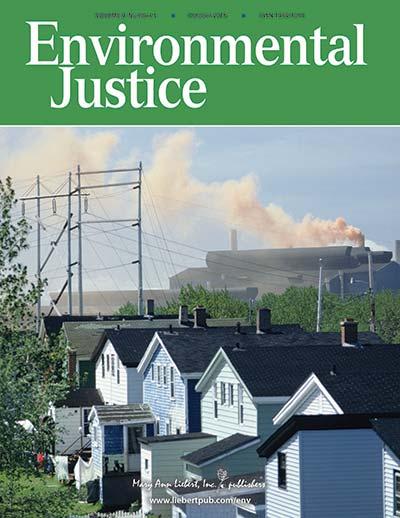
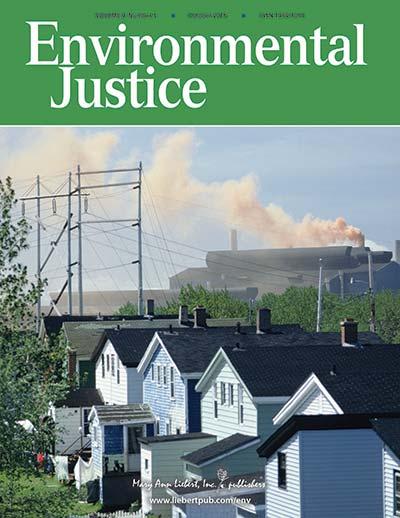
IMAGE

Credit: ©Mary Ann Liebert, Inc., publishers

New Rochelle, NY, October 25, 2016–In cities where homeless persons are viewed as an "environmental contaminant"–a form of pollution, efforts to purge the homeless from the area tend to push them to the fringes of the community and diminish their access to the urban environment and the resources it provides, according to an article published in Environmental Justice, a peer-reviewed journal published by Mary Ann Liebert, Inc. publishers. The article is available free on the Environmental Justice website until November 28, 2016.

In the article, "Treating People Like Pollution: Homelessness and Environmental Injustice," Eric Bonds, PhD and Leslie Martin, PhD, University of Mary Washington, Fredericksburg, VA, focus on the homeless population of Fredericksburg, Virginia, a small city and distant suburb of Washington, DC. The authors provide compelling information and arguments to demonstrate how both official and unofficial movements and exclusionary policies from within communities reduce the visible existence of homeless populations. This important, and too often under-recognized environmental injustice, marginalizes homeless persons, making them feel less safe and unable to access community resources that may provide shelter, meals, and other social services.

"This article is important in elucidating the human costs of environmental indifference to those who we perceive as "others" in our society," says Environmental Justice Editor-in-Chief Sylvia Hood Washington, PhD, MSE, MPH, and a LEED AP, and Sustainability Director, Environmental Health Research Associates, LLC. "The authors make a significant contribution to the field of environmental injustice by including the homeless in our understanding of who suffers from environmental disenfranchisement."

###

About the Journal

Environmental Justice is an authoritative peer-reviewed journal published bimonthly online with Open Access options and in print. The Journal encompasses study and debate on a broad range of environmental inequalities at the local, national, and global level tied to social, health, and economic equity. The Journal features studies that demonstrate the adverse effects on populations that are already at risk for health and environmental hazards, as well as the complicated issues inherent in remediation, funding, relocation of facilities that pose hazardous risk to health. Complete tables of contents and a sample issue may be viewed on the Environmental Justice website.

About the Publisher

Mary Ann Liebert, Inc., publishers is a privately held, fully integrated media company known for establishing authoritative peer-reviewed journals in many promising areas of science, medicine, biomedical research, and law, including Sustainability: The Journal of Record, Environmental Engineering Science, and Ecopsychology. Its biotechnology trade magazine, GEN (Genetic Engineering & Biotechnology News), was the first in its field and is today the industry's most widely read publication worldwide. A complete list of the firm's 80 journals, books, and newsmagazines is available on the Mary Ann Liebert, Inc., publishers website.

Media Contact

Jennifer Gatti
[email protected]
914-740-2100
@LiebertPub

http://www.liebertpub.com

Share12Tweet8Share2ShareShareShare2

Related Posts

Do Your Genes Influence How Lifestyle Choices Affect Aging?

Do Your Genes Influence How Lifestyle Choices Affect Aging?

April 1, 2026
Combining Single-Cell Multiomics Unlocks Precise Identification of Rare Cell Types and States

Combining Single-Cell Multiomics Unlocks Precise Identification of Rare Cell Types and States

March 31, 2026

Genetically Engineered Marmosets Pave the Way for Advancements in Human Deafness Research

March 31, 2026

How Great Hammerhead Sharks Outsmart Ocean Temperature Swings: Insights from FIU Researchers

March 31, 2026
Please login to join discussion

POPULAR NEWS

  • blank

    Revolutionary AI Model Enhances Precision in Detecting Food Contamination

    96 shares
    Share 38 Tweet 24
  • Imagine a Social Media Feed That Challenges Your Views Instead of Reinforcing Them

    1006 shares
    Share 398 Tweet 249
  • Promising Outcomes from First Clinical Trials of Gene Regulation in Epilepsy

    51 shares
    Share 20 Tweet 13
  • Popular Anti-Aging Compound Linked to Damage in Corpus Callosum, Study Finds

    43 shares
    Share 17 Tweet 11

About

We bring you the latest biotechnology news from best research centers and universities around the world. Check our website.

Follow us

Recent News

Cutting-Edge “Smart” Drugs Revolutionize Cancer Treatment

KIST-IAE Collaborative Team Surpasses Performance Limits in Lithium-Air Batteries with Innovative Two-Dimensional Catalyst

Brain Metastases Show Unique Macrophage Spatial Patterns

Subscribe to Blog via Email

Enter your email address to subscribe to this blog and receive notifications of new posts by email.

Join 78 other subscribers
  • Contact Us

Bioengineer.org © Copyright 2023 All Rights Reserved.

Welcome Back!

Login to your account below

Forgotten Password?

Retrieve your password

Please enter your username or email address to reset your password.

Log In
No Result
View All Result
  • Homepages
    • Home Page 1
    • Home Page 2
  • News
  • National
  • Business
  • Health
  • Lifestyle
  • Science

Bioengineer.org © Copyright 2023 All Rights Reserved.