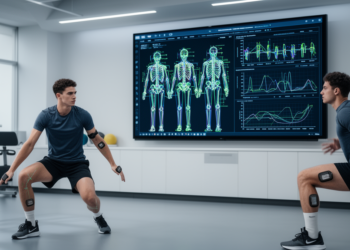
A systematic review evaluating hand anthropometry among interventional clinicians has demonstrated substantial structural mismatches between the physical measurements of practicing proceduralists and the normative datasets historically used to guide medical device manufacturing. Biomedical hand tools frequently exhibit documented design deficiencies, generating persistent ergonomic strain across operating suites. Because hand dimensions directly inform user interface engineering—where hand length governs interface diameter, hand breadth determines interface length, and digit proportions guide the placement of actuation switches—imprecise sizing data routinely yield oversized instruments with functional triggers placed beyond the functional reach of clinicians.
Biomedical engineering has historically operated under human factors benchmarks established in standards such as ANSI/AAMI HE75. However, the reference hand data compiled within HE75 are primarily derived from general civilian and military populations rather than clinical cohorts. In standard manufacturing practice, military datasets like the 1988 U.S. Army anthropometric survey known as ANSUR I have served as primary proxies under the presumption that healthy personnel measurements reflect broader adult populations. The review authors noted that this surrogate approach introduces fundamental sampling bias due to strict entry standards regarding physical stature and baseline strength. Compounding this issue, earlier investigations revealed marked grip strength discrepancies between female surgeons and the general figures cited in HE75, alongside cross-occupational studies showing that body dimensions systematically diverge across distinct career sectors, ethnicities, ages, and genders.
To investigate the empirical basis of hand sizing in clinical practice, the research team registered a formal protocol on PROSPERO in October 2025 and conducted comprehensive literature queries across PubMed, Scopus, Web of Science, and Google Scholar in accordance with PRISMA guidelines. The search strategy combined descriptors for hand and upper limb anthropometry with target designations for interventional operators, including cardiologists, vascular specialists, and minimally invasive surgeons, while deliberately excluding terms related to diabetic and wound conditions. Initial screening captured 205 unique records after deduplication. Following independent title and abstract screening by two reviewers, who achieved an interrater agreement of 85 percent and a Cohen’s kappa of 0.63, 67 candidate manuscripts underwent full-text appraisal. Ultimately, 14 published studies met all eligibility criteria for inclusion in the final qualitative and statistical analyses.
The fourteen included investigations were published between 2004 and 2025 and represented diverse operational settings, spanning cross-sectional designs, surveys, and observational case-control studies. Eleven of the investigations evaluated operators performing laparoscopic procedures across general surgery, gynaecological laparoscopy, and gastrointestinal endoscopy. The remaining three publications focused on gynaecologic oncologists, cardiothoracic surgeons, and urologists performing simulated ureteroscopy. A focus on work-related musculoskeletal disorders and physical strain was central to nine of the studies, while only four explicitly evaluated anthropometric data to directly optimize or prototype refined tool handles. Methodological evaluations conducted via the Critical Appraisal Skills Programme checklist classified the overall risk of bias across the literature base as moderate, largely driven by small sample sizes and widespread reliance on subjective self-reporting across eight of the papers.
Across the identified literature, investigators employed a varied assortment of measurement modalities to capture operator physical dimensions. Six studies recorded precise instrumentation methods, deploying tools such as three-dimensional surface scanners, vernier and digital callipers, flatbed two-dimensional scanners, calibrated photography processed in computation software, and manual rulers. Hand length represented the single most frequently quantified manual parameter, appearing across investigations from Du, González, and Kono. Across these cohorts, mean hand length varied widely, extending from a low of 169.5 millimetres among female proceduralists evaluated in Japan to a high of 190.7 millimetres in a mixed-gender cohort of laparoscopic clinicians assessed in China. Other measured parameters included hand circumference, hand breadth, palm length, maximum grip diameter, total hand span, and individual finger segment lengths from thumb to little finger.
When extracted clinical hand measurements were compared against the design figures published in HE75, notable descriptive discrepancies emerged across both sexes. Because precise sample sizes and variance metrics were omitted in several foundational source references cited by HE75, formal independent hypothesis testing could not be completed for that standard. Nevertheless, proportional comparisons revealed that HE75 listed larger values for female hand length and grip diameter, whereas female interventionalists presented larger measurements across all other captured parameters. In male comparisons, HE75 reported larger values for hand length, hand circumference, and grip diameter by small percentages, while male proceduralists exceeded HE75 values in digit lengths. Discrepancies in thumb length were exceptionally wide, with clinician cohorts showing thumb dimensions roughly 27 to 30 percent larger than the reference figures in HE75, likely reflecting differences in anatomical landmarking protocols across studies.
To assess the validity of using defense datasets as sizing proxies, the authors conducted two-tailed independent-samples t-tests with Welch-Satterthwaite degrees of freedom, comparing extracted proceduralist data against raw records from the 1,304 women and 1,003 men cataloged in the ANSUR I survey. Out of 26 direct statistical comparisons across hand dimensions and stature, 11 yielded statistically significant differences. Hand length for Japanese female surgeons was significantly smaller than the military reference group at a significance threshold below 0.001, though male hand lengths in that study matched the military average.
Overall body stature comparisons further highlighted extensive geographic and demographic variation between operating room clinicians and historical military samples. Japanese surgeons studied by Kono were significantly shorter than the U.S. military baseline for both men and women at the p < 0.001 level, reflecting expected population-level anthropometric traits. Conversely, American gynaecologists examined by Wong and Australian endoscopic surgeons assessed by Hislop displayed standing statures that significantly exceeded the ANSUR I military averages across multiple sex subgroups. Rather than indicating conflicting study data, these directional shifts illustrate that surgeon populations vary widely across international markets, undermining the utility of any single non-civilian reference standard for global device sizing.
Traditional biomedical product development frequently relies on a universal design framework intended to accommodate users falling between the fifth and ninety-fifth percentiles of a general population within a single rigid tool configuration. Multiple reviewed authors challenged this one-size-fits-all framework, observing that it disproportionately disadvantages female clinicians and operators of non-Caucasian heritage whose smaller hand dimensions cause severe handle-to-hand mismatch.
Significant heterogeneity in research protocols prevented the authors from pooling data into a quantitative meta-analysis. The included investigations measured divergent combinations of anatomical landmarks, used differing units, and frequently omitted variance metrics or segregated data tables by gender and age. To overcome these limitations in future research, the authors recommend that investigators strictly adhere to the standardized methodologies described in ISO 15535:2023 for anthropometric database assembly and ISO 7250-1 for basic landmark definitions. The authors emphasize that future publications on surgical ergonomics must consistently capture stature, hand length, and hand breadth as core baseline parameters, while providing comprehensive distributional breakdowns that allow subsequent aggregation into large-scale multi-center databases.
Several critical methodological constraints characterized the systematic review itself. Furthermore, conducting multiple simultaneous independent t-tests against ANSUR I created an inherent mathematical risk of false-positive type I statistical errors. The authors also acknowledged that while their investigative team combined expertise in design and human factors, the review did not incorporate direct clinical input from active proceduralists during synthesis. Research support was disclosed through Medtronic’s Enterprise Partnership Scheme for lead author Gráinne Tyrrell, with co-author Donna Curley maintaining industry employment at Medtronic.
Ultimately, the review emphasizes that medical device developers cannot rely uncritically on historical military surveys or broad population compilations to configure sensitive surgical hand tools. With hand length varying across surgical cohorts and significant differences documented in digit reach and palm spans, instrument manufacturers must adopt inclusive design strategies that offer modular, adjustable, or multi-sized interface handles. Establishing accessible, standardized anthropometric databases specific to international surgical populations will be vital to eliminate persistent ergonomic mismatches, reduce occupational injury among proceduralists, and ensure that interventional tools function intuitively in clinical practice.
Subject of Research: Hand anthropometry of interventional proceduralists in medical device ergonomic design
Article Title: Hand anthropometry of interventional proceduralists for the design of medical devices: A systematic review
Article References: Tyrrell, G., O’Sullivan, L., Curley, D., & White, E. (2026). Hand anthropometry of interventional proceduralists for the design of medical devices: A systematic review. Human Factors in Healthcare, 10, Article 100148. https://doi.org/10.1016/j.hfh.2026.100148
Image Credits: AI Generated
DOI: 10.1016/j.hfh.2026.100148
Keywords: hand anthropometry, medical device design, interventional proceduralists, systematic review, ergonomics, HE75 standard, ANSUR I dataset, laparoscopic surgery, hand length, hand breadth, grip diameter, stature measurements, surgical instruments, biomechanics, human factors engineering, device interface sizing
News Source: Ophelia Keating. (November 26, 2026). Systematic Review Finds Surgical Hand Dimensions Often Differ From Device Standards. Scienmag.