• HOME
  • NEWS
  • EXPLORE
    • CAREER
      • Companies
      • Jobs
    • EVENTS
    • iGEM
      • News
      • Team
    • PHOTOS
    • VIDEO
    • WIKI
  • BLOG
  • COMMUNITY
    • FACEBOOK
    • INSTAGRAM
    • TWITTER
Thursday, November 26, 2026
BIOENGINEER.ORG
No Result
View All Result
  • Login
  • HOME
  • NEWS
  • EXPLORE
    • CAREER
      • Companies
      • Jobs
        • Lecturer
        • PhD Studentship
        • Postdoc
        • Research Assistant
    • EVENTS
    • iGEM
      • News
      • Team
    • PHOTOS
    • VIDEO
    • WIKI
  • BLOG
  • COMMUNITY
    • FACEBOOK
    • INSTAGRAM
    • TWITTER
No Result
View All Result
Bioengineer.org
No Result
View All Result
Home NEWS Science News Technology

Polymer Binders Double Shear Strength in Structural Battery Positive Electrodes

by
November 25, 2026
in Technology
Reading Time: 2 mins read
0
Polymer Binders Double Shear Strength in Structural Battery Positive Electrodes

Polymer Binders Double Shear Strength in Structural Battery Positive Electrodes

Share on FacebookShare on TwitterShare on LinkedinShare on RedditShare on Telegram

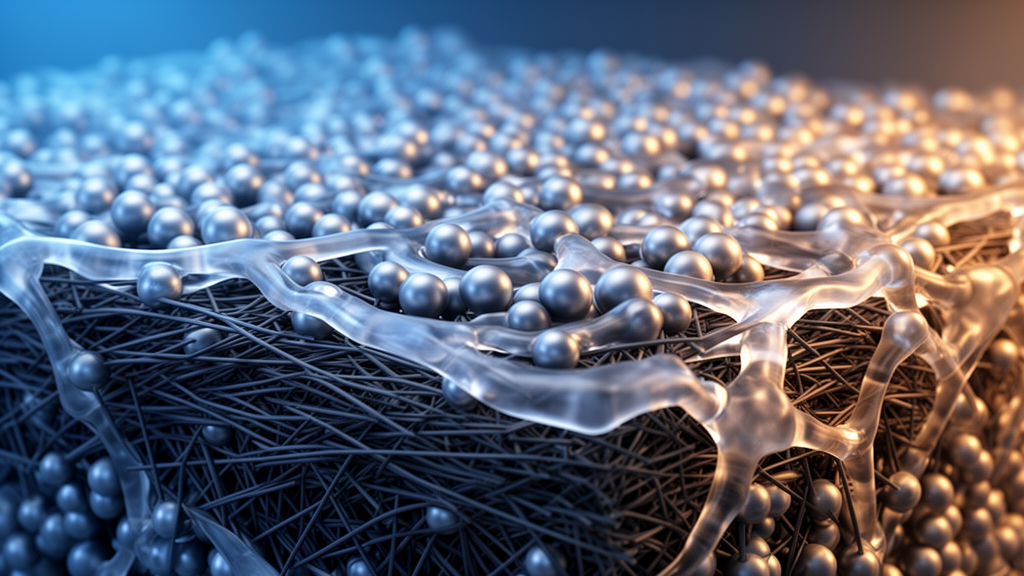
Researchers investigating structural battery composites have found that incorporating polymer binders into cathode coatings more than doubles their mechanical shear strength. Structural battery materials are designed to combine electrochemical energy storage and mechanical load-bearing functions within a single composite material, offering a potential pathway toward lightweight engineering designs across multiple industrial sectors. Current structural batteries incorporate carbon fibres into their electrodes, where the fibres within the positive electrode are coated with an active cathode material layer.

The overall multifunctional performance of these dual-purpose composite systems depends fundamentally on the durability and damage resistance of the active coating and its internal interfaces. When examining structural positive electrodes, scanning electron microscopy observations revealed physical degradation in the form of cracking and active material detachment. To prevent the formation of such cracks and interface debonds, the researchers introduced polymer binders intended to reinforce the mechanical integrity of the cathode coatings.

In the experimental setup, two distinct polymer binders were introduced into the electrode coatings using electrophoretic deposition: hydroxyethyl cellulose, abbreviated as HEC, and poly(acrylic acid), or PAA. To support the coating deposition process, polydiallyldimethylammonium chloride, designated as PDDA, was employed as a positive surfactant. Mechanical evaluation confirmed that adding these binders successfully increased the shear strength of the resulting coatings to more than double the baseline values.

Electrochemical testing subsequently demonstrated that operational performance varied significantly depending on the specific binder chemistry chosen. Coatings formulated with PAA delivered the highest specific capacity among the tested variants, registering 148 milliampere-hours per gram at a discharge rate of 0.05 C. Furthermore, the PAA formulation retained a specific capacity of 70 milliampere-hours per gram when tested under a higher cycling rate of 1 C.

In contrast, pairing the binders with the positive surfactant altered rate performance markedly. The combination of PDDA and HEC provided balanced electrochemical kinetics alongside stable cycling performance during testing. However, the combination of PDDA and PAA exhibited poor high-rate capability, showing negligible capacity retention when cycled at the 1 C rate.

These experimental outcomes demonstrate that binder chemistry functions as a critical design parameter governing the trade-offs among coating mechanical strength, electronic connectivity, and ionic transport. By strategically selecting binder compositions, engineers can balance mechanical durability against electrochemical kinetics, establishing an effective design strategy for advancing multifunctional structural battery electrodes.

Subject of Research: Polymer binder effects on structural battery positive electrode coatings

Article Title: Binder effects on the multifunctional performance of structural battery positive electrodes

Article References: Chen, H., Chaudhary, R., Xu, J., Xia, Z., & Asp, L. E. (2026). Binder effects on the multifunctional performance of structural battery positive electrodes. Advanced Composites and Hybrid Materials. https://doi.org/10.1007/s42114-026-02195-7

Image Credits: AI Generated

DOI: 10.1007/s42114-026-02195-7

Keywords: structural batteries, positive electrodes, cathode coatings, polymer binders, poly(acrylic acid), hydroxyethyl cellulose, electrophoretic deposition, shear strength, carbon fibres, energy storage composites, PDDA surfactant, multifunctional materials, specific capacity, electrochemical kinetics, damage resistance, ionic transport

News Source: Neil Sanderson. (November 25, 2026). Polymer Binders Double Shear Strength in Structural Battery Positive Electrodes. Scienmag.


Tags: carbon fibrescathode coatingsdamage resistanceelectrochemical kineticselectrophoretic depositionenergy storage compositeshydroxyethyl celluloseionic transportMultifunctional MaterialsPDDA surfactantpolyacrylic acidpolymer binderspositive electrodesshear strengthspecific capacitystructural batteries
Share12Tweet7Share2ShareShareShare1

Related Posts

Iron Oxide Nanocomposites Improve Latent Fingerprint Detection on Several Tested Surfaces

Iron Oxide Nanocomposites Improve Latent Fingerprint Detection on Several Tested Surfaces

November 26, 2026
Hybrid AI Pipeline Validates Machine-Readable Traffic Ontologies From Legal Text

Hybrid AI Pipeline Validates Machine-Readable Traffic Ontologies From Legal Text

November 26, 2026

Explainable Artificial Intelligence and Backlight Vision Streamline Turfgrass Seed Evaluation

November 26, 2026

Lamina Nanoparticles Enhance Heat Transfer in Hybrid Nanofluid Flow Simulations

November 26, 2026

POPULAR NEWS

  • Mutational Spectrum Deviations Reveal Most Missense Drivers in Oncogenes Are Already Known

    Mutational Spectrum Deviations Reveal Most Missense Drivers in Oncogenes Are Already Known

    29 shares
    Share 12 Tweet 7
  • AI Resident Framework Proposes Bounded Delegation to Ease Medical Interaction Burden

    29 shares
    Share 12 Tweet 7
  • Tea Leaf Maturity Governs Taste Compound Evolution During Fu Brick Fermentation

    29 shares
    Share 12 Tweet 7
  • Nine-Variable Triage Score Accurately Predicts Sepsis Across Multicentre Emergency Department Cohorts

    29 shares
    Share 12 Tweet 7

About

We bring you the latest biotechnology news from best research centers and universities around the world. Check our website.

Follow us

Recent News

Dual-Energy CT Reveals Trigeminal Nerve Material Composition Changes in Neuralgia

Combined Biomechanical Deficits Linked to Knee Pain in Female Volleyball Players

Computational Analysis Identifies MMP1 as Diagnostic Marker and Drug Target in Oral Cancer

Subscribe to Blog via Email

Enter your email address to subscribe to this blog and receive notifications of new posts by email.

Join 89 other subscribers
  • Contact Us

Bioengineer.org © Copyright 2023 All Rights Reserved.

Welcome Back!

Login to your account below

Forgotten Password?

Retrieve your password

Please enter your username or email address to reset your password.

Log In
No Result
View All Result
  • Homepages
    • Home Page 1
    • Home Page 2
  • News
  • National
  • Business
  • Health
  • Lifestyle
  • Science

Bioengineer.org © Copyright 2023 All Rights Reserved.