Credit: Mary Drewnoski
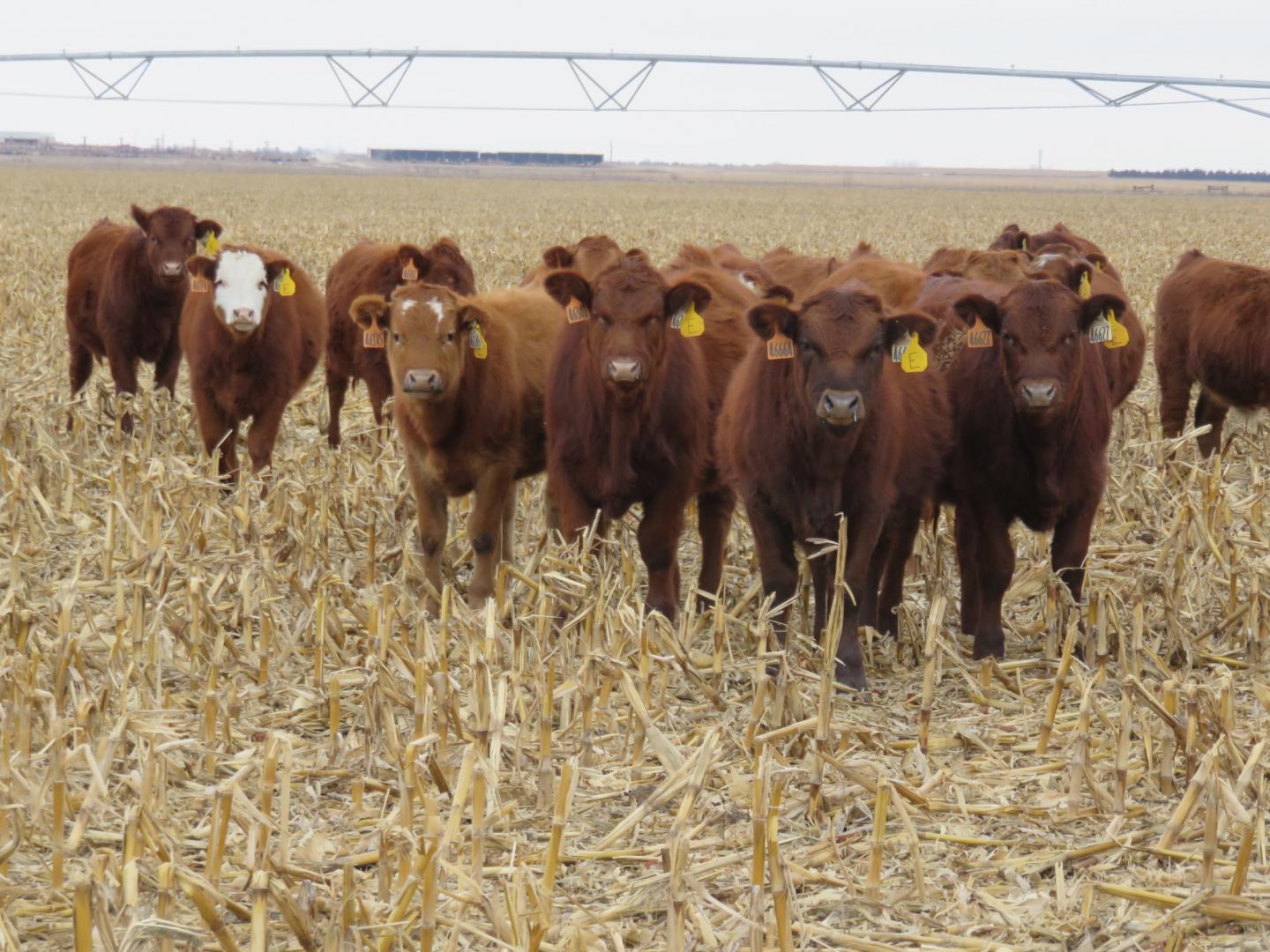
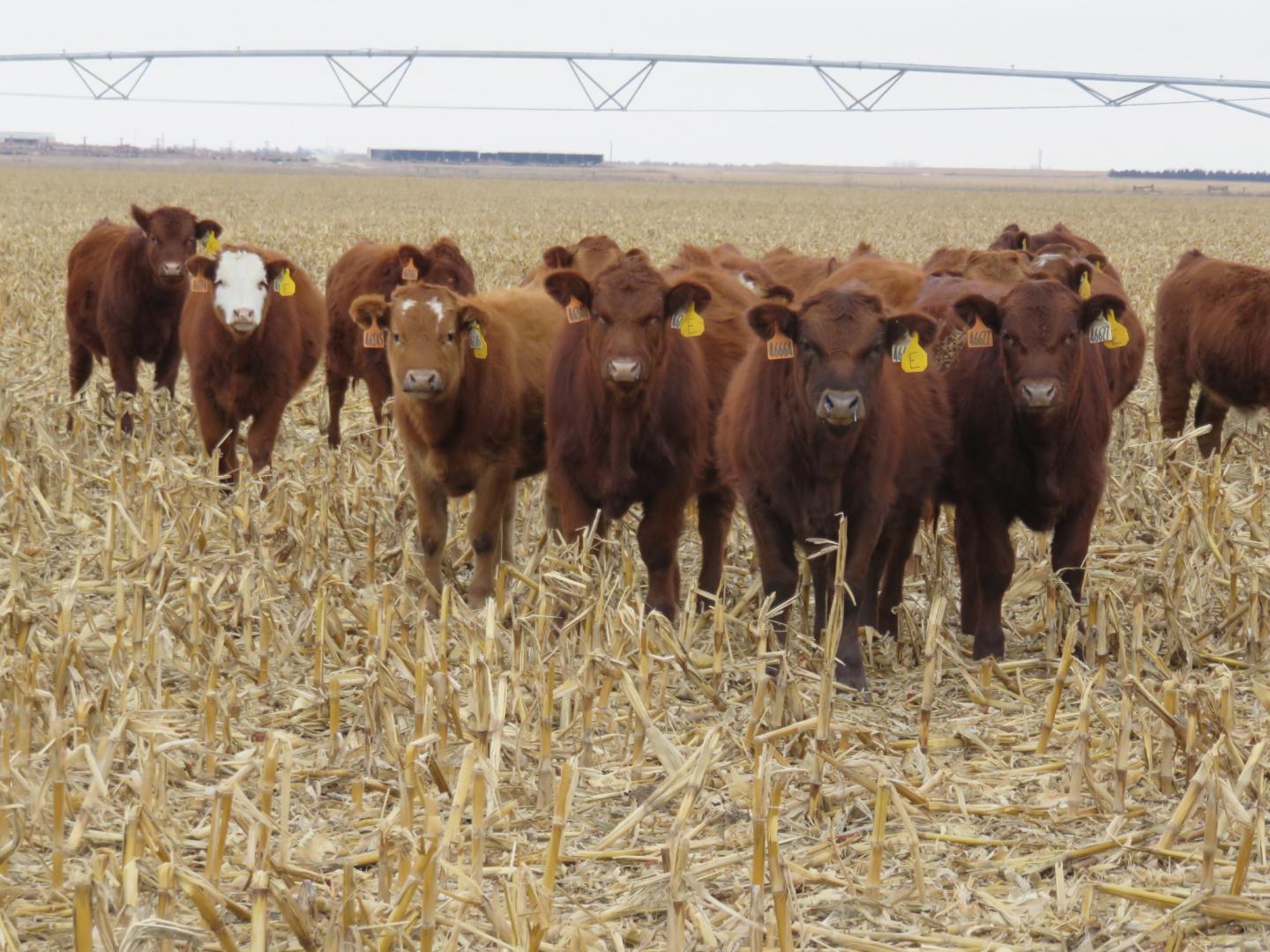
It makes sense that a 1,200 pound Angus cow would place quite a lot of pressure on the ground on which it walks. But a new study shows that even these heavy beasts can't do much to compact common soils — if they're grazed responsibly.
The study is unique in its 16-year span. Researchers wanted to know whether grazing cattle on corn stubble left in the field in fall and spring would significantly affect the quality of the soil. It was established in 1997 by Terry Klopfenstein, professor in the department of Animal Science at the University of Nebraska-Lincoln. Humberto Blanco, a soil scientist and associate professor in the department of Agronomy and Horticulture, led the soil research to evaluate the long-term impact.
"We were looking at soil ecosystem services," Blanco said. Ecosystem services are indicators of healthy soil. It includes soil compaction and soil structural properties, as well as microbial community structure. Researchers matched these properties with corn and soybean yields to gauge whether any changes in the soil properties affected crop outcomes.
"We did not see any negative effects of grazing residues on soil properties except compaction," Blanco said. "Compaction increased with grazing as expected, but it was not high enough to reduce yields. The level of compaction was too small to adversely affect corn or soybean yield."
This is good news, Blanco said, especially as the team performed a "worst-case scenario" in their springtime condition with more-than-usual cattle on the field.
The researchers stocked cattle in corn fields after harvest in the fall and in spring before planting. These fields are planted without tilling each year, so soil structure isn't disturbed. Researchers found that soil compaction was only slight. The compaction was slight even with more cattle than what experts would recommend on wet spring soil. Fall and winter grazing, when the ground was frozen, did not compact soil.
"The hypothesis at the beginning was that we were probably going to see negative effects on soil properties due to grazing," Blanco explained. "But our data did not show that. We did not see many negative effects."
Blanco said that it appears grazing cattle on corn residues in the field could have a slightly positive impact on soil quality, such as soil microbial community structure. That's because grazing leaves more residues on the ground than clearing the field with machinery and adds nutrient- and microbe-rich manure to the fields. He said future studies should look at this more closely.
There is one caveat. The team measured very little compaction in the grazed fields as a whole. But compaction could be more severe–and potentially harmful to yields — around heavy-traffic areas such as livestock water tanks. However, such areas are relatively small.
Blanco said producers who are interested in grazing corn residues during the off-season should consult with local consultants or Extension specialists. These specialists should be able to help producers identify the proper times and herd size for grazing.
"If a producer is following proper recommendations and he or she doesn't put animals on the field when the soil is wet, negative impacts are unlikely to occur," Blanco said. Blanco and colleagues are currently evaluating grazing impacts on soils and crops across different soil types in Nebraska.
The study specifically considered an irrigated field under a no-till corn-soybean rotation in Nebraska following 16 years of grazing. The fields had silt-loam soil, common in the Midwest. The length of the study makes it the first long-term experiment of its kind to measure the effects of cattle grazing residues on various aspects of soil health.
Read more in Soil Science Society of America Journal.
###
Media Contact
Susan Fisk
[email protected]
608-273-8091
@ASA_CSSA_SSSA
http://www.agronomy.org