• HOME
  • NEWS
  • EXPLORE
    • CAREER
      • Companies
      • Jobs
    • EVENTS
    • iGEM
      • News
      • Team
    • PHOTOS
    • VIDEO
    • WIKI
  • BLOG
  • COMMUNITY
    • FACEBOOK
    • INSTAGRAM
    • TWITTER
Saturday, February 7, 2026
BIOENGINEER.ORG
No Result
View All Result
  • Login
  • HOME
  • NEWS
  • EXPLORE
    • CAREER
      • Companies
      • Jobs
        • Lecturer
        • PhD Studentship
        • Postdoc
        • Research Assistant
    • EVENTS
    • iGEM
      • News
      • Team
    • PHOTOS
    • VIDEO
    • WIKI
  • BLOG
  • COMMUNITY
    • FACEBOOK
    • INSTAGRAM
    • TWITTER
  • HOME
  • NEWS
  • EXPLORE
    • CAREER
      • Companies
      • Jobs
        • Lecturer
        • PhD Studentship
        • Postdoc
        • Research Assistant
    • EVENTS
    • iGEM
      • News
      • Team
    • PHOTOS
    • VIDEO
    • WIKI
  • BLOG
  • COMMUNITY
    • FACEBOOK
    • INSTAGRAM
    • TWITTER
No Result
View All Result
Bioengineer.org
No Result
View All Result
Home NEWS Science News Biology

Newly identified cell explosions involved in bacterial secretion and adherence

Bioengineer by Bioengineer
February 8, 2018
in Biology
Reading Time: 2 mins read
0
Share on FacebookShare on TwitterShare on LinkedinShare on RedditShare on Telegram
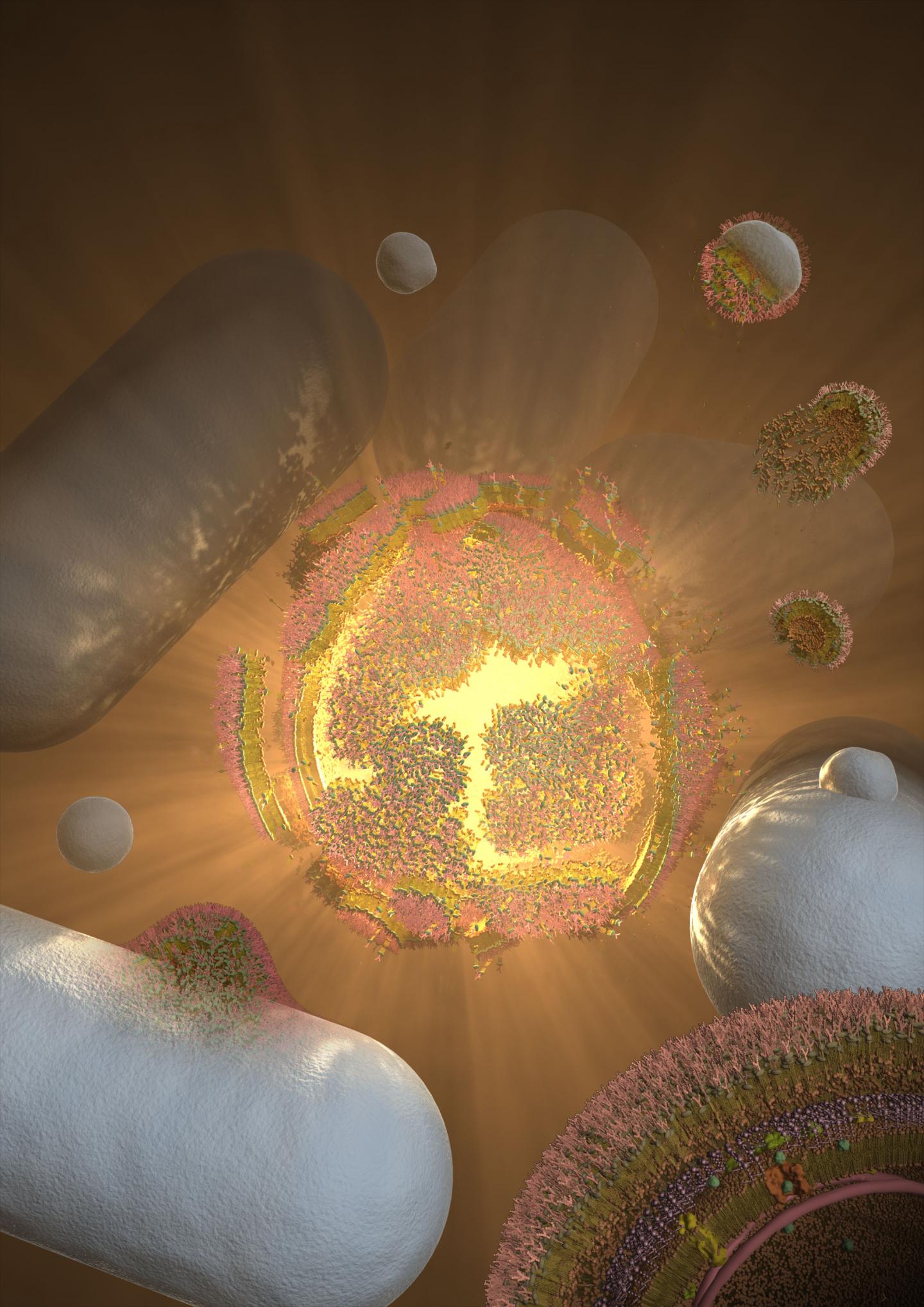
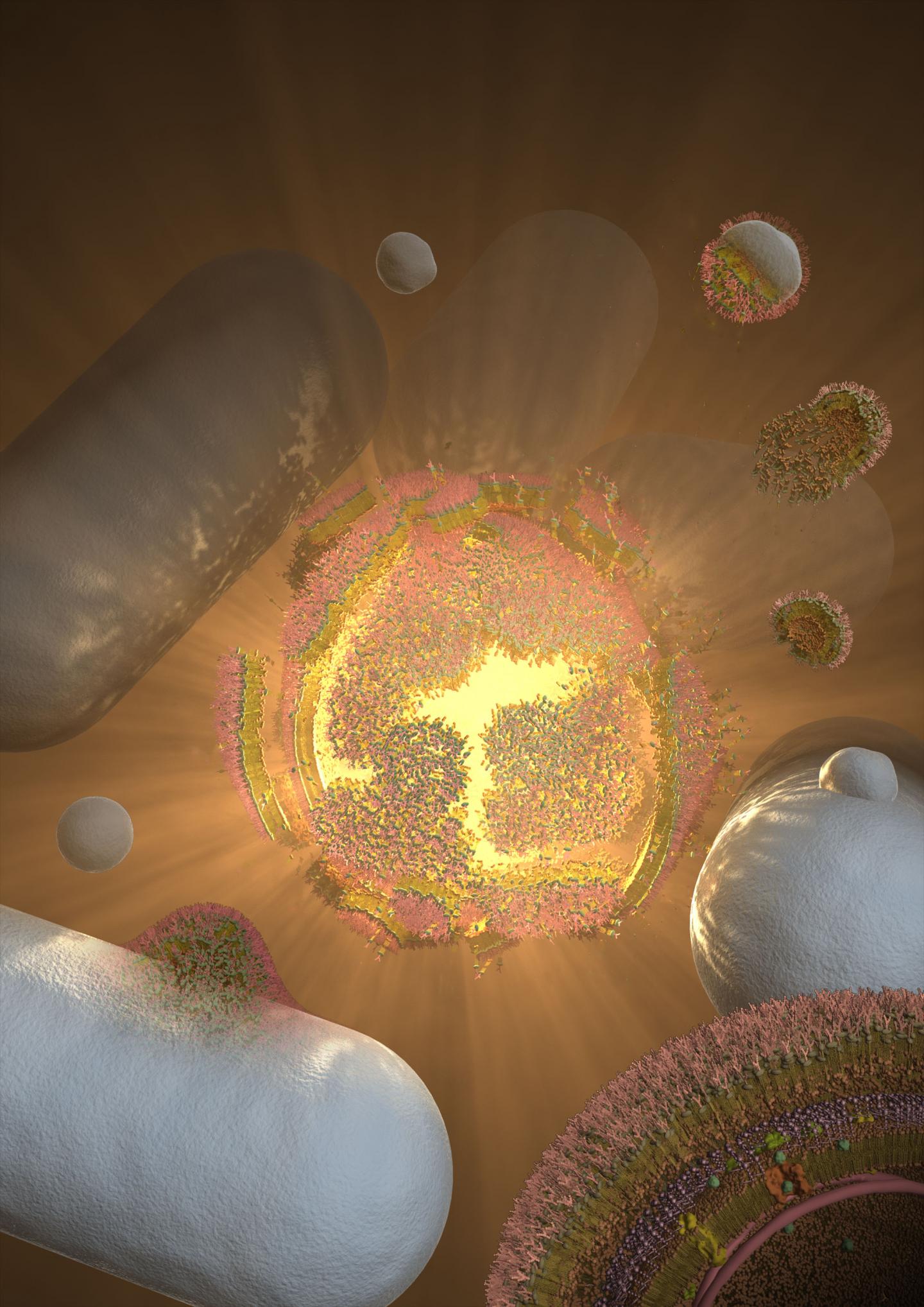
IMAGE

Tsukuba, Japan — Researchers have been unclear on how bacteria form and release certain extracellular components involved in cell adhesion and multicellular structures that also contribute to antibiotic resistance. However, a recent study from a multinational team of researchers identified a previously unknown phenomenon, explosive cell lysis, as crucial in the production of membrane vesicles and biofilm formation. The study was reported in Nature Communications.

Membrane vesicles are tiny spheres that develop from bacterial membranes and contain a mixture of proteins, DNA, and RNA. They are important for the virulence of the bacterium–its ability to cause disease–as they play vital roles in invasion, secretion, and signaling. They also contribute to the formation of biofilms, the slimy three-dimensional structures that form when bacteria adhere to moist surfaces such as teeth or wounds. Extracellular (e)DNA is a key structural organization of biofilms, yet it was not known how certain structural proteins or eDNA are released.

To answer this, the researchers used live cell microscopy of the pathogenic bacterium Pseudomonas aeruginosa to reveal that cells quickly changed from rod- to round-shaped, and explode. "Cells lose their structural integrity in 5-10 seconds," corresponding author Cynthia Whitchurch of the University of Technology Sydney explains, "and the explosion releases cellular content including eDNA, proteins, and membrane fragments into the surrounding environment."

Using super-resolution microscopy to follow the explosions, they found a surprising observation described by first author Lynne Turnbull: "We observed that membrane fragments produced by exploding bacteria curled up to form membrane vesicles that captured eDNA and other cellular components released by the explosion."

Co-corresponding and co-first author Masanori Toyofuku of the University of Tsukuba and University of Zurich explains that, "this was completely unexpected as until now bacterial membrane vesicles were thought to form from membranous protrusions at the cell surface."

The team found that the explosions are caused by an enzyme (Lys) used by bacteria-infecting viruses (phages) and phage-like elements to disrupt the cell wall of their hosts. Using a mutant bacterial strain incapable of producing Lys, they discovered that the enzyme was needed to produce eDNA and membrane vesicles.

Through a range of experiments, the team also demonstrated that exposure of cells to different forms of stress, such as antibiotics or DNA damaging agents, stimulated expression of the gene encoding Lys and induced explosive cell lysis. "This shows that the bacterial 'SOS' response triggers explosive cell lysis in response to unfavorable environmental conditions," co-corresponding author Leo Eberl of the University of Zurich says.

This mechanism may enable bacteria to release important cellular factors for use by bacterial communities as public goods, and knowledge of its control could be used to interfere with biofilm formation of pathogenic bacteria.

###

Media Contact

Masataka Watanabe
[email protected]
81-298-532-039
Share12Tweet8Share2ShareShareShare2

Related Posts

Florida Cane Toad: Complex Spread and Selective Evolution

Florida Cane Toad: Complex Spread and Selective Evolution

February 7, 2026
New Study Uncovers Mechanism Behind Burn Pit Particulate Matter–Induced Lung Inflammation

New Study Uncovers Mechanism Behind Burn Pit Particulate Matter–Induced Lung Inflammation

February 6, 2026

DeepBlastoid: Advancing Automated and Efficient Evaluation of Human Blastoids with Deep Learning

February 6, 2026

Navigating the Gut: The Role of Formic Acid in the Microbiome

February 6, 2026
Please login to join discussion

POPULAR NEWS

  • Robotic Ureteral Reconstruction: A Novel Approach

    Robotic Ureteral Reconstruction: A Novel Approach

    82 shares
    Share 33 Tweet 21
  • Digital Privacy: Health Data Control in Incarceration

    63 shares
    Share 25 Tweet 16
  • Study Reveals Lipid Accumulation in ME/CFS Cells

    57 shares
    Share 23 Tweet 14
  • Breakthrough in RNA Research Accelerates Medical Innovations Timeline

    53 shares
    Share 21 Tweet 13

About

We bring you the latest biotechnology news from best research centers and universities around the world. Check our website.

Follow us

Recent News

Decoding Prostate Cancer Origins via snFLARE-seq, mxFRIZNGRND

Digital Health Perspectives from Baltic Sea Experts

Florida Cane Toad: Complex Spread and Selective Evolution

Subscribe to Blog via Email

Enter your email address to subscribe to this blog and receive notifications of new posts by email.

Join 73 other subscribers
  • Contact Us

Bioengineer.org © Copyright 2023 All Rights Reserved.

Welcome Back!

Login to your account below

Forgotten Password?

Retrieve your password

Please enter your username or email address to reset your password.

Log In
No Result
View All Result
  • Homepages
    • Home Page 1
    • Home Page 2
  • News
  • National
  • Business
  • Health
  • Lifestyle
  • Science

Bioengineer.org © Copyright 2023 All Rights Reserved.