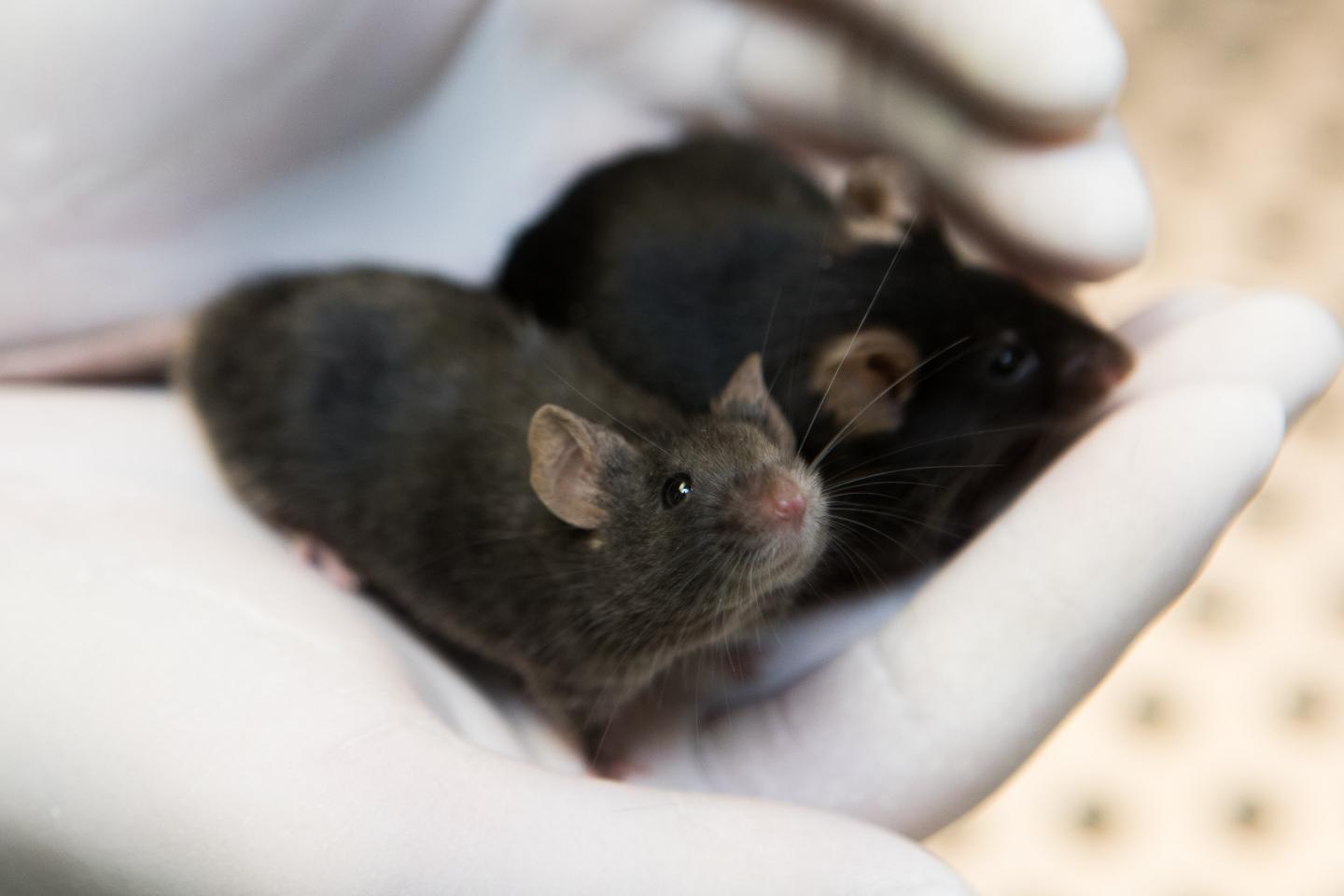
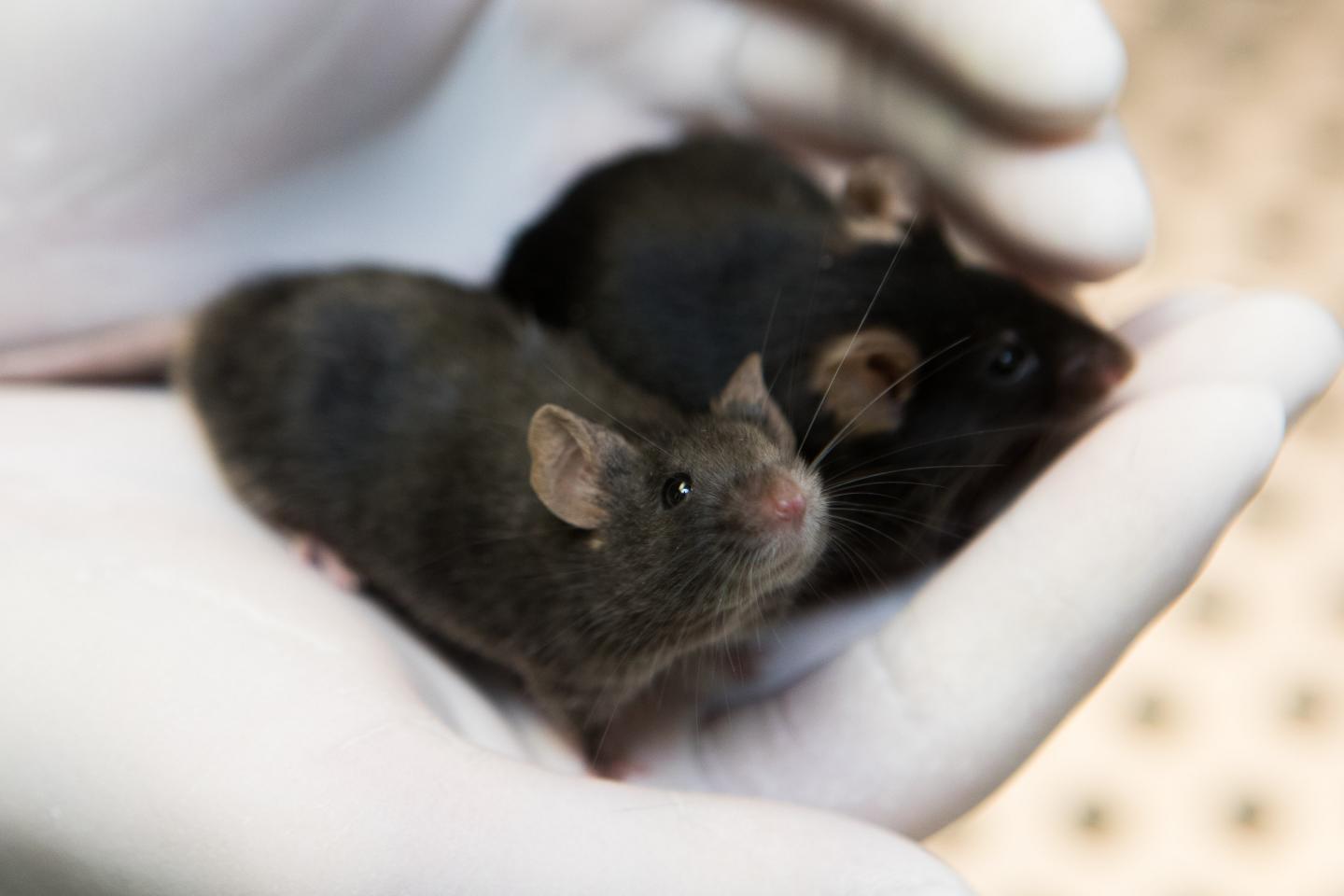
Credit: University of Bath
A potential new antidepressant and antianxiety treatment with a unique mechanism of action has been developed by scientists at the University of Bath.
The compound has shown significant potential after studies in mice. The research is published in the British Journal of Pharmacology.
Around one in six adults will experience depression in their lifetimes. New drugs to treat depression in particular are needed because many existing antidepressants don't work in up to 50% of patients. This new University of Bath compound, known as BU10119, works in a different way to the most common antidepressant drugs; selective serotonin reuptake inhibitors (SSRIs), and may therefore offer a new potential treatment for those in whom SSRIs don't work.
Unlike SSRIs which target the serotonin system in the brain, BU10119 works by blocking receptors called kappa opioid receptors. Blocking these receptors has been shown to have anti-depressant like effects in mice.
In a series of laboratory trials, mice given BU10119 demonstrated behaviours consistent with providing antidepressant-like effects.
Dr Sarah Bailey, Senior Lecturer in the Department of Pharmacy & Pharmacology at the University of Bath, said: "I'm really quite excited by the potential of this compound. Developing new medicines is why I got into pharmacology and, in 20 years of research, this is the closest I have come to a new compound that might translate towards the clinic. It's promising, but that said, we are still at an early stage, these experiments are in mice and further research is still required for example to establish safety.
"SSRIs can work very well for some patients, but we know they don't work for everyone which is one reason why developing new antidepressant and antianxiety drugs could be really beneficial."
The researchers were inspired to develop the compound after previous University of Bath research showed that a combination of two existing drugs, buprenorphine and naltrexone, had potential as an antidepressant. BU10119 combines the effects of this combination in one drug.
Professor Stephen Husbands, Head of Medicinal Chemistry at the University of Bath added:
"This research builds on our previous work which showed that combining buprenorphine and naltrexone can give antidepressant effects in mice. By combining the effects of both drugs in one molecule we hope that a safe and effective drug will eventually be the outcome. BU10119 is part of a series of compounds now licensed to, and under development with, Orexigen Therapeutics."
###
The study was funded a by a National Institute on Drug Abuse grant and a PhD scholarship from the Government of Saudi Arabia.
The University of Bath has signed the Concordat on Openness on Animal Research. The University is committed to enhancing our communications with the media and public about our research using animals. Find out more: http://www.bath.ac.uk/collections/animal-research/
Media Contact
Chris Melvin
[email protected]
44-012-253-83941
@uniofbath
http://www.bath.ac.uk
Related Journal Article
http://dx.doi.org/10.1111/bph.14060