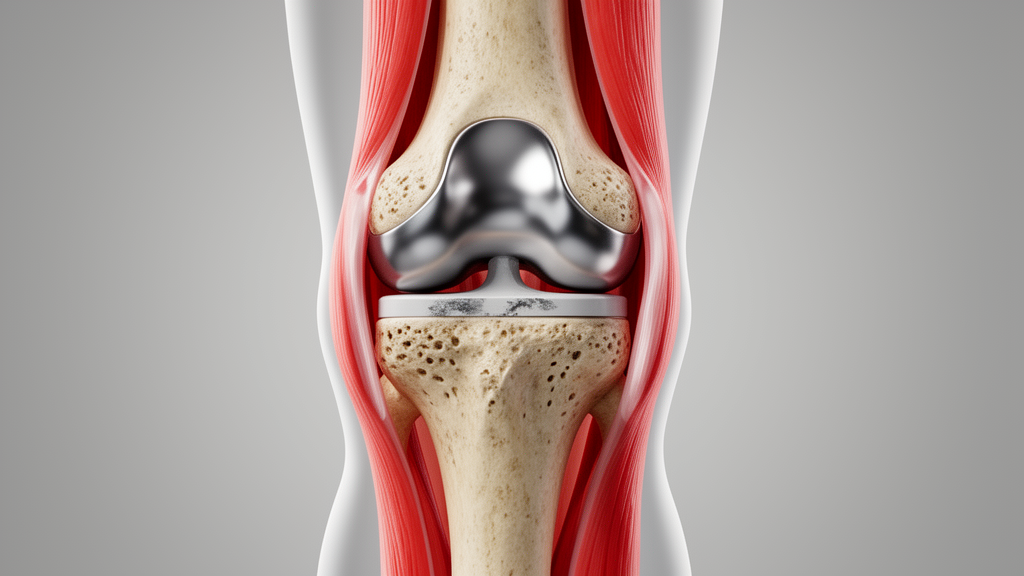
A comprehensive retrospective cohort study tracking thousands of orthopaedic patients over an eleven-year period has determined that individuals diagnosed with inflammatory arthritis face more than triple the hazard of undergoing revision surgery following primary total knee arthroplasty compared to those treated for osteoarthritis. Conducted at a high-volume tertiary referral training and research hospital located in the eastern Black Sea region of Türkiye, the long-term clinical investigation evaluated institutional revision-free implant survival among 3,364 qualifying individuals who underwent primary joint replacement between January 1, 2015, and December 31, 2025. Across the entire surgical cohort, overall cumulative revision-free implant survival remained exceptionally high, demonstrating Kaplan–Meier survival probabilities of 99.7 percent at one year, 98.4 percent at five years, and 97.6 percent at ten years postoperatively. However, comparative survival assessments revealed a pronounced divergence in long-term outcomes based on underlying surgical indication, with patients diagnosed with inflammatory arthropathies recording an estimated ten-year revision-free survival probability of 91.7 percent compared to 97.7 percent among their counterparts presenting with degenerative osteoarthritis.
The procedural scale of total knee arthroplasty has expanded substantially across global healthcare systems over the preceding two decades, driven by escalating clinical demand for elective reconstructive interventions that relieve debilitating chronic joint pain and restore functional mobility. In the United States, primary procedure volumes documented within Medicare beneficiaries expanded by 156 percent between 2000 and 2019 to reach 480,958 annual cases, with longitudinal forecasts anticipating further surges to 1.22 million procedures by 2040 and 2.92 million by 2060. International systematic assessments encompassing sixteen countries have confirmed comparable sustained expansion, displaying five-year volume gains of 13 percent in the United Kingdom alongside decade-long increases exceeding 400 percent in South Korea. Correspondingly, nationwide reimbursement registries in Türkiye compiled 283,400 primary arthroplasty interventions between 2010 and 2014, reflecting annual compound growth rates oscillating between 10 and 31 percent. As the cumulative volume of primary implantations climbs internationally, healthcare networks confront an expanding clinical and economic burden tied to subsequent mechanical and biological failures, highlighting the necessity of clarifying precise patient-specific determinants of long-term implant longevity.
To rigorously delineate survivorship determinants, the investigative team framed an observational cohort protocol reported in alignment with the STROBE guidelines and formally approved by the local institutional review board under protocol 2026/06 following the ethical tenets of the Declaration of Helsinki. Patient identification was executed through an exhaustive institutional audit of electronic hospital information management systems utilizing Turkish Social Security Institution procedure code 612,420, an administrative descriptor assigned to all primary total knee arthroplasties irrespective of public reimbursement or private funding. The analytical framework enforced sequential exclusion criteria to preserve cohort homogeneity, eliminating 38 complex primary operations recorded under code 612,421, nine single-session simultaneous bilateral arthroplasties due to index knee assignment ambiguity, and three entries with zero documented follow-up days. For individuals receiving staged bilateral knee reconstructions on distinct calendar dates, only the chronological first operated joint was retained for analytical evaluation. In every confirmed reoperation, the surgical side was cross-referenced against operative registers and post-surgical radiographic records to ensure no contralateral revision procedures were erroneously attributed to the primary index implant.
The demographic and clinical profile of the study population mirrored the real-world epidemiology of end-stage knee disease treated at regional referral centers. The overall mean patient age stood at 66.1 years with a standard deviation of 7.4 years, and female patients constituted 78.6 percent of the cohort, numbering 2,643 individuals. Annual surgical volume advanced steadily across the observation window, expanding from 188 primary total knee reconstructions executed in 2015 to 453 completed procedures in 2025, establishing an institutional operating average of 306 primary replacements per year. The vast majority of operations addressed degenerative conditions, with osteoarthritis serving as the primary operative indication for 3,271 patients, representing 97.2 percent of the cohort. Conversely, inflammatory arthritis was identified in 93 individuals, accounting for 2.8 percent of the study population. Documented pre-existing diabetes mellitus was established in 355 patients, representing 10.6 percent of the cohort. Crucially, all implanted prostheses evaluated across the study period incorporated cruciate-retaining designs, ensuring uniformity across biomechanical component specifications and surgical reconstruction philosophies.
Diagnostic categorization of systemic comorbidities relied on objective, pre-established electronic health record linkages prior to the index surgical date. Inflammatory arthritis status was defined by explicit pre-arthroplasty International Classification of Diseases coding, encompassing rheumatoid arthritis under codes M05 through M06 in 66 patients, ankylosing spondylitis under code M45 in 23 patients, and other inflammatory systemic arthropathies under codes M07, M08, M32 through M35, and M46 in four patients. When degenerative and inflammatory diagnostic codes coexisted within historical encounter databases, the inflammatory diagnosis took absolute precedence to yield reproducible, mutually exclusive cohorts independent of subjective intraoperative descriptions. Diabetes mellitus was ascertained through diagnostic classifications E10 through E14 documented before arthroplasty. Nationwide population registry linkages tracked participant survival via unique national identity numbers, confirming 83 deaths across the follow-up period, including four deaths among patients with inflammatory arthritis and 79 deaths among patients with osteoarthritis. These confirmed fatal events were incorporated as competing risks within the longitudinal time-to-event analytical architecture.
Across an aggregate median follow-up of 3.8 years, with an interquartile range extending from 1.8 to 7.1 years and a maximum individual observation span reaching 11.0 years, exactly 44 patients underwent revision surgery at the tertiary facility, representing an institutional reoperation rate of 1.31 percent. The median duration elapsed between primary knee replacement and secondary revision surgery was 2.5 years, spanning a wide clinical range from 0.1 to 8.4 years. Reoperation rates varied substantially by surgical indication, with crude revision frequencies reaching 4.3 percent among patients with inflammatory arthritis, derived from four revision events across 93 individuals, compared to 1.2 percent among individuals presenting with osteoarthritis, derived from 40 reoperations across 3,271 patients. The non-revised cohort exhibited a significantly longer median observation duration of 3.8 years compared to the 2.5-year median follow-up documented among revised individuals. Revised and non-revised patients showed no statistically meaningful differences regarding baseline chronological age, sex distributions, or diabetes mellitus prevalence, whereas inflammatory arthritis prevalence proved significantly elevated among patients requiring secondary revision.
Individual chart reviews encompassing operative records, histopathological specimens, and microbiological cultures identified the specific clinical indications precipitating all 44 surgical revisions. Within the comprehensive cohort, mechanical instability constituted the leading cause of construct failure, responsible for 17 cases or 38.6 percent of all reoperations, followed by aseptic loosening in 12 cases or 27.3 percent. Deep periprosthetic joint infection accounted for five failures representing 11.4 percent, while severe arthrofibrosis and joint stiffness necessitated four reoperations, periprosthetic fractures caused three, and extensor mechanism rupture, implant malalignment, and unexplained chronic pain accounted for one case each. Aseptic structural failures accounted for 39 interventions or 88.6 percent, whereas septic etiologies represented 11.4 percent. Strikingly, mechanical instability occurred exclusively among osteoarthritis patients, accounting for 17 of their 40 revisions, while being completely absent among the inflammatory cohort. In stark contrast, three of the four revisions recorded among inflammatory arthritis patients were directly triggered by aseptic component loosening occurring at 0.92, 4.6, and 6.6 years, alongside a single acute periprosthetic joint infection developing at 0.46 years postoperatively.
Survival analyses applying Kaplan–Meier estimation established high overall implant retention probabilities, documenting cumulative survival of 99.0 percent at three years, 98.0 percent at seven years, and 97.6 percent at ten years, though median survival could not be calculated because cumulative failure never reached 50 percent. Stratified log-rank testing confirmed a statistically significant survival decrement among inflammatory arthritis patients compared to degenerative osteoarthritis cases, producing a log-rank test statistic of 6.290 and a corresponding significance value of p = 0.012. Kaplan–Meier implant survival stood at 95.5 percent versus 98.5 percent at five years, widening to 91.7 percent versus 97.7 percent at ten years. Stratified survival comparisons across diabetic versus non-diabetic cohorts, male versus female subgroups, and patients younger than 65 years versus those aged 65 or older revealed no significant differences in revision-free longevity, yielding log-rank values of p = 0.346, p = 0.884, and p = 0.079, respectively. However, investigators noted that inflammatory arthritis cohorts exhibited sharp reductions in patients remaining at risk over time, diminishing from 80 individuals at one year to 39 at five years, 22 at seven years, and only five patients at ten years.
To rigorously accommodate the competing hazard of patient mortality before revision, the researchers fitted multivariable cause-specific Cox proportional hazards models alongside Fine-Gray subdistribution hazard regressions utilizing four prespecified clinical covariates: age per ten-year increment, biological sex, inflammatory arthritis, and diabetes mellitus. Inflammatory arthritis emerged as the sole independent predictor of secondary revision within the cause-specific Cox framework, generating an adjusted hazard ratio of 3.25 with a 95 percent confidence interval spanning 1.16 to 9.10 and a p-value of 0.025. Accounting for competing mortality within the Fine-Gray subdistribution model corroborated this finding, yielding a subdistribution hazard ratio of 3.23, a confidence interval between 1.15 and 9.08, and a significance value of p = 0.026. Sensitivity analyses utilizing Firth penalized-likelihood regression affirmed the association, producing an adjusted hazard ratio of 3.61 with a penalized profile-likelihood interval from 1.17 to 8.65 and p = 0.025. Restricting the exposure strictly to rheumatoid arthritis against osteoarthritis demonstrated a comparable cause-specific hazard ratio of 3.15, though it bordered statistical significance with a confidence interval of 0.97 to 10.23 and p = 0.056. Neither patient age, biological sex, nor diabetes mellitus demonstrated statistically significant independent associations with revision risk across either modeling approach.
In contextualizing these findings, the study authors underscored several critical methodological caveats, clinical nuances, and systemic limitations governing data interpretation. Because the association between inflammatory arthritis and revision rested on four documented failures, statistical fragility analysis demonstrated a fragility index of exactly 1, indicating that subtracting or reclassifying a single reoperation reduced the hazard ratio to approximately 2.4 and eliminated statistical significance with p-values shifting to 0.13 through 0.15. The researchers highlighted regional differences in pharmacological disease control, observing that national registries in Turkey document biologic or targeted synthetic disease-modifying antirheumatic drug usage in only 13 percent of rheumatoid arthritis patients, contrasting sharply with Western European utilization rates of 19 to 22 percent where lower revision rates have historically been documented. Furthermore, the eastern Black Sea region exhibits the nation’s highest standardized rheumatoid arthritis prevalence at 2.0 percent. The principal structural limitation remained the institutional ascertainment of revisions, which could not capture reoperations executed at external facilities, alongside unmeasured confounding from body mass index, individual surgeon volume variations, and specific perioperative immunosuppressive regimens, leading the authors to designate the elevated risk of aseptic loosening in inflammatory arthritis as a hypothesis-generating signal warranting future prospective multicenter validation.
Subject of Research: Implant survival and revision risk following primary total knee arthroplasty in inflammatory arthritis
Article Title: Implant survival and the impact of inflammatory arthritis on revision risk following primary total knee arthroplasty: an 11-year single-center analysis
Article References: Okur, K. T., Varış, O., Abdioğlu, A. A., Altun, İ., Güvercin, Y., & Peker, G. (2026). Implant survival and the impact of inflammatory arthritis on revision risk following primary total knee arthroplasty: an 11-year single-center analysis. Archives of Orthopaedic and Trauma Surgery, 146(1), Article 414. https://doi.org/10.1007/s00402-026-06563-2
Image Credits: AI Generated
DOI: 10.1007/s00402-026-06563-2
Keywords: total knee arthroplasty, implant survival, revision surgery, inflammatory arthritis, osteoarthritis, aseptic loosening, rheumatoid arthritis, ankylosing spondylitis, cruciate-retaining implants, competing risks, Fine-Gray model, Cox proportional hazards, periprosthetic joint infection, orthopaedic surgery, retrospective cohort, fragility index, Black Sea region
News Source: Ophelia Keating. (November 25, 2026). Inflammatory Arthritis Triples Knee Replacement Revision Risk in Long-Term Study. Scienmag.