Credit: Julie O'Connor, Wayne State University
DETROIT – A Wayne State University research team recently received a $1.9 million grant from the National Eye Institute of the National Institutes of Health for the project, "Mechanisms of Inflammation Resolution in Bacterial Endophthalmitis."
Endophthalmitis is a severe inflammation of the interior of the eye caused by contaminating microorganisms that enter the eye following trauma or surgery — notably cataract surgery — or that spread through the bloodstream from a distant infection site. Despite appropriate therapeutic intervention, bacterial endophthalmitis often results in vision loss and sometimes requires surgical removal of the eye.
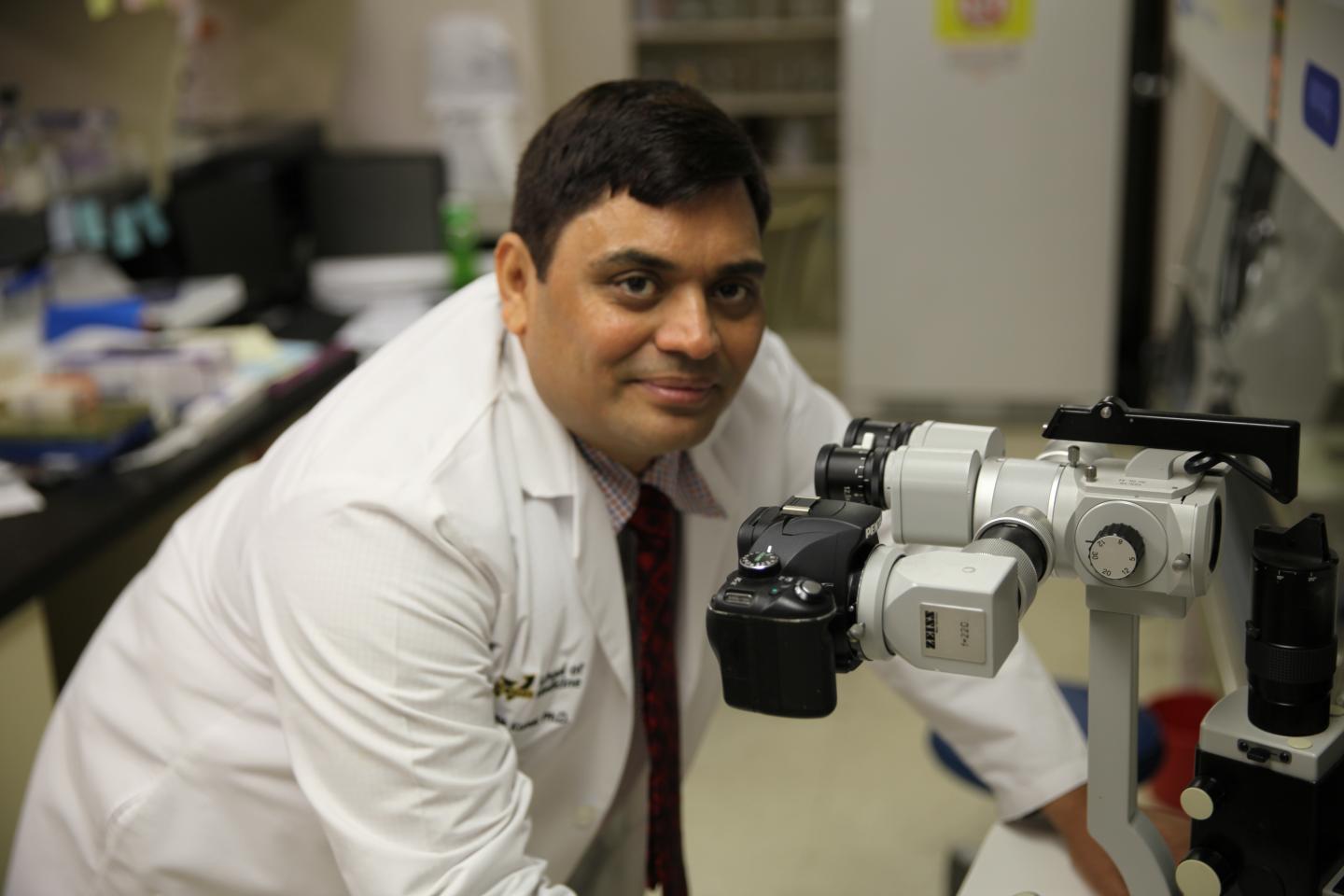
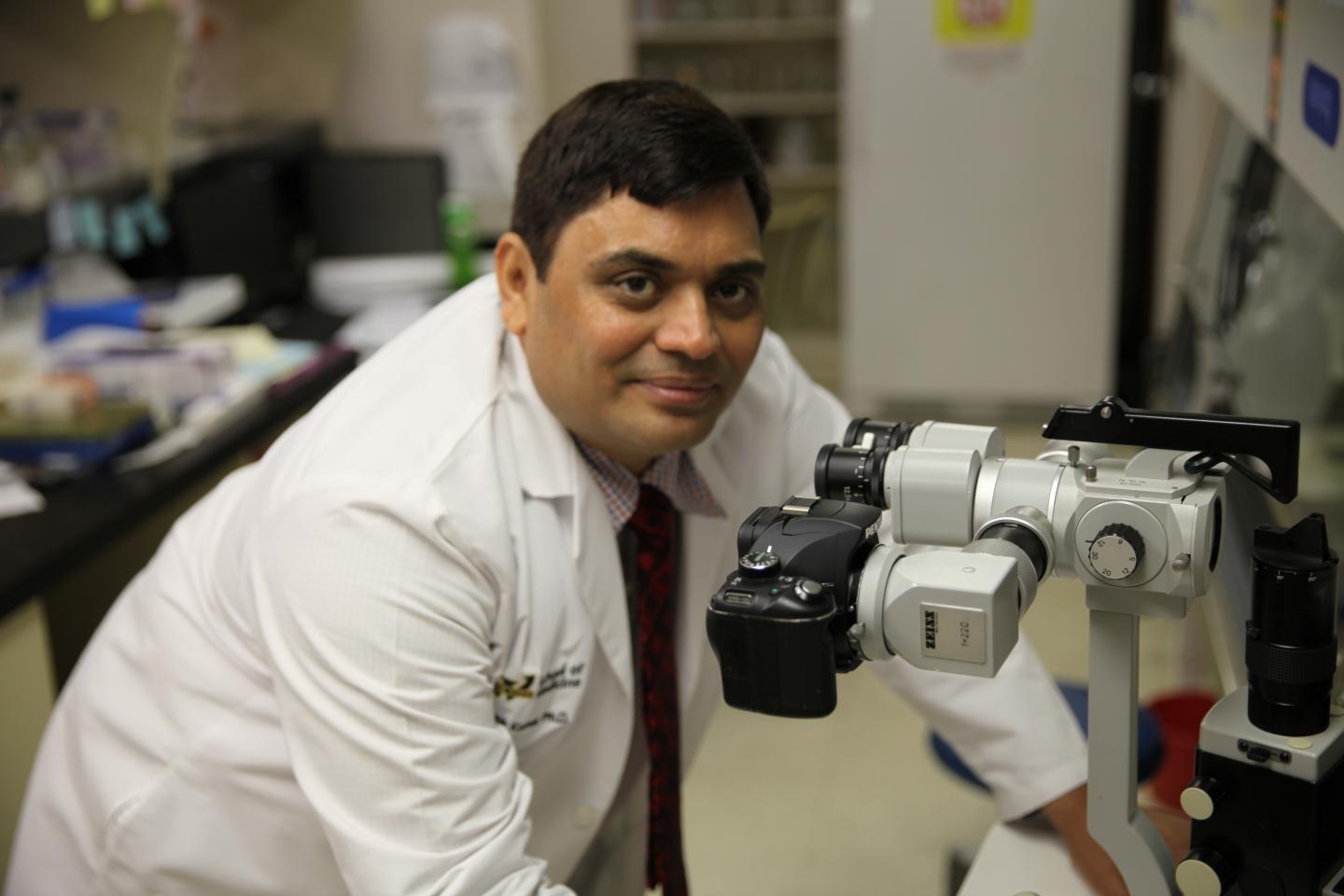
The study, led by Ashok Kumar, Ph.D., assistant professor of ophthalmology, anatomy and cell biology, microbiology, immunology, and biochemistry in the School of Medicine and Kresge Eye Institute at Wayne State University, will investigate the mechanism to harness the therapeutic value of a lipid mediator, Resolvin D1 (RvD1), to potentially prevent and treat endophthalmitis.
"Although the ideal treatment for bacterial endophthalmitis should aim for both bacterial eradication and inflammation resolution, monotherapy with intravitreal antibiotic injections remains the current standard of treatment," said Kumar. "The antibiotics, while destroying the bacteria, may release various bacterial cell wall components, which can enhance inflammatory responses. Hence, the identification of novel targets for the development of new anti-inflammatory therapeutics are urgently needed; agents which may be used to treat endophthalmitis alone or in combination with antibiotics and are non-immunosuppressive.
While addressing this clinical problem, we discovered that administration of RvD1 — a type of specialized pro-resolving mediator — in a mouse model of bacterial endophthalmitis drastically reduced inflammation, prevented tissue damage and maintained retinal function in otherwise blinded mice. In this study, we are investigating the protective mechanisms of RvD1 treatment."
Kumar's team will test the co-administration of RvD1 with conventional antibiotics and use different routes of delivery — topical and intravitreal — to compare their effects with that of corticosteroids, a current treatment method for endophthalmitis. They will also be looking at how the inflammation interacts with Toll-like receptor 2 (TLR2) signaling pathways — a membrane protein that is expressed on the surface of certain cells and recognizes foreign substances and passes on appropriate signals to the cells of the immune system.
"Inflammation is a beneficial reaction of the host to microbial infection or tissue damage and has the primary role in restoring tissue homeostasis," said Kumar. "However, uncontrolled or unresolved inflammation can lead to tissue damage, which is quite detrimental in the eye, being an immune privileged organ. Therefore, timely resolution of inflammation is essential to maintain tissue health after stimuli that cause tissue dysfunction or damage."
Kumar and his research team believe that understanding the cross-talk between molecule or signaling pathways that evoke the resolution of inflammation and those pathways such as TLRs, which promote the induction of inflammation, remains a challenge in this promising and exciting field. Unmasking this will help the team translate its findings to human clinical trials in order to determine the real usefulness of resolution-based strategies to treat patients with bacterial endophthalmitis or other microbial infections.
"Together, we believe that the mechanistic insights and treatment strategies we develop will have a major impact on ocular and non-ocular infectious diseases," said Kumar.
Kumar received a $1.9 million grant earlier this year from the National Institutes of Health (EY026964) for additional research of bacterial endophthalmitis. That project investigates the link between AMP-activated protein kinase-regulated energy metabolism of monocytes and macrophages, and their role in regulating innate responses in bacterial endophthalmitis. The team hopes to identify novel pathways and new means to treat blinding ocular infections.
"With an aging U.S. population and the increasing prevalence of antibiotic-resistant bacterial pathogens causing ocular infections, our research studies are of critical importance, as it may lead to the development of new anti-inflammatory therapeutics for the prevention and/or treatment of bacterial endophthalmitis," added Kumar.
###
The grant number for this National Institutes of Health project is EY027381.
About Wayne State University
Wayne State University is one of the nation's pre-eminent public research universities in an urban setting. Through its multidisciplinary approach to research and education, and its ongoing collaboration with government, industry and other institutions, the university seeks to enhance economic growth and improve the quality of life in the city of Detroit, state of Michigan and throughout the world. For more information about research at Wayne State University, visit research.wayne.edu.
Media Contact
Julie O'Connor
[email protected]
313-577-8845
http://www.research.wayne.edu/about/index.php
Original Source
http://research.wayne.edu/news/wayne-state-receives-19-million-nih-grant-to-develop-novel-approach-to-treat-bacterial-endophthalmitis-28224