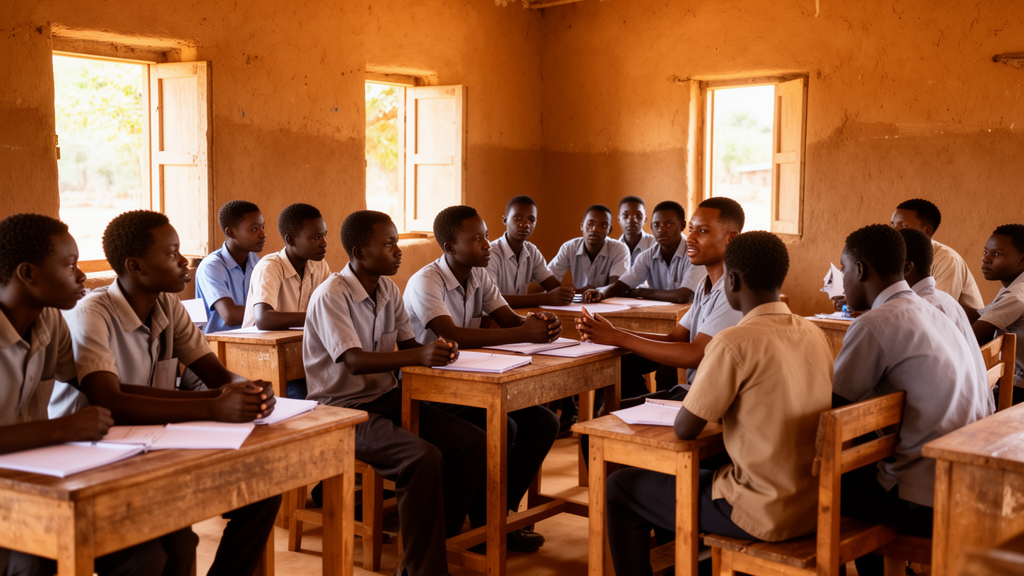
A cross-sectional study of senior secondary school students in rural Ebonyi State, Nigeria, has uncovered a measurable disconnect between gender-based violence knowledge and preventive practices. According to the investigation, adolescents frequently engaged in protective measures despite displaying substantial deficits in factual knowledge and holding predominantly negative perceptions. Researchers investigated these patterns because gender-based violence remains a major public health concern among adolescents, particularly in rural settings where sociocultural norms can limit its recognition and prevention.
The school-based cross-sectional study evaluated 300 senior secondary students selected through multistage sampling using a pretested, self-administered questionnaire. Researchers generated composite scores for knowledge, perception, and prevention practices, applying a 50 percent threshold for descriptive categorization. Spearman’s correlation and Pearson’s chi-square tests assessed associations between these domains, while unadjusted and multivariable linear regression models examined associated factors using continuous scores.
Continuous score assessments revealed marked differences across the three measured domains. Participating students recorded a mean knowledge score of 12.62 ± 4.70 out of 30, a mean perception score of 10.25 ± 6.42 out of 36, and a mean prevention-practice score of 6.01 ± 2.82 out of 12. When applying the 50 percent descriptive threshold, poor knowledge was observed in 184 out of 276 students, representing 66.7 percent of respondents.
Categorical assessments further revealed that negative perceptions regarding gender-based violence were pervasive among the adolescents, observed in 237 out of 275 students, or 86.2 percent. In contrast to the poor knowledge and negative perception outcomes, reported preventive actions were comparatively higher, with good prevention practices identified in 181 out of 287 students, accounting for 63.1 percent of respondents. Statistical testing demonstrated that knowledge was moderately correlated with prevention practices with a Spearman’s rho of 0.508, whereas perception showed a weaker correlation of rho equals 0.232, with both correlations reaching statistical significance. Categorical knowledge was significantly associated with prevention practices, whereas perception was not.
Multivariable linear regression models identified notable domestic and demographic factors associated with continuous knowledge and perception scores. Living with a guardian was associated with higher knowledge scores, showing an adjusted beta coefficient of 1.94 with a 95 percent confidence interval spanning from 0.12 to 3.77. Additionally, living with one parent or a guardian was associated with higher perception scores, whereas being in a romantic relationship was associated with lower scores.
Higher prevention-practice scores were significantly associated with living in a polygamous family structure, residing with a single parent or a guardian, being in a relationship, and witnessing arguments between caregivers. Conversely, uncertainty regarding household financial status was associated with lower prevention-practice scores.
The authors concluded that despite generally poor knowledge and pervasive negative perceptions, reported prevention practices among these rural secondary school students were comparatively better. Because the alignments between knowledge, perception, and actual practices remain incomplete, the study indicates that adolescent preventive responses reflect multifaceted personal and social influences. To address gender-based violence effectively, the researchers emphasized that integrated interventions at the school, family, and community levels must simultaneously strengthen factual knowledge, challenge harmful sociocultural beliefs, and foster practical prevention skills among youth.
Subject of Research: Gender-based violence knowledge, perception, and prevention among rural Nigerian secondary students
Article Title: Knowledge, perception, and preventive practices of gender-based violence among secondary school students in rural Nigeria: evidence of a knowledge–practice disconnect
Article References: Umahi, E. N., Okoroafor, P. I., & Aja, G. N. (2026). Knowledge, perception, and preventive practices of gender-based violence among secondary school students in rural Nigeria: evidence of a knowledge–practice disconnect. BMC Public Health. https://doi.org/10.1186/s12889-026-30535-1
Image Credits: AI Generated
DOI: 10.1186/s12889-026-30535-1
Keywords: gender-based violence, secondary school students, rural Nigeria, Ebonyi State, preventive practices, knowledge-practice disconnect, adolescent health, public health, cross-sectional study, multistage sampling, linear regression, Spearman correlation, polygamous families, guardian care, caregiver arguments, perception scores, sociocultural norms
News Source: Ophelia Keating. (November 25, 2026). Rural Nigerian Students Report Violence Prevention Practices Despite Low Knowledge. Scienmag.