A narrative review published in Plant Stress synthesizes emerging evidence on how multifactorial abiotic stress combinations impair plant physiology and highlights how naturally salt-tolerant halophytes can serve as climate-resilient alternative crops. Agricultural ecosystems increasingly face concurrent environmental pressures, including drought, salinity, heat, alkalinity, waterlogging, and heavy metal contamination, which together account for roughly seventy percent of global crop yield losses. More than one billion hectares of arable land are already degraded by salinity, drought, or excessive heat, while changing climate patterns continue to expand these vulnerable territories each year. Global agricultural output for staples such as bread wheat, Asian rice, maize, barley, soybean, and sugarcane continues to experience measurable declines under these pressures. Addressing these compounded challenges is critical because the Food and Agriculture Organization estimates that global food production must rise by approximately sixty percent by 2050 to sustain an expanding human population. Although early botanical research evaluated environmental challenges in isolation, recent investigations demonstrate that when multiple environmental stresses converge simultaneously or sequentially in the field, they generate non-additive physiological, biochemical, and molecular responses that cannot be predicted from single-factor experiments.
The review outlines the historical progression of plant stress research, which originated in controlled laboratory settings that focused on seed germination before expanding into greenhouse environments. While greenhouse trials eliminate environmental fluctuations cost-effectively, they fail to capture the unpredictable extremes and overlapping stressors inherent to open fields. When seedlings identified as stress-tolerant in controlled environments are transplanted into natural field conditions, many fail to establish or survive. Field conditions subject plants to concurrent heat, drought, salinity, alkalinity, cold snaps, and wind, triggering severe cellular and metabolic disruptions. A bibliometric analysis of the scientific literature published over the past decade through September 2025 reveals that researchers produced approximately 16,610 papers on salinity stress, 9,701 on heavy metal stress, 9,229 on heat stress, 8,850 on drought, 5,760 on alkalinity, and 198 on waterlogging or flooding. Despite this large volume of research, studies examining combined abiotic stresses remain limited; out of approximately 6,731 papers addressing combined stresses, only 245 specifically evaluated combinations among salinity, drought, alkalinity, heat, flooding, and heavy metals, leaving higher-order interactions largely unmapped.
When plants confront combined salinity and drought, the co-occurring pressures produce distinct physiological dilemmas because soil salinity reduces osmotic potential and induces physiological drought even when moisture is present. Elevated sodium accumulation restricts water and mineral uptake by roots, reducing leaf water potential, cell turgor, and cellular expansion. Stomatal closure follows, which lowers transpiration and restricts carbon dioxide influx, thereby suppressing ribulose-1,5-bisphosphate carboxylase-oxygenase activity and damaging photosystem II photochemistry. Visual symptoms include leaf curling, chlorosis, and premature senescence. However, responses vary with stress intensity: while high salinity combined with drought severely intensifies tissue damage, low-level salinity combined with drought can stimulate osmotic adjustment and carbon assimilation in certain tolerant genotypes. Molecular analyses show that simultaneous salinity and drought down-regulate essential thylakoid structural proteins, including D1, D2, CP43, CP47, PsbE, and PsbH, and impair chloroplast redox enzymes such as glutamine synthetase, phosphoglycerate kinase, and transketolase. In the halophyte Halostachys caspica, reference genes such as elongation factor 1-alpha, tubulin 3, and ubiquitin-conjugating enzyme 10 maintain transcriptional stability under combined salinity and drought, whereas common control genes fluctuate widely. Furthermore, a meta-analysis in barley identified 441 differentially expressed genes responsive to this pairing, with 46 genes connected to Rubisco activase A.
Combinations involving salinity alongside alkalinity or extreme heat impose compounding ionic, thermal, and biochemical stresses on vegetative tissues. Salinity paired with alkalinity introduces excessive sodium alongside basic salts such as sodium bicarbonate and sodium carbonate, elevating soil pH well beyond the standard range of 6 to 8 required by major crops. This alkaline environment decreases the bioavailability of essential micronutrients and macronutrients, including phosphorus, iron, copper, boron, and zinc. In switchgrass, sunflower, and mulberry, combined salinity and alkalinity reduce seed germination, plumule and radicle growth, chlorophyll pigments, and electron transport rates. When salinity coincides with heat, plants experience conflicting regulatory pressures: high temperatures stimulate stomatal opening to drive evaporative transpiration cooling, but soil salinity limits root water absorption. If plants open their stomata, transpirational pull accelerates the uptake and accumulation of toxic sodium ions, exacerbating tissue injury. In contrast, if stomata close to prevent ion influx and conserve water, internal leaf temperatures rise and thermal regulation fails. Genetic investigations in transgenic rice indicate that overexpression of flavanol 3-hydroxylase elevates kaempferol and quercetin accumulation, up-regulates ion homeostasis genes, and confers tolerance to combined salinity and heat, while application of nano-selenium, silicon, or exogenous melatonin mitigates oxidative damage in cucumber and tomato.
Flooding and heavy metal contamination introduce additional chemical hazards that intensify under multifactorial conditions. Flooding causes waterlogging and submergence, creating hypoxic or anoxic root environments because gas diffusion in water is drastically slower than in porous soil. Oxygen deprivation restricts mitochondrial respiration, suppresses beneficial rhizosphere microbes, stimulates anaerobic polypeptides and ethanol fermentation, and elevates toxic reduced compounds such as divalent iron, trivalent manganese, and hydrogen sulfide. When salinity coincides with flooding, root sodium exclusion mechanisms break down, accelerating chlorosis and necrosis. However, tolerant maize cultivars such as DK-6142 and MALKA-2016 mitigate this injury by enhancing superoxide dismutase, catalase, peroxidase, and ascorbate peroxidase activity, alongside a 57 to 82 percent increase in catalase gene expression. When flooding occurs alongside heavy metals such as cadmium, copper, lead, or chromium, the altered redox conditions in waterlogged soils increase metal solubility, bioavailability, and mobility. Long-term exposure impairs photosynthetic efficiency and weakens antioxidant defenses across cereals and vegetables. In dry soils, drought combined with heavy metals elevates malondialdehyde and electrolyte leakage, although soil amendments using groundnut shell biochar paired with the plant growth-promoting rhizobacterium Bacillus pseudomycoides ARN7 show protective effects in maize.
The interaction between drought and heat represents another prevalent and detrimental multi-stress pairing, defined by opposing stomatal control mechanisms. Drought promotes abscisic acid accumulation to trigger stomatal closure and prevent dehydration, whereas elevated temperatures encourage stomatal opening to facilitate transpirational leaf cooling. This conflict suppresses stomatal conductance and carbon dioxide assimilation, causing sharp drops in photosynthetic rates and elevating internal leaf temperatures. To survive this impasse, certain species utilize differential transpiration, an acclimation mechanism where stomata in reproductive organs such as flowers, sepals, and pods open selectively to enable localized evaporative cooling while foliar stomata remain closed to prevent systemic desiccation. At the molecular level, combined drought and heat stress alters carbohydrate metabolism; in wheat, 23 genes encoding six classes of starch biosynthesis show differential regulation. In tea plants, this dual stress induces differential alternative splicing across 2,447 genes, while date palms up-regulate wax biosynthesis genes twofold to reinforce cuticle barriers. In forage grasses such as perennial ryegrass, cocksfoot, and tall fescue, combined drought and heat reduce membrane stability and relative water content, whereas chicory exhibits greater tolerance.
As stress combinations expand to threefold or higher-order combinations, physiological and metabolic injuries compound rapidly. Under simultaneous salinity, drought, and heat, evaporative water loss and osmotic imbalance restrict gaseous exchange, elevate reactive oxygen species, and destabilize cellular membranes. In Chenopodium quinoa, this threefold stress severely disrupts root and shoot potassium-to-sodium balances while inducing protective antioxidant enzymes, including superoxide dismutase and peroxidase. In Arabidopsis thaliana, genetic engineering that combines the vacuolar pyrophosphatase gene AVP1 with Larrea Rubisco activase RCA enhances vacuolar ion compartmentalization and stabilizes photosynthetic function under concurrent salinity, drought, and heat. Chemical mitigation using salicylic acid in hulled and hulless barley varieties accelerates proline and protein accumulation while boosting antioxidant enzymes. When stress loads reach six concurrent factors—such as simultaneous heat, salinity, excess light, cadmium toxicity, nitrogen deficiency, and oxidative stress from paraquat—experiments in tomato and Arabidopsis document progressive collapses in root growth, chlorophyll retention, hormonal signaling, and overall plant survival, demonstrating the non-linear thresholds of multi-stress exposure.
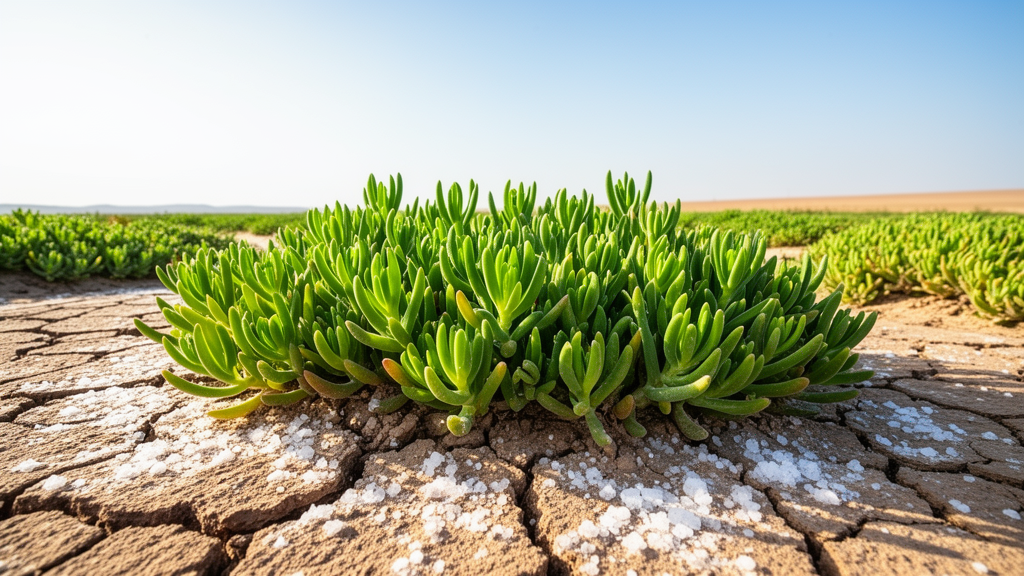
Halophytes, which comprise approximately one to two percent of all terrestrial plant species—representing roughly 2,600 of 235,000 known botanical species—possess innate adaptations that allow them to endure multifactorial environmental stresses. Unlike glycophytes, which represent the vast majority of conventional food crops and display vulnerability when exposed to combined stresses, halophytes thrive in saline environments and frequently maintain optimal vegetative development at sodium chloride concentrations between 50 and 250 millimolar. For example, Panicum turgidum achieves elevated biomass and chlorophyll synthesis at 125 millimolar sodium chloride, Suaeda fruticosa thrives between 200 and 400 millimolar, and Suaeda salsa completes its entire life cycle in salinity reaching 200 to 500 millimolar. In field trials, cultivating halophytes such as Suaeda salsa, Kalidium folium, and Atriplex species reduced soil salinity by up to 37.7 percent through ion uptake, sequestration, and salt gland secretion, with Atriplex and Suaeda species accumulating salt equivalent to 25 to 35 percent of their dry biomass. Additionally, species such as Halocnemum strobilaceum and Salicornia europaea yield seed oil contents of 28.9 percent and 18.58 percent, respectively, illustrating their potential utility as oilseed, forage, and biofuel crops.
The superior resilience of halophytes relies on an integrated suite of anatomical, physiological, and biochemical traits that maintain homeostasis under stress. Anatomical features include succulent tissues, epidermal trichomes, salt glands, and dense epidermal cell arrangements that protect internal photosynthetic structures, as observed in quinoa during concurrent heat and salinity. Physiologically, halophytes regulate toxic sodium transport through high-affinity potassium transporters, vacuolar sodium-hydrogen antiporters, and the Salt Overly Sensitive signaling cascade. In glycophytes, these regulatory networks function effectively only at low salinity levels between 150 and 250 millimolar, whereas halophytic transporters sustain ionic balance at salt concentrations reaching 400 millimolar. Halophytes also accumulate high concentrations of non-enzymatic osmoprotectants, such as proline, glycine betaine, mannitol, sorbitol, and inositol, alongside robust enzymatic antioxidant machinery encompassing superoxide dismutase, catalase, ascorbate peroxidase, dehydroascorbate reductase, and monodehydroascorbate reductase. In Panicum antidotale, low salinity combined with drought caused minimal oxidative accumulation and minor dry mass changes while enhancing nutrient-use efficiency. In Salsola imbricata, mild salinity alleviated drought-induced declines in photosynthetic rate and leaf water potential by facilitating inorganic solute accumulation.
Despite these promising capabilities, the authors emphasize that substantial methodological and mechanistic limitations currently restrict the application of multifactorial stress research. Many stress pairings—such as alkalinity combined with heat, flooding paired with alkalinity, and complex higher-order permutations—remain completely uncharacterized. Existing experiments frequently employ inconsistent stress intensities, varying heat-ramping rates, disparate water-deprivation techniques, and unstandardized reporting metrics, preventing rigorous meta-analytic synthesis across diverse plant families. Because the reviewed literature consists of a narrative synthesis rather than a formal systematic meta-analysis, the authors call for harmonized experimental protocols and repeated field trials that integrate multi-omics platforms, including transcriptomics, proteomics, ionomics, and metabolomics. Uncovering regulatory hub genes and transferrable tolerance mechanisms from halophytes will be essential to breed resilient conventional crops or establish direct halophyte-based agriculture on marginal saline lands, supporting long-term food security under accelerating global climate extremes.
Subject of Research: Plant physiological and molecular responses to multifactorial abiotic stress combinations and the role of halophytes as climate-resilient crops
Article Title: Multifactorial stress combinations: the emerging role of halophytes as climate-resilient and alternative crops
Article References: Nisa, S. U., Asrar, H., Khan, F., Liu, X., & Hussain, T. (2026). Multifactorial stress combinations: the emerging role of halophytes as climate-resilient and alternative crops. Plant Stress, 24, Article 101533. https://doi.org/10.1016/j.stress.2026.101533
Image Credits: AI Generated
DOI: 10.1016/j.stress.2026.101533
Keywords: halophytes, multifactorial stress, abiotic stress, climate resilience, salinity stress, drought stress, heat stress, alkalinity stress, soil salinization, food security, plant physiology, osmoprotectants, ion homeostasis, photosystem II, differential transpiration, crop science, phyto-desalination, alternative crops
News Source: Drew Townsend. (November 24, 2026). Halophyte Crops Offer Multi-Stress Resilience Against Compounding Climate Pressures. Scienmag.