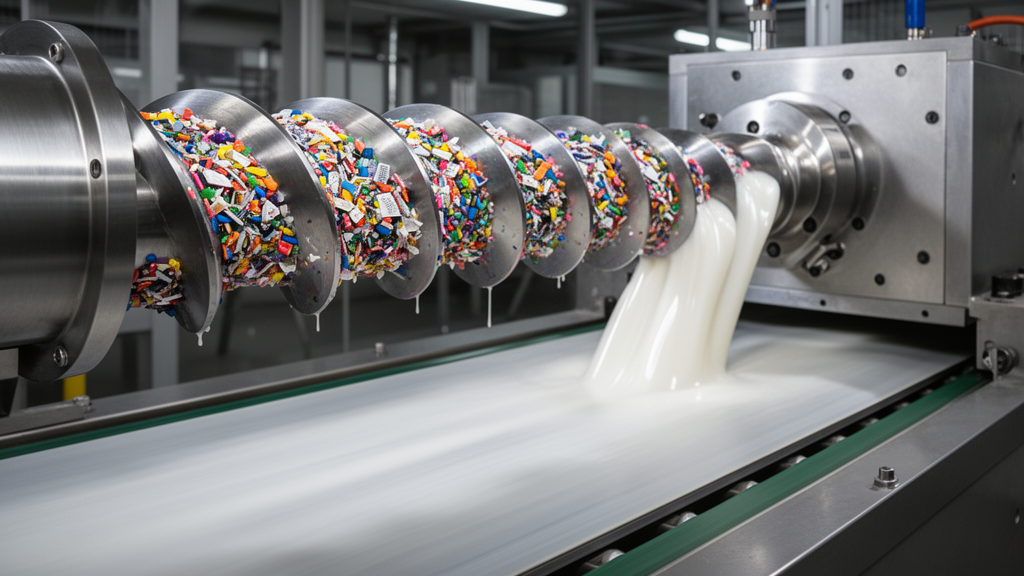
Computational fluid dynamics simulations of a single-screw extruder indicate that operating at a reduced screw speed of 36.7 rpm optimizes recycled polyethylene terephthalate density while lowering energy consumption during processing. This research addresses the growing environmental and energy challenges tied to the increasing production and accumulation of plastic waste.
To analyze the behavior of plastic throughout the extrusion process, the research team initially constructed a geometric model of the single-screw extruder using SolidWorks software. Following this geometric modeling stage, the investigators conducted computational fluid dynamics simulations in ANSYS to analyze the behavior of the molten plastic material. The simulation framework examined key operational parameters affecting the quality of the molten plastic, including extruder screw speed, pressure, density, and the temperature distribution along the extruder.
To enhance product quality, the investigators applied a direct optimization approach focused specifically on maximizing plastic density at the extruder outlet. In the authors’ analysis, achieving higher density is critical because higher density is associated with higher crystallinity, higher tensile strength, higher stiffness, and better chemical resistance. When examining parameter interactions, the simulation results revealed an inverse relationship between the operating temperature and the final product density.
The direct optimization results showed that operating within the identified thermal range and rotational speed maximizes material density before discharge. Specifically, the optimized model produced an optimum temperature range of 541° to 591° throughout the extruder screw zones. In conjunction with this temperature profile along the extruder, the optimization identified an optimum screw speed of 36.7 rpm, which resulted in a calculated final output density of 1171.25 kg/m3 at the extruder outlet.
Furthermore, the optimized model indicates that reducing screw speeds improves both polyethylene terephthalate quality and energy consumption.
Subject of Research: Single-screw extruder process optimization for polyethylene terephthalate recycling
Article Title: Design and process optimization of a single screw extruder for plastic recycling
Article References: Mostafa, S. A., Shamseldin, M. A., Elkhatib, S., & Eleashy, H. (2026). Design and process optimization of a single screw extruder for plastic recycling. Discover Applied Sciences, 8(12), Article 1419. https://doi.org/10.1007/s42452-026-09676-w
Image Credits: AI Generated
DOI: 10.1007/s42452-026-09676-w
Keywords: polyethylene terephthalate, PET recycling, plastic recycling, single-screw extruder, process optimization, computational fluid dynamics, ANSYS, SolidWorks, screw speed, temperature distribution, output density, polymer crystallinity, tensile strength, chemical resistance, energy consumption, molten plastic, extruder outlet
News Source: Audrey Campbell. (November 24, 2026). Optimized Single Screw Extruder Model Enhances Recycled Plastic Density and Efficiency. Scienmag.