• HOME
  • NEWS
  • EXPLORE
    • CAREER
      • Companies
      • Jobs
    • EVENTS
    • iGEM
      • News
      • Team
    • PHOTOS
    • VIDEO
    • WIKI
  • BLOG
  • COMMUNITY
    • FACEBOOK
    • INSTAGRAM
    • TWITTER
Tuesday, November 24, 2026
BIOENGINEER.ORG
No Result
View All Result
  • Login
  • HOME
  • NEWS
  • EXPLORE
    • CAREER
      • Companies
      • Jobs
        • Lecturer
        • PhD Studentship
        • Postdoc
        • Research Assistant
    • EVENTS
    • iGEM
      • News
      • Team
    • PHOTOS
    • VIDEO
    • WIKI
  • BLOG
  • COMMUNITY
    • FACEBOOK
    • INSTAGRAM
    • TWITTER
No Result
View All Result
Bioengineer.org
No Result
View All Result
Home NEWS Science News Health

Artificial Intelligence Accurately Detects Breast Arterial Calcification on Routine Mammograms

by
November 24, 2026
in Health
Reading Time: 2 mins read
0
Artificial Intelligence Accurately Detects Breast Arterial Calcification on Routine Mammograms

Artificial Intelligence Accurately Detects Breast Arterial Calcification on Routine Mammograms

Share on FacebookShare on TwitterShare on LinkedinShare on RedditShare on Telegram

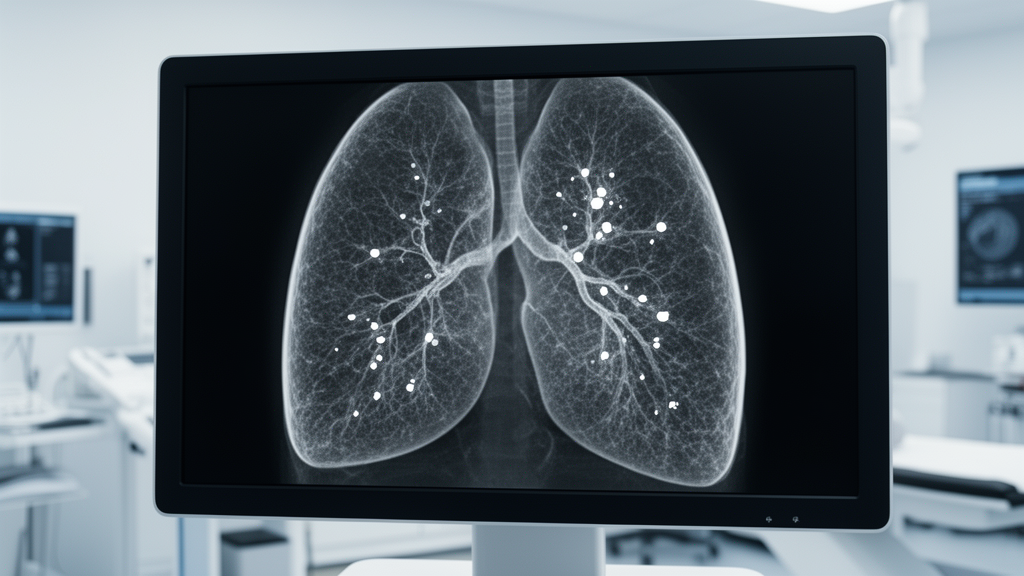
Artificial intelligence systems can accurately identify breast arterial calcifications on routine mammography, according to a systematic review evaluating diagnostic performance across multiple clinical datasets. The review analyzed findings from five studies encompassing 12,924 mammography cases, comparing automated detection algorithms directly against manual assessments performed by radiologists to evaluate whether machine learning tools could reliably pinpoint vascular markers.

Cardiovascular disease remains the leading cause of death worldwide and disproportionately affects women. Although breast arterial calcifications have emerged as a sex-specific predictor of cardiovascular risk, routine clinical reporting has remained inconsistent because standard evaluation guidelines are currently lacking. Consequently, automated artificial intelligence models have attracted attention as an objective mechanism to identify these calcifications during regular mammography examinations.

To assess algorithmic precision, researchers conducted a systematic search across major databases, including MEDLINE, PubMed Central, Scopus, ScienceDirect, IEEE Xplore, and ClinicalTrials.gov for literature published between 2015 and 2025. Following PRISMA 2020 guidelines, two independent reviewers screened 84 initial records and extracted data using Covidence, while applying the QUADAS-2 tool to evaluate potential study bias before synthesizing results.

The analyzed machine learning models demonstrated robust diagnostic capability when compared with radiologist-generated ground truth. Across the included investigations, artificial intelligence tools achieved Area Under the Curve values ranging from 0.84 to 0.96. System performance also yielded diagnostic sensitivities between 0.696 and 0.87, specificities between 0.92 and 0.98, overall accuracies between 0.81 and 0.998, precisions between 0.683 and 0.89, and F1-scores between 0.665 and 0.87.

Despite minor variability across evaluated platforms, the consistently high metrics indicate that automated systems can effectively augment manual interpretation workflows without displacing radiologist oversight. While the authors emphasize that larger and more diverse cohorts remain necessary to validate broader generalizability, current evidence demonstrates that artificial intelligence can reliably detect calcifications and help address an unmet need in preventive cardiovascular care for women.

Subject of Research: Diagnostic accuracy of artificial intelligence for detecting breast arterial calcification on mammography

Article Title: Artificial intelligence for breast arterial calcification detection on mammography: A systematic review of diagnostic accuracy

Article References: Campbell, A. P., Petfield, L., Nemec II, E. C., & Rose, S. J. (2026). Artificial intelligence for breast arterial calcification detection on mammography: A systematic review of diagnostic accuracy. PLOS Digital Health, 5(11), e0001829. https://doi.org/10.1371/journal.pdig.0001829

Image Credits: AI Generated

DOI: 10.1371/journal.pdig.0001829

Keywords: artificial intelligence, breast arterial calcifications, mammography, cardiovascular disease, systematic review, diagnostic accuracy, radiology, PRISMA guidelines, QUADAS-2, area under the curve, preventive care, women health, clinical screening, radiologist workflow, sensitivity and specificity, digital health

News Source: Ophelia Keating. (November 24, 2026). Artificial Intelligence Accurately Detects Breast Arterial Calcification on Routine Mammograms. Scienmag.


Tags: area under the curveArtificial Intelligencebreast arterial calcificationsCardiovascular diseaseclinical screeningdiagnostic accuracyDigital Healthmammographypreventive carePRISMA guidelinesQUADAS-2radiologist workflowradiologysensitivity and specificitysystematic reviewwomen health
Share12Tweet7Share2ShareShareShare1

Related Posts

Tranexamic Acid Route Shows Similar Hematoma Risk in Breast Reduction Surgery

Tranexamic Acid Route Shows Similar Hematoma Risk in Breast Reduction Surgery

November 24, 2026
Oral Nutraceuticals and Lasers Show Measurable Benefits for Restoring Skin Barrier Integrity

Oral Nutraceuticals and Lasers Show Measurable Benefits for Restoring Skin Barrier Integrity

November 24, 2026

Study Analyzes Factors Influencing Inpatient Physician Adherence to Clot Risk Recommendations

November 24, 2026

Therapist Attachment Style and Bodily Regulation Shape Movement Therapy in Residential Care

November 24, 2026

POPULAR NEWS

  • Methodological Enhancements Proposed to Strengthen Retinal Transcriptomic Signatures in Alzheimer's Models

    Methodological Enhancements Proposed to Strengthen Retinal Transcriptomic Signatures in Alzheimer’s Models

    29 shares
    Share 12 Tweet 7
  • Endometrial Morular Metaplasia Does Not Alter Fertility Preservation Outcomes in Hyperplasia

    29 shares
    Share 12 Tweet 7
  • Care Package Boosts Primary Care Urticaria Knowledge and PROM Adoption in Italy

    29 shares
    Share 12 Tweet 7
  • Paternal Psychological Stress Linked to Epididymal Sperm RNA Changes in Review

    29 shares
    Share 12 Tweet 7

About

We bring you the latest biotechnology news from best research centers and universities around the world. Check our website.

Follow us

Recent News

Cryo-Electron Tomography Uncovers Native Molecular Architecture Inside Intact Cell Nuclei

Tranexamic Acid Route Shows Similar Hematoma Risk in Breast Reduction Surgery

Community Ethnobotany Informs Food Forest Design but Faces Persistent Participation Barriers

Subscribe to Blog via Email

Enter your email address to subscribe to this blog and receive notifications of new posts by email.

Join 89 other subscribers
  • Contact Us

Bioengineer.org © Copyright 2023 All Rights Reserved.

Welcome Back!

Login to your account below

Forgotten Password?

Retrieve your password

Please enter your username or email address to reset your password.

Log In
No Result
View All Result
  • Homepages
    • Home Page 1
    • Home Page 2
  • News
  • National
  • Business
  • Health
  • Lifestyle
  • Science

Bioengineer.org © Copyright 2023 All Rights Reserved.