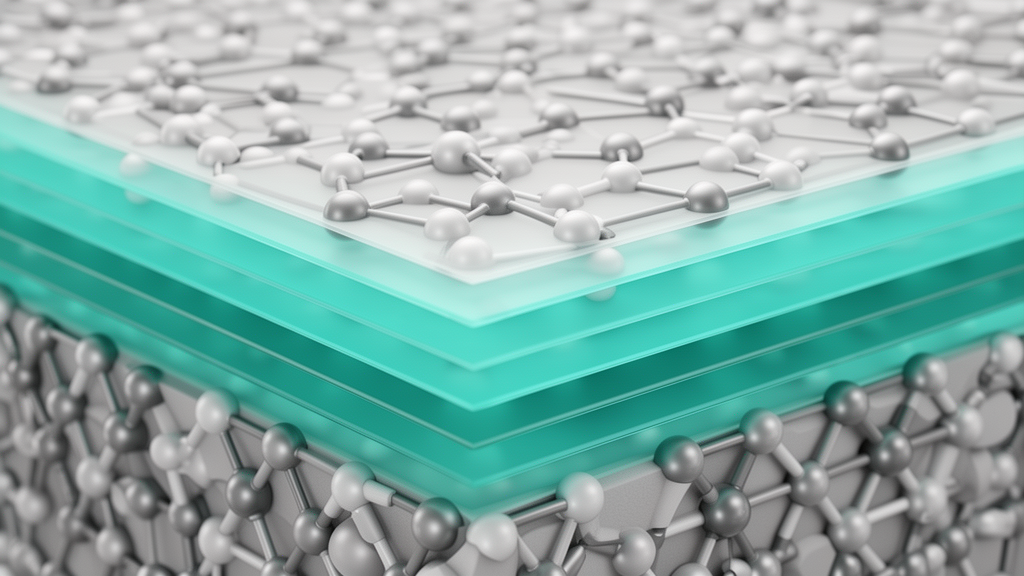
Materials scientists have developed a two-dimensional bismuth oxybromide interface modification layer between a tin oxide electron transport layer and a methylammonium lead iodide perovskite absorber, increasing solar cell power conversion efficiency from 11.7 percent to 15.0 percent while improving ambient moisture stability. Organic-inorganic halide perovskite solar cells have advanced rapidly in laboratory evaluations, with photoelectric conversion efficiencies climbing from 3.8 percent to 27.0 percent. However, reaching the theoretical conversion limit of 33 percent remains a major challenge. Under suboptimal fabrication or operating conditions, microscopic defects within perovskite films proliferate rapidly, undermining long-term stability in the presence of elevated temperatures and humidity. To improve performance, researchers have explored electron transport layer engineering, post-treatment, interface modification, and additive engineering.
Two-dimensional materials have attracted widespread attention for interfacial engineering due to their tunable band gaps, high electrical conductivities, and abundant surface-active functional groups. Researchers have investigated diverse two-dimensional systems as additives or buffer layers, including graphene, graphitic carbon nitride, transition metal carbides or nitrides known as MXenes, tungsten disulfide, molybdenum disulfide, and black phosphorus. For instance, facet-dependent passivation using 2-aminopyridine hydroiodide improves photovoltaic performance, while incorporating graphitic carbon nitride into precursor solutions slows crystallization and passivates film defects. Nevertheless, identifying two-dimensional candidates that combine appropriate electronic band gaps with high electrical conductivity remains an ongoing hurdle. Many organic two-dimensional materials exhibit restricted electrical conductivity, whereas several two-dimensional metallic compounds feature undesirably narrow band gaps despite high conductivity.
Bismuth oxyhalides possess distinctive layered architectures and tunable electronic properties that make them particularly promising for perovskite solar cell applications. In crystalline bismuth oxybromide, positively charged bismuth-oxygen layers with the composition [Bi2O2]2+ are structurally interleaved between double layers of negatively charged bromide ions. Strong covalent bonds connect the bismuth and oxygen atoms within the [Bi2O2]2+ sheets, whereas relatively weak van der Waals interactions connect these oxide layers to the adjacent bromide sheets. This pronounced structural anisotropy provides sufficient space for atomic polarization, generating an internal electric field oriented along the [001] crystallographic axis between the interleaved sheets. The resulting internal electric field promotes the spatial separation and directional migration of photogenerated electron-hole pairs, reducing charge accumulation and recombination losses.
To exploit these characteristics, the researchers synthesized two-dimensional BiOBr nanosheets through a facile hydrothermal route under acidic conditions. In the experimental procedure, 0.97 grams of bismuth nitrate pentahydrate was dissolved in 3 milliliters of glacial acetic acid, while 0.24 grams of potassium bromide was dissolved in 30 milliliters of deionized water. The bismuth solution was slowly added to the potassium bromide solution under continuous mechanical stirring for 30 minutes. The mixture was sealed inside a 50-milliliter polytetrafluoroethylene-lined stainless-steel autoclave and heated at 120 degrees Celsius for 6 hours. Following the reaction, the white precipitate was collected and rinsed with deionized water and ethanol via centrifugation at 8,000 revolutions per minute for 10 minutes across three to five washing cycles. The resulting powder was dried overnight at 60 degrees Celsius in air and subsequently calcined in a muffle furnace at 500 degrees Celsius for 3 hours with heating and cooling rates controlled at 2 degrees Celsius per minute.
High-resolution scanning electron microscopy confirmed that the hydrothermally synthesized BiOBr consisted of ultrathin two-dimensional sheets displaying lateral dimensions of approximately 2 micrometers. X-ray diffraction patterns revealed that all diffraction peaks indexed cleanly to tetragonal BiOBr without detectable impurity phases, verifying high crystallographic purity. Survey X-ray photoelectron spectroscopy further verified the characteristic elemental peaks of bismuth, oxygen, and bromine. To ensure that introducing this intermediate layer would not impede incoming solar illumination, ultraviolet-visible transmittance measurements were conducted on fluorine-doped tin oxide substrates coated with pristine tin oxide electron transport layers and BiOBr-modified tin oxide films across varying modification concentrations. The resulting spectra demonstrated that BiOBr modification at concentrations between 0.1 and 0.4 milligrams per milliliter did not significantly affect optical transmittance in the wavelength range of 300 to 800 nanometers, confirming that the modifier preserves incident light transmission into the overlying perovskite absorber.
Solar cell fabrication employed a planar architecture on fluorine-doped tin oxide glass substrates, which were ultrasonically cleaned in deionized water, isopropanol, ethanol, and isopropanol for 20 minutes per stage before drying. The tin oxide precursor was prepared by dissolving 0.6768 grams of tin(II) chloride dihydrate and 0.1772 grams of urea in 20 milliliters of deionized water, aging under stirring for over 48 hours in ambient air until fully clear. The precursor was irradiated with ultraviolet ozone for 15 minutes, spin-coated at 4,000 revolutions per minute for 30 seconds, and annealed at 180 degrees Celsius for 15 minutes, followed by a second layer annealed at 150 degrees Celsius. BiOBr dispersions with concentrations from 0.1 to 0.4 milligrams per milliliter were spin-coated on top and ultraviolet-irradiated for 15 minutes. In an argon glove box, a 1.3 molar methylammonium lead iodide precursor in dimethylformamide and dimethyl sulfoxide was spin-coated with chlorobenzene antisolvent dripped at 16 seconds and annealed at 100 degrees Celsius for 15 minutes. Complete devices were finalized by screen-printing a commercial carbon slurry counter electrode dried at 100 degrees Celsius.
Chemical analyses illuminated the electronic interaction between the BiOBr modifier and the underlying tin oxide electron transport layer. Core-level X-ray photoelectron spectroscopy of pristine tin oxide revealed Sn 3d5/2 and Sn 3d3/2 peaks at 487.3 and 495.7 electron volts, which shifted to lower binding energies of 487.2 and 495.6 electron volts after BiOBr deposition. This downward shift indicates that BiOBr species occupy surface vacancies in tin oxide, increasing local electron density around tin atoms and lowering their binding energies. Deconvolution of O 1s spectra into lattice oxygen at 531.05 electron volts and non-lattice oxygen at 532.13 electron volts showed a reduced ratio of non-lattice to lattice oxygen, confirming interfacial bonding and electron donation to tin oxide. Photoluminescence emission peaks at 429, 466, and 510 nanometers were markedly quenched after modification, demonstrating that non-lattice oxygen trap states were suppressed. Raman spectroscopy revealed reduced intensities for vibrational modes at 455, 556, and 785 inverse centimeters, further corroborating defect elimination, while conductivity tests confirmed substantially enhanced electrical conductivity across the modified composite layer.
Beyond optimizing the electron transport layer, BiOBr modification profoundly improved the crystal quality, grain size, and morphology of the overlying perovskite film. Field-emission scanning electron microscopy showed that BiOBr-modified perovskite films exhibited larger grains, fewer grain boundaries, and smoother surface coverage compared with pristine films. Statistical evaluation established that average perovskite grain size increased from 313.80 nanometers in control films to 475.24 nanometers in modified films, while cross-sectional imaging revealed a stronger tendency toward vertical grain orientation. X-ray diffraction patterns demonstrated significant intensity enhancements for the primary (110) and (220) diffraction peaks without peak shifts, confirming improved crystallinity without lattice incorporation of BiOBr. Contact angle measurements indicated enhanced surface wettability, lowering the Gibbs free energy barrier for nucleation and promoting heterogeneous nucleation that guided vertical grain growth. Furthermore, X-ray photoelectron spectroscopy showed shifts in Pb 4f and I 3d core levels toward lower binding energies, demonstrating that bromine atoms donate electrons to vacant 6p orbitals of lead ions to form passivating lead-bromine bonds, while oxygen atoms participate in interfacial hydrogen bonding with iodine species.
Photovoltaic measurements confirmed that modifying the buried interface with 0.2 milligrams per milliliter of BiOBr delivered the highest optoelectronic performance among tested concentrations. The champion modified solar cell achieved a power conversion efficiency of 15.00 percent, with an open-circuit voltage of 1.07 volts, a short-circuit current density of 22.36 milliamperes per square centimeter, and a fill factor of 0.63, outperforming the control device efficiency of 11.7 percent. Statistical evaluation across multiple devices demonstrated that average power conversion efficiency increased from 11.62 ± 0.45 percent for control devices to 14.43 ± 0.57 percent for optimized devices. Incident photon-to-electron conversion efficiency spectra showed external quantum efficiencies exceeding 90 percent across the 400 to 750 nanometer range in optimized devices, compared to exceeding 80 percent in control cells. Integrated current densities reached 22.02 milliamperes per square centimeter for the optimized cell and 18.21 milliamperes per square centimeter for the control, matching current density-voltage sweeps. Optical absorption measurements confirmed that the enlarged grain morphology and enhanced crystallinity produced stronger visible light absorption, boosting overall light harvesting capacity.
Detailed impedance and carrier dynamics investigations clarified the physical mechanisms governing the observed performance improvements and environmental durability. Electrical impedance spectroscopy revealed that series resistance dropped from 86.77 ohms in control devices to 78.16 ohms in modified devices, while charge transfer resistance decreased from 104.3 ohms to 81.03 ohms, signifying accelerated carrier transport. Concurrently, recombination resistance increased from 79.54 ohms to 138.4 ohms, confirming suppressed carrier recombination at the tin oxide and perovskite interface. Space-charge-limited-current measurements showed that the trap-filled limit voltage decreased from 0.72 volts to 0.54 volts, reflecting a reduction in calculated trap-state density from 2.38 × 10^16 per cubic centimeter in the 327-nanometer control film to 1.37 × 10^16 per cubic centimeter in the 373-nanometer modified film. In dark current measurements, modified devices exhibited lower leakage currents, while time-resolved photoluminescence showed that average carrier lifetimes decreased from 118.56 nanoseconds to 68.65 nanoseconds, confirming rapid interfacial charge extraction. Crucially, environmental stability testing in ambient air at room temperature and 40 ± 5 percent relative humidity demonstrated that control devices degraded to approximately 60 percent of initial efficiency after 700 hours, whereas BiOBr-modified devices retained over 80 percent of their initial efficiency.
Subject of Research: Two-dimensional bismuth oxybromide interface engineering for perovskite solar cells
Article Title: Building two-dimensional BiOBr interface to afford efficient and stable perovskite solar cells
Article References: Gui, L., Chen, Z., Lu, X., Wang, H., Yang, X., Wu, C., Zhao, L., & Wang, S. (2026). Building two-dimensional BiOBr interface to afford efficient and stable perovskite solar cells. Advanced Sensor and Energy Materials, 5(4), Article 100220. https://doi.org/10.1016/j.asems.2026.100220
Image Credits: AI Generated
DOI: 10.1016/j.asems.2026.100220
Keywords: perovskite solar cells, bismuth oxybromide, two-dimensional materials, interface modification, tin oxide electron transport layer, power conversion efficiency, defect passivation, hydrothermal synthesis, charge carrier recombination, methylammonium lead iodide, internal electric field, photoluminescence quenching, electrochemical impedance spectroscopy, space-charge-limited-current, ambient moisture stability, heterogeneous nucleation
News Source: Bethany Barker. (November 24, 2026). Two-Dimensional Bismuth Oxybromide Interface Improves Perovskite Solar Cell Efficiency and Stability. Scienmag.