• HOME
  • NEWS
  • EXPLORE
    • CAREER
      • Companies
      • Jobs
    • EVENTS
    • iGEM
      • News
      • Team
    • PHOTOS
    • VIDEO
    • WIKI
  • BLOG
  • COMMUNITY
    • FACEBOOK
    • INSTAGRAM
    • TWITTER
Saturday, February 7, 2026
BIOENGINEER.ORG
No Result
View All Result
  • Login
  • HOME
  • NEWS
  • EXPLORE
    • CAREER
      • Companies
      • Jobs
        • Lecturer
        • PhD Studentship
        • Postdoc
        • Research Assistant
    • EVENTS
    • iGEM
      • News
      • Team
    • PHOTOS
    • VIDEO
    • WIKI
  • BLOG
  • COMMUNITY
    • FACEBOOK
    • INSTAGRAM
    • TWITTER
  • HOME
  • NEWS
  • EXPLORE
    • CAREER
      • Companies
      • Jobs
        • Lecturer
        • PhD Studentship
        • Postdoc
        • Research Assistant
    • EVENTS
    • iGEM
      • News
      • Team
    • PHOTOS
    • VIDEO
    • WIKI
  • BLOG
  • COMMUNITY
    • FACEBOOK
    • INSTAGRAM
    • TWITTER
No Result
View All Result
Bioengineer.org
No Result
View All Result
Home Headlines

Gene therapy using ‘junk DNA’ could lower risk for heart…

Bioengineer.org by Bioengineer.org
January 30, 2018
in Headlines, Health, Science News
Reading Time: 2 mins read
0
Share on FacebookShare on TwitterShare on LinkedinShare on RedditShare on Telegram
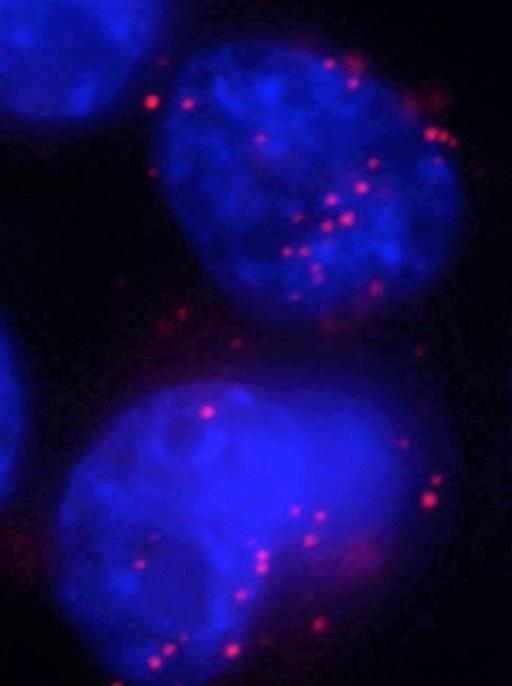
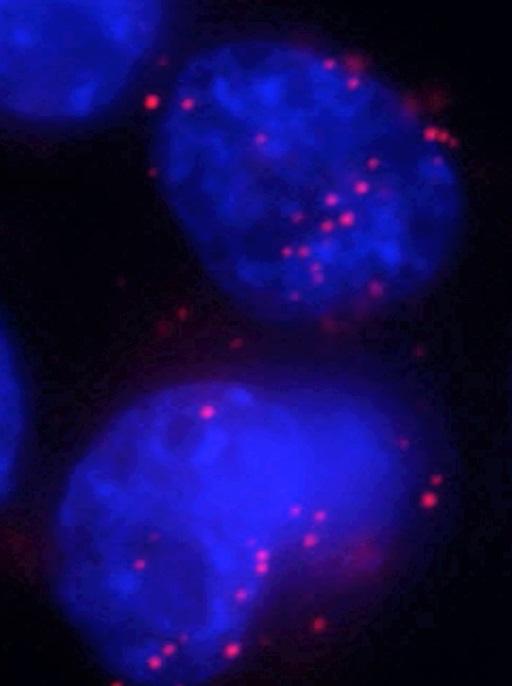
IMAGE

Credit: Judy Wu / UCLA Division of Cardiology

FINDINGS

Scientists from UCLA and the Howard Hughes Medical Institute successfully used a gene that suppresses cholesterol levels as part of a treatment to reduce plaque in mice with a disorder called familial hypercholesterolemia. In a preclinical study, researchers found that the gene, LeXis, lowered cholesterol and blockages in the arteries, and the treatment appeared to reduce the build-up of fat in liver cells.

BACKGROUND

Familial hypercholesterolemia is an inherited condition characterized by extremely high levels of low-density lipoprotein cholesterol (commonly referred to as "bad cholesterol") and an increased risk of early heart disease.

The LeXis gene belongs to a unique group of genes that until recently were considered "junk DNA" because scientists believed they served little purpose. However, evidence from the human genome project led to the discovery that genes like LeXis are actually active. The study of these genes, now referred to as long noncoding ribonucleic acids, or lncRNAs, is a rapidly evolving area in biology.

METHOD

Researchers wanted to test whether a single injection of LeXis could slow the development of heart disease. To do so, they gave the mice either LeXis or a control gene, and fed them a 15-week diet consisting of food high in sodium and cholesterol — the mouse equivalent of fast-food hamburgers and french fries. Researchers then measured the progression of heart disease.

In the next phase of the study, researchers intend to confirm the findings in larger animals and test the therapy in combination with currently available treatments.

IMPACT

Although previous research has shown that lncRNAs can be important, this is the first study to show that they could potentially be used to treat a human disease using gene therapy. Junk genes could one day offer a framework for treating people with familial hypercholesterolemia and other conditions that are otherwise very difficult to treat.

###

AUTHORS

The paper's authors are Xiaohui Wu, Zhengyi Zhang and Dr. Tamer Sallam of UCLA; and Dr. Peter Tontonoz, Marius Jones and David Salisbury of the Howard Hughes Medical Institute.

JOURNAL

The study was published online in the journal Circulation.

FUNDING

The research was supported by grants from the National Heart, Lung, and Blood Institute; the American College of Cardiology; and the Lauren B. Leichtman and Arthur E. Levine UCLA Cardiovascular Discovery Fund.

Media Contact

Amy Albin
[email protected]
310-267-7095
@uclahealth

http://www.uclahealth.org/

Related Journal Article

http://dx.doi.org/10.1161/CIRCULATIONAHA.117.029002

Share12Tweet8Share2ShareShareShare2

Related Posts

Decoding Prostate Cancer Origins via snFLARE-seq, mxFRIZNGRND

February 7, 2026

Digital Health Perspectives from Baltic Sea Experts

February 7, 2026

Florida Cane Toad: Complex Spread and Selective Evolution

February 7, 2026

Exploring Decision-Making in Dementia Caregivers’ Mobility

February 7, 2026
Please login to join discussion

POPULAR NEWS

  • Robotic Ureteral Reconstruction: A Novel Approach

    Robotic Ureteral Reconstruction: A Novel Approach

    82 shares
    Share 33 Tweet 21
  • Digital Privacy: Health Data Control in Incarceration

    63 shares
    Share 25 Tweet 16
  • Study Reveals Lipid Accumulation in ME/CFS Cells

    57 shares
    Share 23 Tweet 14
  • Breakthrough in RNA Research Accelerates Medical Innovations Timeline

    53 shares
    Share 21 Tweet 13

About

We bring you the latest biotechnology news from best research centers and universities around the world. Check our website.

Follow us

Recent News

Decoding Prostate Cancer Origins via snFLARE-seq, mxFRIZNGRND

Digital Health Perspectives from Baltic Sea Experts

Florida Cane Toad: Complex Spread and Selective Evolution

Subscribe to Blog via Email

Enter your email address to subscribe to this blog and receive notifications of new posts by email.

Join 73 other subscribers
  • Contact Us

Bioengineer.org © Copyright 2023 All Rights Reserved.

Welcome Back!

Login to your account below

Forgotten Password?

Retrieve your password

Please enter your username or email address to reset your password.

Log In
No Result
View All Result
  • Homepages
    • Home Page 1
    • Home Page 2
  • News
  • National
  • Business
  • Health
  • Lifestyle
  • Science

Bioengineer.org © Copyright 2023 All Rights Reserved.