Researchers from the ARC Centre of Excellence for Transformative Meta-Optical Systems (TMOS) have reported the first reflective display based on Antimony Selenide that can hold an image for months without being powered. This experimental study, published in Advanced Photonics Research, demonstrates a new approach to energy-efficient displays by utilizing the unique properties of phase change materials. The team, comprising scientists from the Royal Melbourne Institute of Technology (RMIT) and the Australian National University (ANU), built and tested a reflective platform capable of retaining images, being reliably reusable, and offering a wide colour gamut. The lead researcher, Dr Phuong Yen Le, described the work as a new way to create energy-efficient displays, highlighting the potential of this technology to reduce the constant power draw required by everyday screens.
Conventional displays found in phones, laptops, and televisions require a continuous power supply to maintain an image. In contrast, reflective displays are emerging as a sustainable alternative that could offer near zero power consumption while maintaining visual content. The core of this new technology lies in the use of phase change materials, or PCMs, which Dr Le has studied for a long time. Unlike most materials that remain fixed in a single structure, PCMs can be rearranged repeatedly at the atomic level by applying specific stimuli such as heat, light, or electricity. This capacity for reordering allows the material to switch between different optical and electrical properties, making it suitable for dynamic display applications.
The specific material chosen for this display, Antimony Selenide (Sb2Se3), is desirable among PCMs due to its non-volatility. Once the material changes phase, it is locked into that state and does not require continuous power to maintain it. Dr Le noted that most materials stay in one structure, fixing any application to that specific material structure. However, PCMs can change their structure, allowing for different optical and electrical properties to be accessed as needed. This fundamental difference makes Antimony Selenide a promising candidate for lower-power display technologies that do not rely on constant electrical input to preserve visual information.
To create a functional display, the research teams needed to understand how to produce a range of colours and shades using these phase change materials. One key reason for choosing Antimony Selenide was the significant change in its interaction with light between its crystalline and amorphous forms. Light travelling through these different phases moves at different speeds and is absorbed to different degrees. The researchers leveraged these effects to produce different colours by manipulating the phase of the material. Understanding the relationship between the material’s phase and the resulting colour was the main thrust of the research, as it allowed the team to characterize how structural changes affect optical properties.
The process of creating colour involved combining the investigation of phase changes with different thicknesses of the Antimony Selenide thin films. By varying these parameters, the researchers produced colours ranging from deep blues through to greys and oranges. Dr Le emphasized that this current range is just the start of the colour possibilities. The next step in the research is to understand what changes to the device’s structure will make more colours accessible and expand the colour gamut further.
The mechanism for rearranging the material at the atomic level to produce these colours involves the use of heat and lasers. Erasing the display is achieved by heating the material uniformly to approximately 200°C. At this temperature, the atoms have enough energy to move around and find new positions and orientations. This high-temperature process, known as annealing, allows atoms to migrate into the most stable positions, which tend to be crystals due to the dense packing of their regular structure. Annealing resets the display with a uniform blank image, effectively erasing any previous patterns and preparing the surface for new content. This thermal reset process is a critical step in ensuring the display can be reliably reused multiple times.
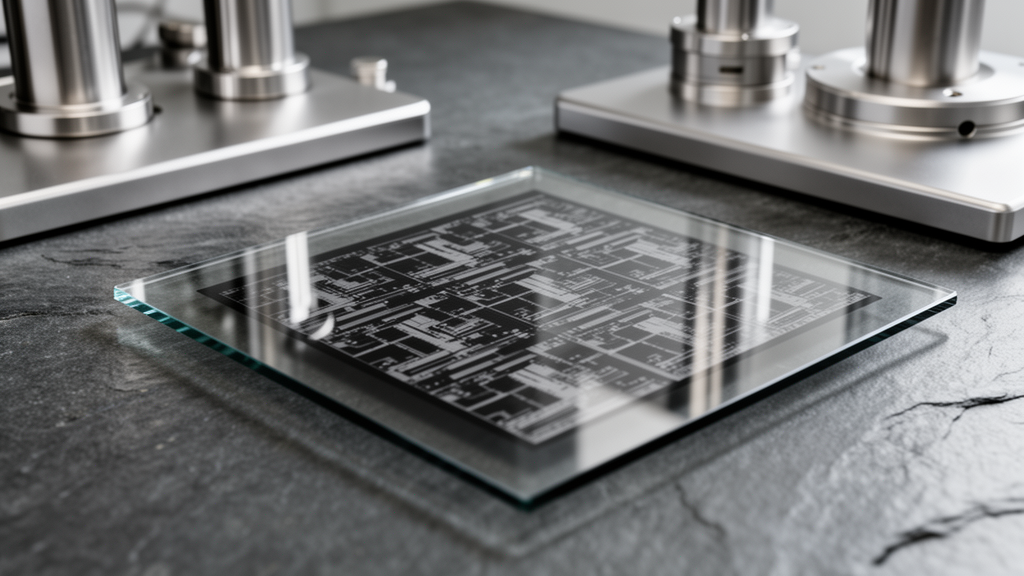
To draw images on the blank screen, co-author Dr Shvedov used short laser pulses, akin to drawing with a laser instead of a pencil. These laser pulses add just enough energy to get the atoms moving again and into irregular arrangements. Crucially, this process is done quickly, allowing the regions hit with the laser to cool down rapidly. As the material cools, the atoms freeze in their new irregular arrangement before they have a chance to settle back into their crystalline configuration. This rapid cooling leaves the atoms fixed in their amorphous phase, resulting in different coloured regions that form the desired image.
The results of the testing demonstrated the viability of this technology. A variety of images, including a map of Australia, the TMOS logo, and a koala, were drawn and erased on the display. The researchers found that there was no residual image after annealing, even when inspected under a 5× magnification microscope. This complete erasure capability is essential for a rewritable display system. Furthermore, the image of a koala was imprinted on the material and left for three months under ambient conditions without any noticeable change. Dr Le noted that the image has actually lasted even longer, stating that it still looks the same a year later. These results highlight the stability and durability of the Antimony Selenide display under normal environmental conditions.
Despite these promising results, there are avenues to cover to get to true commercial energy-efficient displays. Currently, the device uses a laser to write images, but Dr Le is working on testing the electrical characteristics of the material to develop a fully electrical device. This transition from optical to electrical writing is a significant step towards practical commercial applications. Additionally, if the goal is to have more colour, the structure of the device may need to be changed. The research team is focused on these next steps to enhance the functionality and versatility of the display technology. The current experimental setup serves as a proof of concept for the nonvolatile, rewritable nature of the Antimony Selenide thin films.
The study, titled “Nonvolatile, Rewritable, Multilevel Reflective Displays Based on Antimony Selenide Thin Films,” was published in Advanced Photonics Research on November 14, 2026. The work represents a cross-node collaboration within TMOS, bringing together expertise from RMIT and ANU. The experimental study focused on characterizing the optical properties of Antimony Selenide and demonstrating its application in a reflective display platform. The findings provide a foundation for future developments in low-power display technologies that could significantly reduce energy consumption in everyday devices. The research underscores the potential of phase change materials to transform how we create and maintain visual displays.
By reducing the need for constant power to maintain images, these displays could contribute to more sustainable electronic devices. The ability to hold an image for months without power opens up possibilities for applications where energy efficiency is critical. The team’s work on expanding the colour gamut and developing electrical writing methods will be crucial for bringing this technology to market. As the research progresses, the focus will remain on optimizing the material properties and device structure to achieve a fully functional, energy-efficient display system. The initial success in creating a nonvolatile, rewritable display marks a significant milestone in the field of meta-optical systems.
Subject of Research: Development of nonvolatile, rewritable reflective displays using Antimony Selenide phase change materials
Article Title: New rewritable displays can show an image for months without power
Article References: New rewritable displays can show an image for months without power. Original publication (Bibliographic details unavailable.)
Image Credits: AI Generated
DOI: Not provided
Keywords: Antimony Selenide, Phase Change Materials, Reflective Displays, Energy Efficiency, TMOS, RMIT, ANU, Advanced Photonics Research, Nonvolatile Memory, Optical Properties, Laser Writing, Annealing, Amorphous Phase, Crystalline Phase, Colour Gamut, Thin Films, Meta-Optical Systems, Sustainable Technology, Display Technology, Atomic Rearrangement
News Source: Bethany Barker. (November 24, 2026). Antimony Selenide Display Holds Image for Months Without Power. Scienmag.