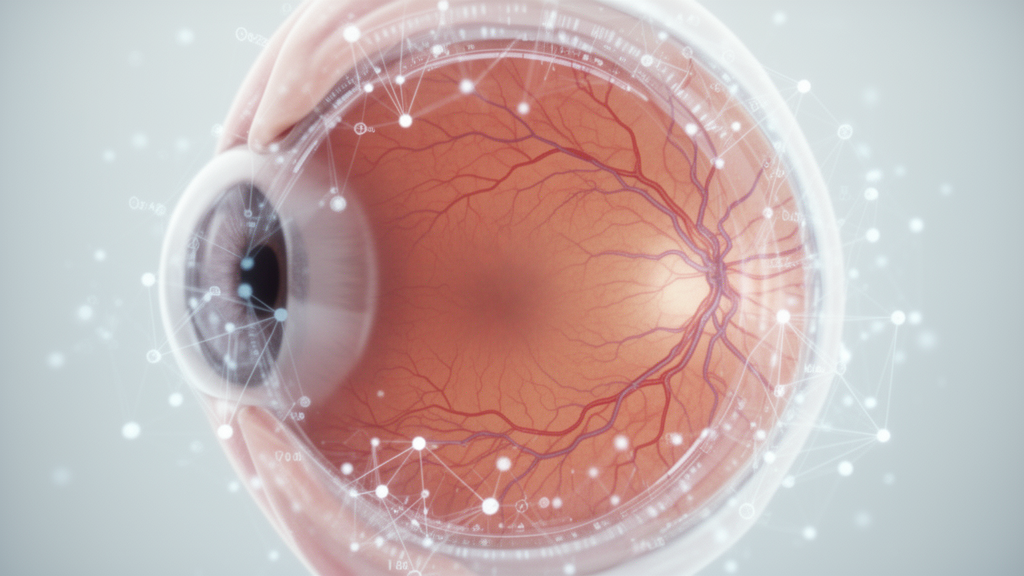
Engineering researchers S. Shrivatssan and Malaya Kumar Nath from the National Institute of Technology Puducherry have evaluated an automated framework that couples handcrafted image texture features with deep convolutional neural networks to classify cardiovascular disease risk directly from retinal fundus photographs. Cardiovascular diseases remain a leading cause of global mortality, responsible for approximately 19.8 million deaths in 2022, according to World Health Organization figures cited by the authors, with roughly 85 percent of those fatalities resulting from acute heart attacks and strokes. While traditional risk stratification frameworks such as the Framingham Risk Score, the Systematic Coronary Risk Evaluation system, and QRISK2 rely on clinical measurements including blood pressure, lipid panels, demographic variables, and patient medical history, their assessments frequently encounter fluctuations in biomarker values over time that can lead to overestimation or underestimation of true clinical risk. Furthermore, imaging modalities such as carotid ultrasound allow direct visualization of vascular plaque and arterial wall thickening, but they involve specialized equipment and higher screening expenses that limit widespread deployment in low-risk screening cohorts. Because the microvasculature of the human retina shares common anatomical and physiological traits with the cerebral and coronary circulatory networks, structural anomalies across retinal blood vessels offer a non-invasive window into systemic vascular pathology without demanding expensive or invasive diagnostic equipment.
To establish a computationally efficient screening approach that does not require auxiliary multimodal clinical laboratory metrics, the investigators investigated whether combining classical handcrafted texture descriptors with standard deep learning vision backbones could effectively identify cardiovascular risk. Deep learning models applied to medical imagery often rely on end-to-end representations extracted directly from raw pixel arrays, which can require large computational footprints and frequently fail to capture domain-specific structural patterns. Handcrafted mathematical descriptors, by contrast, explicitly quantify deterministic surface variations and spatial arrangements within tissue imagery. The authors focused on two complementary descriptor families: Local Binary Patterns, which capture micro-level textural details across local pixel neighborhoods, and Gray-Level Co-occurrence Matrices, which quantify macro-level second-order statistical relationships such as contrast, spatial homogeneity, and directional alignment. By merging these handcrafted descriptors into an integrated feature representation and feeding them alongside learned visual features into deep neural networks, the study sought to determine whether hybrid texture integration provides meaningful performance improvements over standard end-to-end convolutional pipelines across a clinical fundus imaging dataset.
The experimental evaluation utilized the China-Fundus-CIMT dataset, which comprises bilateral high-resolution retinal fundus photographs collected from 2903 patients between 2015 and 2024 at the Department of Endocrinology within the Second Affiliated Hospital of Anhui Medical University. In this clinical repository, high-resolution retinal images had been acquired using a Canon CR-2 PLUS AF non-mydriatic digital fundus camera, while carotid arterial health was independently quantified through carotid intima-media thickness measurements obtained using a Siemens ACUSON S2000 ultrasound system equipped with an L16 high-frequency probe. Clinical labels were established using carotid intima-media thickness thresholds, designating subjects with measurements under 0.9 millimeters as normal and those with measurements of 0.9 millimeters or greater as the thickened cohort representing elevated cardiovascular risk. To prevent cross-patient data leakage while addressing the natural class imbalance between normal and thickened cases, the authors implemented a patient-wise stratified partition with a 70:15:15 split across training, validation, and testing subsets. This experimental design ensured that all bilateral photographs originating from any individual patient remained strictly confined within a single subset, resulting in an independent evaluation test set comprising 484 patients consisting of 326 thickened cases and 158 normal subjects.
Image preparation followed a systematic multistep preprocessing pipeline specifically designed to isolate retinal vascular morphology and eliminate background artifacts prior to feature calculation. The authors selected the green color channel from the raw color fundus photographs because green light yields optimal optical contrast between retinal blood vessels and background tissue compared to red or blue wavelengths. The extracted green channel arrays were processed using Contrast-Limited Adaptive Histogram Equalization with a clip limit of 2.0 and an eight-by-eight grid size, enhancing local vessel visibility while suppressing non-uniform illumination across the field of view. The equalized arrays were normalized to the range between zero and one through min-max scaling, converted back to eight-bit grayscale representations to maintain consistent intensity distributions, and standardized to a uniform resolution of 224 by 224 pixels. Subsequently, Gaussian smoothing coupled with morphological opening and closing operations was applied to generate clean binary masks, isolating the functional retinal aperture and eliminating extraneous peripheral borders containing irrelevant imaging artifacts.
Handcrafted feature extraction was executed on the normalized, masked retinal regions using both Local Binary Pattern operators and Haralick texture metrics derived from Gray-Level Co-occurrence Matrices. The Local Binary Pattern operator inspected circular neighborhoods of radius R around individual central pixels, sampling P equidistant neighboring locations. If a neighbor pixel exhibited an intensity greater than or equal to the central pixel, it was encoded as one; otherwise, it was encoded as zero. The resulting binary sequences were mapped to decimal codes using a uniform, rotation-invariant formulation that assigns patterns possessing at most two bitwise transitions across circular boundaries to seventeen distinct bins, with all remaining non-uniform patterns assigned to an eighteenth bin, producing a compact 18-dimensional histogram feature vector per image. Concurrently, Gray-Level Co-occurrence Matrices were constructed to evaluate the spatial co-occurrence frequency of quantized pixel intensity pairs across two spatial displacement distances of one and two pixels along four distinct angular orientations: zero degrees, 45 degrees, 90 degrees, and 135 degrees. From each of the resulting eight matrices, fourteen Haralick descriptors were extracted, and their mean and standard deviation were computed across all four orientations to guarantee rotation invariance, yielding a 28-dimensional global statistical vector. Concatenating the Local Binary Pattern histogram with the Gray-Level Co-occurrence Matrix descriptors produced a unified 46-dimensional handcrafted texture vector for each retinal photograph.
For classification, the researchers evaluated three established convolutional neural network architectures displaying distinct depths, parameter budgets, and scaling principles: DenseNet-121, EfficientNet-B3, and MobileNetV3-Large. DenseNet-121 contains approximately eight million parameters across 121 layers and employs direct dense skip connections, feeding the feature maps of every preceding layer into all subsequent layers to encourage feature reuse, stabilize gradient propagation, and mitigate vanishing gradients during backpropagation. EfficientNet-B3 encompasses roughly 12 million parameters across approximately 300 layers, utilizing compound scaling coefficients that systematically balance architectural depth, channel width, and input image resolution under an established compound scaling factor. MobileNetV3-Large serves as a lightweight, resource-conscious model designed for resource-constrained environments, containing approximately 5.4 million parameters across 70 to 80 layers and utilizing depthwise separable convolutions that factor standard convolutions into spatial depthwise operations followed by pointwise one-by-one convolutions, supplemented with squeeze-and-excitation attention modules and hard-swish activation functions.
All deep architectures were trained on a single workstation configured with a 12th Generation Intel Core i3-12100 central processing unit operating at 3.30 gigahertz, 24 gigabytes of system memory, and an NVIDIA GeForce RTX 3060 graphics card with 12 gigabytes of dedicated video memory running 64-bit Windows 11 Pro and PyTorch 2.5.1 with CUDA 12.1 acceleration. Model optimization was executed using the AdamW optimizer with a learning rate of 1×10⁻⁴, weight decay regularization of 1×10⁻⁴, a batch size of 32, and weighted cross-entropy loss to counteract class imbalance. The training schedule permitted up to 40 maximum epochs, monitored by an early stopping criterion with a patience parameter of eight epochs based on validation performance, alongside a ReduceLROnPlateau learning rate scheduler that reduced the learning rate when validation loss plateaued. For fusion models incorporating handcrafted descriptors alongside deep convolutional representations, a dropout rate of 0.2 was applied to the fully connected classification layers, and model checkpoints yielding the highest validation macro F1-scores were retained for evaluation on the independent test set.
Experimental testing on the independent test set demonstrated that incorporating handcrafted texture descriptors yielded noticeable performance gains for specific architectures. When trained strictly on image pixel arrays without handcrafted features, DenseNet-121 achieved an accuracy of 73.30 percent, a precision of 69.60 percent, a recall of 69.30 percent, an F1-score of 69.40 percent, a Matthews correlation coefficient of 0.389, and an area under the receiver operating characteristic curve of 0.767. When the 46-dimensional concatenated Local Binary Pattern and Gray-Level Co-occurrence Matrix feature vectors were integrated into the DenseNet-121 pipeline, its performance improved across all tracked evaluation metrics, attaining an accuracy of 75.20 percent, a precision of 71.70 percent, a recall of 70.50 percent, an F1-score of 71.00 percent, a Matthews correlation coefficient of 0.422, and an area under the receiver operating characteristic curve of 0.780. The lightweight MobileNetV3-Large network demonstrated the largest relative benefit from handcrafted texture augmentation, increasing its accuracy from 69.40 percent to 72.90 percent, its precision from 65.40 percent to 69.10 percent, its recall from 65.60 percent to 68.50 percent, its F1-score from 65.50 percent to 68.80 percent, its Matthews correlation coefficient from 0.309 to 0.376, and its area under the receiver operating characteristic curve from 0.707 to 0.766.
In contrast to the improvements observed in DenseNet-121 and MobileNetV3-Large, EfficientNet-B3 did not demonstrate performance enhancements when combined with handcrafted features. When processing image data alone, EfficientNet-B3 achieved an accuracy of 72.90 percent, a precision of 69.00 percent, a recall of 67.20 percent, an F1-score of 67.80 percent, a Matthews correlation coefficient of 0.361, and an area under the receiver operating characteristic curve of 0.734. Under the multi-feature fusion configuration, its accuracy decreased slightly to 72.10 percent, its precision fell to 68.00 percent, its recall dropped to 66.90 percent, and its F1-score shifted to 67.30 percent, alongside a Matthews correlation coefficient of 0.349, even though its area under the receiver operating characteristic curve increased modestly to 0.749. The authors noted that these contrasting outcomes illustrate that the practical efficacy of integrating handcrafted texture descriptors depends significantly on the underlying structural and scaling properties of the chosen deep learning backbone.
To contextualize these findings against prior literature, the authors re-implemented an Inception-v3 baseline architecture described by Prenner and evaluated it under the identical patient-wise split, preprocessing steps, training configurations, and performance metrics. In this controlled benchmark, the Inception-v3 baseline achieved an accuracy of 71.70 percent, a precision of 68.00 percent, a recall of 68.60 percent, an F1-score of 68.30 percent, a Matthews correlation coefficient of 0.366, and an area under the receiver operating characteristic curve of 0.770. The proposed DenseNet-121 model combining retinal images with Local Binary Patterns and Gray-Level Co-occurrence Matrix descriptors surpassed this baseline across every evaluated performance metric, establishing that combining local micro-pattern distributions and global spatial statistical relationships provides complementary discriminative cues that are not fully captured by direct convolutional image feature extraction alone.
Despite the observed predictive utility, the study authors outlined several methodological and operational boundaries that define the scope of their framework. The classification system was trained and evaluated on binary labels defined by a surrogate carotid intima-media thickness threshold of 0.9 millimeters, distinguishing general high-risk from low-risk profiles rather than providing multi-grade clinical staging or predicting specific major adverse cardiovascular events directly. Additionally, the experimental findings remain grounded in a single-center cohort from the Second Affiliated Hospital of Anhui Medical University, highlighting the need for future validation across external populations and diverse camera hardware. Moving forward, the authors noted that future technical investigations will examine Vision Transformer architectures, explore explainable artificial intelligence frameworks such as SHAP, LIME, Grad-CAM, and Grad-CAM++ to visually interpret regional feature attribution, and extend classification beyond binary thresholds into multi-grade cardiovascular risk stratification.
Subject of Research: Automated cardiovascular risk classification using retinal fundus images and ensemble texture features
Article Title: Identification of cardiovascular diseases from colour fundus images using ensemble texture features by deep neural networks
Article References: Shrivatssan, S., & Nath, M. K. (2026). Identification of cardiovascular diseases from colour fundus images using ensemble texture features by deep neural networks. Computer Methods and Programs in Biomedicine Update, 10, Article 100262. https://doi.org/10.1016/j.cmpbup.2026.100262
Image Credits: AI Generated
DOI: 10.1016/j.cmpbup.2026.100262
Keywords: Cardiovascular Disease, Retinal Fundus Imaging, Deep Learning, DenseNet-121, EfficientNet-B3, MobileNetV3-Large, Local Binary Patterns, Gray-Level Co-Occurrence Matrix, Carotid Intima-Media Thickness, Medical Image Processing, Machine Learning, Texture Analysis, Computer-Aided Diagnosis, China-Fundus-CIMT, Atherosclerosis, Biomedical Engineering
News Source: Blake Davidson. (November 24, 2026). Retinal Texture Features Combined with Deep Learning Improve Cardiovascular Risk Classification. Scienmag.