A comprehensive systematic review and meta-analysis of laboratory investigations has found that canal moisture conditions do not produce statistically robust differences in the push-out bond strength of endodontic bioceramic sealers. While residual dentinal moisture can theoretically influence the setting and adhesion performance of hydraulic calcium silicate–based sealers, the optimal canal moisture state prior to obturation has long remained an open question. Across the synthesized evidence, the authors concluded that current data do not establish the superiority of any particular canal-drying protocol, indicating that variations in dentinal moisture may not predictably determine how strongly these materials bond to root canal walls.
The systematic review adhered to the PRISMA guidelines and was formally registered in the PROSPERO database under identification code CRD420251273592. To assemble the relevant evidence, researchers searched four primary electronic databases—PubMed, Embase, Scopus, and Google Scholar—from their inception through June 2026. Eligible investigations were limited to in vitro studies evaluating the push-out bond strength of bioceramic sealers under specified canal moisture settings. For the purposes of systematic comparison, the experimental canal-drying protocols employed across the literature were categorized into four distinct groups: dry, paper point, moist, or wet.
From the comprehensive literature search, fifteen in vitro investigations met the criteria for inclusion in the systematic review, with twelve of those publications providing sufficient data to be incorporated into the quantitative meta-analysis. Methodological quality across the included studies was formally appraised using the QUIN risk-of-bias evaluation tool. Among the fifteen reviewed studies, eight investigations were judged to possess a low risk of bias, while the remaining seven studies were categorized as having a moderate risk of bias. Despite the structured inclusion criteria, the meta-analytic synthesis uncovered considerable heterogeneity across the evaluated experimental comparisons.
In the quantitative analysis, potential between-study variation was modeled using the DerSimonian–Laird random-effects method within the RevMan 5.4 software package. When pooling the data under this model, the researchers detected no statistically significant difference in push-out bond strength when comparing canals dried with paper points against completely dry or moist conditions. However, the DerSimonian–Laird model did show that canals dried with paper points and canals maintained in dry conditions both achieved significantly greater bond strength than canals that remained completely wet.
Subgroup evaluations conducted using the DerSimonian–Laird method indicated that the obturation technique may interact with moisture conditions. Specifically, when analyzing single-cone obturation protocols, canals categorized as dry showed significantly higher push-out bond strength than moist canals, based on three studies examining four types of bioceramic sealers with a significance level of p < 0.001. Similarly, canals dried with paper points exhibited significantly superior bond strength compared to moist canals across six publications testing seven types of bioceramic sealers with a significance level of p < 0.01.
The apparent statistical advantages identified under the DerSimonian–Laird framework failed to hold up during more stringent sensitivity testing. When the authors applied restricted maximum likelihood estimation alongside Hartung–Knapp inference, leave-one-publication-out testing, and risk-of-bias sensitivity analyses using a threshold of p < 0.05, none of the previously significant moisture differences remained statistically significant, aside from a single non-robust outcome. The authors noted that within the inherent limits of in vitro evidence and the small number of studies available per comparison, completely flooded canals may impair bioceramic sealer adhesion, and single-cone obturation appears more sensitive to moisture, yet the existing literature fails to establish that any specific canal-drying protocol provides superior bonding performance.
Subject of Research: Effect of canal moisture on the push-out bond strength of bioceramic sealers
Article Title: Effect of dentin moisture on push-out bond strength of bioceramic sealers: a systematic review and meta-analysis of in vitro studies
Article References: Khoshkhounejad, M., Shokouhinejad, N., Gerami, F., Raee, A., Shamshiri, A. R., & Noori, F. (2026). Effect of dentin moisture on push-out bond strength of bioceramic sealers: a systematic review and meta-analysis of in vitro studies. BMC Oral Health. https://doi.org/10.1186/s12903-026-10463-7
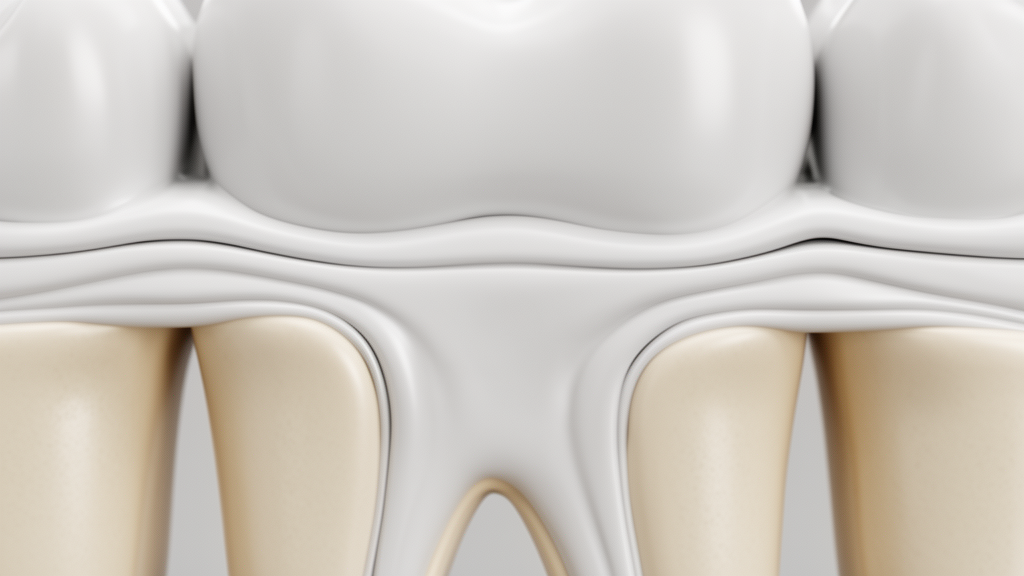
Image Credits: AI Generated
DOI: 10.1186/s12903-026-10463-7
Keywords: bioceramic sealers, push-out bond strength, dentinal moisture, hydraulic calcium silicate, systematic review, meta-analysis, in vitro studies, canal drying protocols, single-cone obturation, paper points, QUIN tool, DerSimonian-Laird, restricted maximum likelihood, Hartung-Knapp, PRISMA guidelines, PROSPERO registration, RevMan 5.4, root canal obturation
News Source: Ophelia Keating. (November 24, 2026). Canal Moisture Yields No Robust Push-Out Bond Differences for Bioceramic Sealers. Scienmag.