Computational biologists from Gujarat University have engineered a candidate multi-epitope vaccine designed to trigger comprehensive immune responses against Plasmodium vivax, offering a potential breakthrough in combating the neglected yet widespread cause of human malaria. Using an exhaustive immunoinformatics framework, the research team computationally screened the entire proteome of the parasite to identify highly conserved, surface-exposed outer membrane proteins and extract immunogenic peptide fragments. The resulting synthetic construct incorporates carefully chosen B-cell, helper T-lymphocyte, and cytotoxic T-lymphocyte epitopes linked to an erythrocyte invasion adjuvant. Structural simulations, molecular docking assessments, and computational immune modeling suggest that the engineered polypeptide maintains remarkable structural stability while theoretically stimulating robust humoral and cellular defenses. Published in Frontiers in Drug Discovery, the investigation represents an ambitious step forward in computer-guided antigen discovery, providing a detailed architectural blueprint for future laboratory synthesis and biological validation against a pathogen that continues to evade existing therapeutic and chemical control strategies across numerous endemic regions.
The global public health imperative driving this research stems from the staggering international burden imposed by malarial diseases and the progressive erosion of traditional frontline therapies. World Health Organization figures from 2023 estimated that approximately 249 million malaria cases occurred globally, resulting in roughly 608,000 fatal outcomes. Although Plasmodium falciparum accounts for the overwhelming majority of fatal infections in sub-Saharan Africa, Plasmodium vivax poses an immense clinical challenge across subtropical and densely populated zones, generating around 278,000 severe cases worldwide. Historically dismissed by some observers as a relatively benign parasite, clinical evidence demonstrates that vivax infections frequently precipitate acute respiratory distress syndrome, severe anemia, hemolysis, coagulation disorders, and jaundice. When contracted during pregnancy, vivax malaria elevates the risk of spontaneous miscarriage, premature birth, and low neonatal birth weights. Because persistent parasite drug resistance threatens conventional chemotherapies and no licensed vivax-specific vaccine currently matches the deployment scale of falciparum formulations, developing novel multi-stage immunological countermeasures has become an urgent international scientific priority.
To construct an effective multi-epitope vaccine, the investigators initiated their digital pipeline by downloading the complete proteome of the Plasmodium vivax India VII strain, designated under UniProt accession UP000053562. A total of 2,065 proteins displayed measurable antigenic characteristics, with 1,196 meeting the stringent scoring threshold of greater than 0.5. The team then prioritized surface-exposed outer membrane proteins because these surface structures directly engage host immune sentinels during pathogenic microenvironment interactions. Cross-referencing against more than thirty Plasmodium species demonstrated that ten top-ranked outer membrane proteins exhibited greater than 70 percent query coverage and sequence identity, establishing high evolutionary conservation. These ten target proteins—exemplified by candidates such as A0A0J9UYJ8, A0A0J9V778, and A0A0J9S5Z6—were comprehensively evaluated for secondary structure distribution, aliphatic stability, and hydropathicity parameters, ultimately supplying the core antigenic sequence bank from which isolated peptide epitopes were subsequently extracted.
Targeting diverse arms of the adaptive immune response required systematic mapping of individual peptide sequences across the ten selected outer membrane proteins. Linear B-cell epitopes were predicted using the Kolaskar and Tongaonkar method via the Immune Epitope Database analytical resource, producing 156 candidates that were narrowed to ten non-toxic, non-allergenic, and highly conserved epitopes displaying significant sequence overlap with cytotoxic T-lymphocyte markers. Helper T-lymphocyte epitopes restricted to major histocompatibility complex class II were simultaneously identified, sorting a pool of 26,977 sequences by selecting those with percentile ranks under one percent to guarantee strong receptor affinity. Simultaneously, cytotoxic T-lymphocyte prediction using the NetCTL 1.2 server yielded fifty-four non-allergenic epitopes, from which twelve immunogenic peptides were selected based on high combined antigenicity and binding scores. This rigorous dual-tier screening ensured that both humoral antibody production and cytotoxic cell-mediated immunity could be provoked without incorporating allergenic or toxic peptide fragments that could otherwise compromise host safety.
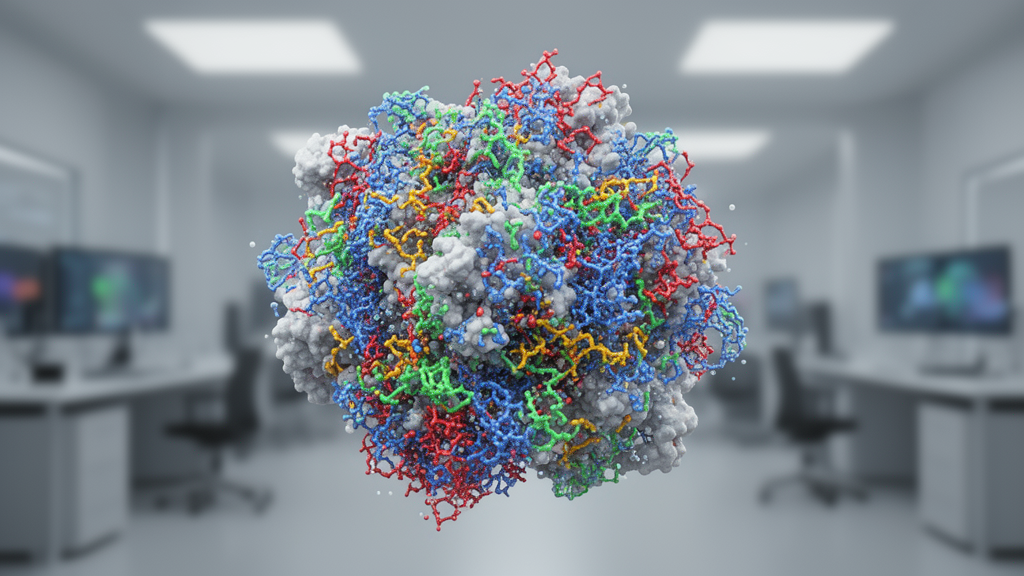
Assembly of the individual peptide segments into a single cohesive polypeptide required careful bioengineering to prevent structural interference and preserve individual epitope conformations. To enhance baseline immunogenicity, the researchers appended a full 402-amino-acid segment of Plasmodium falciparum reticulocyte binding protein homolog 5, known as PfRh5, to the N-terminal apex of the construct. Reticulum-binding proteins play an indispensable role in red blood cell invasion, making PfRh5 an exceptionally potent molecular adjuvant capable of stimulating toll-like receptors and encouraging cross-reactive protective antibody production. To connect this adjuvant to the subsequent string of B-cell and T-cell epitopes without generating unwanted junctional neo-epitopes, the engineering scheme integrated specialized peptide spacers. The construct utilizes rigid EAAAK linkers alongside flexible AAY and GPGPG motifs, which preserve spatial autonomy between consecutive epitopes and facilitate appropriate intracellular antigen processing. The completed vaccine architecture spans exactly 664 amino acid residues and terminates with a hexahistidine affinity tag designed to enable subsequent recombinant protein purification.
Thorough computational physicochemical characterization indicated that the final 664-residue chimeric construct exhibits outstanding thermodynamic stability and favorable biochemical attributes. Theoretical assessments determined an aggregate molecular weight of 78,397.28 Daltons and an isoelectric point of 7.94, which reflects a slightly basic overall chemical composition that promotes physiological stability. The sequence incorporates seventy-four positively charged residues and seventy-two negatively charged residues, establishing a balanced electrostatic configuration. An instability index calculation of 32.09 placed the construct well below the critical forty-point threshold, designating it as structurally stable under simulated conditions. Furthermore, the calculated aliphatic index reached 95.99, indicating substantial thermal resilience across fluctuating temperatures. The grand average of hydropathicity yielded a value of negative 0.188, demonstrating an amphipathic nature that favors water solubility, corroborated by an independent solubility score of 0.783. Combined with an antigenicity probability score of 0.6179 and verified non-allergenic and non-toxic profiles, the engineered molecule satisfied all primary safety criteria for candidate subunit vaccines.
Three-dimensional modeling and conformational validation verified that the engineered vaccine adopts a stable tertiary structure capable of engaging innate pattern-recognition machinery. Structural prediction carried out with trRosetta and subsequent refinement through GalaxyRefine produced a reliable model displaying 54.52 percent alpha-helix, 19.88 percent beta-strand, and 18.37 percent random coil distribution. Ramachandran plot assessments revealed that 93.5 percent of residues occupied the most favored regions, with an additional 3.6 percent in permitted regions, alongside an overall ERRAT quality score of 94.027 and a Z-score of 0.26. Molecular docking carried out via the Hawkdock server evaluated interactions between the folded construct and human toll-like receptor 9, achieving a favorable binding free energy of negative 44.92 kilocalories per mole and a docking affinity score of negative 3,546.67. Subsequent normal mode analysis established low atomic deformability across structural domains while maintaining necessary flexibility around linker regions, demonstrating that the docked receptor-antigen complex possesses the dynamic stability required to trigger downstream intracellular immune signaling cascades.
Because genetic diversity across human populations influences vaccine responsiveness, the investigators conducted comprehensive global population coverage analyses grounded in human leukocyte antigen allele frequencies. Using the Immune Epitope Database population coverage tool, the predicted multi-epitope ensemble exhibited a cumulative worldwide coverage rate of 54.06 percent. Regionally, the candidate achieved its highest estimated coverage in East Asia at 64.37 percent, followed by South Asia at 53.85 percent and India specifically at 53.24 percent, reflecting close alignment with prevalent regional genetic profiles. Conversely, coverage dropped to 45.93 percent in Northeast Asia, 43.68 percent in North Africa, 41.44 percent in Southwest Asia, 36.79 percent in West Africa, and 28.94 percent in East Africa. The authors noted that these pronounced regional disparities stem directly from extensive polymorphisms within human leukocyte antigen genes, which govern how effectively processed antigens are presented to circulating T cells. Addressing these geographic coverage gaps in future candidate iterations may require supplementing the current design with region-tailored epitope sets.
To evaluate recombinant manufacturing feasibility and downstream immunological kinetics, the research team performed in silico expression cloning and dynamic immune simulations. The 664-residue amino acid sequence was reverse-translated and codon-optimized using the JCat tool for expression within an Escherichia coli K12 host system, resulting in an optimal codon adaptation index of 1.0 and a GC content of 66.66 percent. The optimized 2,609-nucleotide sequence was computationally inserted into the pET28a(+) expression vector between BstEII and BtgI restriction sites. In parallel, agent-based immune simulation using the C-ImmSim platform projected rapid immunological activation following simulated administration. The modeling demonstrated substantial reductions in free antigen levels paired with immediate surges in circulating antibodies, reaching an estimated IgM titer of approximately 650,000 units per milliliter and combined IgG and IgM titers approaching 690,900 units per milliliter within five days. Simulations also predicted pronounced expansion of active helper T-lymphocytes, cytotoxic T cells, memory B cells, and elevated concentrations of critical cytokines, including interferon-gamma and interleukin-2.
Despite these encouraging computational metrics, the researchers explicitly underscored that the findings remain strictly theoretical and depend entirely upon future empirical laboratory testing. Computational bioinformatics platforms and molecular dynamics simulations function as potent screening filters and hypothesis-generating mechanisms, but they cannot fully duplicate the biological complexities of human tissue environments, in vivo cellular uptake, or whole-organism metabolic clearance. The reported multi-epitope construct has not yet been synthesized chemically or produced recombinantly in living bacterial cultures, nor has it undergone physical antibody-binding assays or toxicological evaluations in animal challenge models. Furthermore, the moderate conservancy observed in certain selected epitopes highlights the possibility that circulating field strains could exhibit local mutational escape over time. Consequently, the authors emphasize that extensive in vitro binding assays, biological stability profiling, and preclinical animal trials are essential prerequisites before this computationally derived vaccine design can be considered for clinical translation or human testing against Plasmodium vivax.
Subject of Research: Computational design and immunoinformatics evaluation of a multi-epitope malaria vaccine candidate
Article Title: Developing a novel multi-epitope-based vaccine against human malaria: an immunoinformatics approach
Article References: Thummar, P., Patel, S., & Vaghasia, V. (2026). Developing a novel multi-epitope-based vaccine against human malaria: an immunoinformatics approach. Frontiers in Drug Discovery, 6, Article 1924905. https://doi.org/10.3389/fddsv.2026.1924905
Image Credits: AI Generated
DOI: 10.3389/fddsv.2026.1924905
Keywords: Plasmodium vivax, multi-epitope vaccine, immunoinformatics, outer membrane proteins, malaria vaccine design, PfRh5 adjuvant, cytotoxic T lymphocytes, helper T lymphocytes, B-cell epitopes, toll-like receptor 9, molecular docking, molecular dynamics simulation, in silico cloning, population coverage, human leukocyte antigen, C-ImmSim simulation, pET28a vector, vaccine stability
News Source: Kristina Jarvis. (November 24, 2026). Computational Study Designs Multi Epitope Vaccine Against Plasmodium Vivax Malaria. Scienmag.