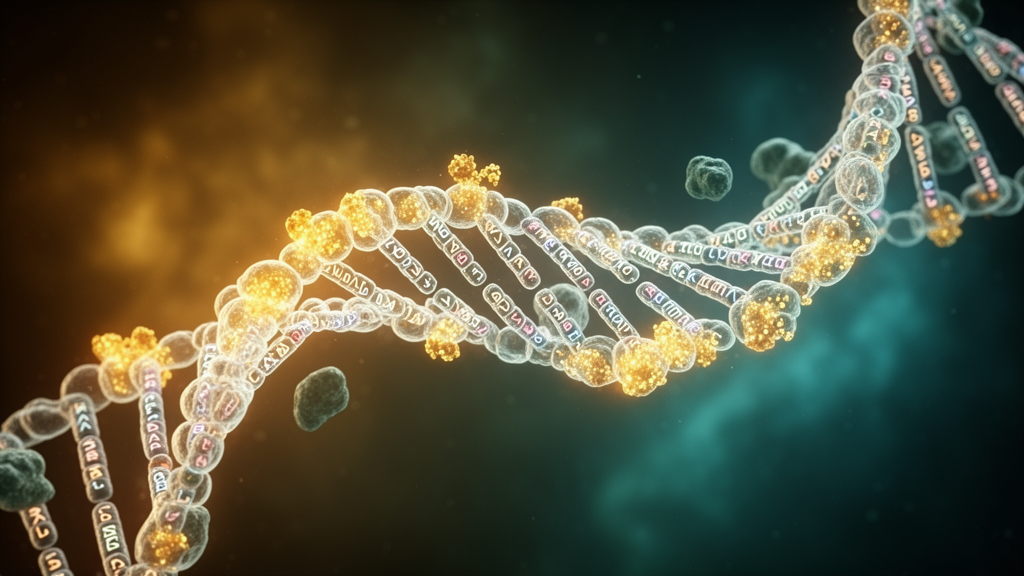
Systematic rearrangement of transcription factor binding sites within an embryonic gene regulatory element demonstrates that syntax—the precise order, orientation, and spacing of regulatory motifs—directly governs transcriptional activation and tissue specificity in developing animal embryos. Testing 460,800 distinct organizational variants of the well-characterized Otx-a neural enhancer in sea squirt embryos revealed that identical collections of transcription factor motifs can produce completely inert DNA sequences, highly restricted tissue-specific drivers, or broadly promiscuous regulatory elements. Published in Nature Genetics, the investigation combined bulk massively parallel reporter assays with a newly engineered single-cell whole-embryo reporter technique to quantify how syntactic rearrangements alter regulatory responses across diverse cell lineages. The resulting measurements demonstrate that enhancer syntax tunes an element’s sensitivity to cellular transcription factor concentrations, establishing that strict organizational rules control gene expression even within seemingly flexible regulatory architectures.
The study focused on the Otx-a enhancer in the ascidian tunicate Ciona robusta, an established model organism for deciphering developmental gene regulatory networks. During early embryonic cleavage, the endogenous Otx-a enhancer directs neural expression of the homeobox gene Otx exclusively within four specific cells of the 32-cell embryo, consisting of two a6.5 blastomeres and two b6.5 blastomeres. The a6.5 lineage subsequently gives rise to anterior neural structures including the palps and anterior sensory vesicle, whereas the b6.5 lineage forms the dorsal neural tube, dorsal epidermis, and tip tail muscle cells. Activation of the native 66-base-pair enhancer relies on cooperative inputs from two broadly distributed regulatory factors: ETS, which is activated downstream of fibroblast growth factor signaling, and GATA, an essential tissue determinant whose activity is restricted in several lineages by beta-catenin-mediated inhibition. The native enhancer contains two ETS binding sites and three GATA binding sites characterized by suboptimal binding affinities, which collective mutagenesis established as strictly necessary and sufficient for lineage-specific gene activation.
To investigate whether spatial arrangement alone alters regulatory output when sequence composition remains strictly constant, researchers constructed the Otx-a rearranged library. This synthetic library comprised 460,800 distinct sequence variants, alongside a matched set of 460,800 transcription factor-ablated control sequences containing single-nucleotide substitutions within every ETS and GATA core motif. Each library element maintained an alternating structure composed of five fixed-length linkers and the five native binding sites, varying only in the order of linkers, the linear order of binding sites, the forward or reverse orientation of each motif, and the spacing intervals separating adjacent sites, which ranged from 8 to 58 base pairs. Investigators electroporated the complete plasmid pool into fertilized Ciona eggs, harvesting embryos at the mid-gastrula stage to isolate transcribed messenger RNA barcodes alongside corresponding plasmid DNA barcodes, successfully recovering and quantifying 896,339 distinct regulatory constructs across three biological replicates.
Quantitative analysis of the bulk reporter measurements demonstrated that altering spatial organization produced functional consequences spanning six orders of magnitude despite invariant motif composition. Only 18 percent of the rearranged constructs, totaling 80,965 elements, functioned as active enhancers exceeding an activity threshold of one, while 31 percent, comprising 143,799 sequences, remained entirely inert with activities at or below zero. Filtering against paired control sequences in which all five binding sites were ablated confirmed that 52,139 active enhancers depended strictly on intact ETS and GATA motifs rather than accidental creation of off-target promoter elements. Orthogonal validation of representative active and inactive constructs using standard green fluorescent protein reporter assays verified that high reporter scores in bulk sequencing faithfully reflected robust embryonic gene activation, confirming that sequence composition alone cannot ensure enhancer function.
The experimental dataset revealed striking structural sensitivities within inactive sequences, demonstrating that functional enhancers often sit adjacent to inert DNA in sequence space. Evaluating the functional consequences of minimal structural perturbations showed that flipping the orientation of a single transcription factor binding site converted 54,164 inert elements, or 38 percent of the inactive pool, into active enhancers. Of these activating single-site flips, 58 percent involved reorienting an ETS motif and 42 percent involved flipping a GATA motif. In individual validation experiments, the completely inactive construct ORL22 was converted into the active neural-specific enhancer ORL23 merely by inverting a single ETS binding site. Randomizing the intervening linker sequences of these elements did not rescue the inactive ORL22 or disable the active ORL23, confirming that the spatial syntax of the binding motifs, rather than unintended repressor or activator motifs within the linkers, dictated transcriptional output.
Systematic pairwise analysis of spacing intervals between adjacent binding sites demonstrated that regulatory output was governed by orientation-dependent spatial preferences. When examining pairs consisting of a reverse GATA site followed by a forward ETS site, active enhancers displayed pronounced enrichment at spacings of 9, 15, and 25 base pairs, exhibiting a quasi-periodic distribution that deviated from strict ten-base-pair helical turns. In contrast, arrangements featuring a reverse GATA site paired with a reverse ETS site favored alternative spacings of 9, 13, 21, and 28 base pairs. These distinct spatial requirements indicated that physical interactions between adjacent regulatory proteins depend substantially on their geometric orientation relative to the DNA backbone, imposing rigid stereochemical constraints that favor specific structural alignments while rendering other configurations functionally silent.
To separate the influence of geometric arrangement from motif binding affinity, the researchers grouped all 460,800 library variants into 38,400 distinct organizational groups. Each group shared an identical order, orientation, and spacing of sites, containing 12 individual members that differed exclusively in the relative placement of higher- and lower-affinity ETS and GATA motifs. This classification revealed 490 robust-syntax organizations in which at least seven members were active and none were inert, demonstrating an ability to drive transcription regardless of affinity placement. Conversely, 1,349 organizations were classified as inert, containing at least seven inactive variants and zero active members. The vast majority of functional organizations, encompassing 32,785 groups, exhibited dependent syntax, where transcriptional activation required placing specific differing-affinity motifs at precise positional coordinates. Enhancers with robust syntaxes drove significantly higher reporter expression than active enhancers with dependent syntaxes.
Because bulk whole-embryo reporter assays cannot resolve anatomical expression domains, the researchers developed Single-cell, whole-Embryo Massively Parallel Reporter Assays, or SEMPRA. This technology integrated transcribable enhancer barcodes with constitutive, ubiquitously expressed normalization barcodes driven by an independent U6 promoter, capturing single-cell transcriptomes from dissociated mid-gastrula embryos using droplet-based microfluidics. By mapping cell-type identities using endogenous lineage marker genes, SEMPRA simultaneously quantified the transcriptional output of 46 distinct regulatory architectures across all embryonic cell lineages. Control testing confirmed high reproducibility across biological replicates, yielding a Pearson correlation coefficient of 0.98. The single-cell measurements mirrored bulk findings while providing cellular resolution, showing that inert organizational groups remained inactive across lineages, whereas active groups displayed markedly divergent patterns of tissue specificity.
Single-cell quantification revealed a decisive relationship between organizational syntax and embryonic tissue restriction. Enhancers characterized by dependent syntax, including the native Otx-a architecture, maintained strict tissue specificity, activating reporter expression almost exclusively within the a6.5 and b6.5 neural lineages. In contrast, 16 of the 19 tested robust-syntax enhancers generated strong ectopic expression across diverse non-neural lineages, including the notochord, endoderm, mesenchyme, and sensory vesicles. Confocal microscopy of embryos expressing green fluorescent protein constructs verified these findings, demonstrating that robust syntaxes drove prominent reporter activity throughout inappropriate embryonic tissues. Testing four robust-syntax enhancers embedded in randomized synthetic sequence backbones with a library complexity of approximately 17 million confirmed that the binding site syntax itself, rather than cryptic elements in the backbone, drove this ectopic transcriptional activation.
These divergent expression patterns correlated directly with the concentration of activated regulatory factors across embryonic cell types during early development. Embryonic mapping demonstrated that the a6.5 and b6.5 blastomeres receive the highest simultaneous levels of active ETS, stimulated by fibroblast growth factor signaling, and active GATA, uninhibited by beta-catenin. Dependent-syntax enhancers, which feature less optimal structural alignment and rely on suboptimal affinity sites, require these high transcription factor concentrations to achieve activation, effectively restricting their expression to target neural lineages. In contrast, robust syntaxes assemble highly productive transcriptional complexes that overcome suboptimal affinity constraints, lowering the threshold of input factors needed to trigger expression. As a consequence, robust enhancers activate in non-target lineages that contain low or intermediate levels of active ETS and GATA, sacrificing tissue specificity for transcriptional potency.
The study clarifies a long-standing paradox in regulatory biology regarding the flexibility of enhancer grammar. While genomic comparisons have supported a soft syntax model characterized by widespread evolutionary divergence in motif placement, the synthetic perturbations examined here reveal that individual functional architectures are governed by strict internal constraints. Dependent syntaxes, which represent the predominant functional category, reconcile apparent sequence plasticity with developmental precision by linking motif placement to local cellular transcription factor abundance. The authors noted that testing these principles in a compact 66-base-pair invertebrate enhancer represents a specialized experimental system, and evaluating whether larger vertebrate enhancers containing extensive modular subunits follow identical dependency mechanisms remains an essential next step for understanding how noncoding genetic variation influences development and disease.
Subject of Research: Exhaustive rearrangement of an enhancer reveals that dependency-syntax encodes tissue specificity
Article Title: Exhaustive rearrangement of an enhancer reveals that dependency-syntax encodes tissue specificity
Article References: Solvason, J. J., Tellez, K., Lim, F., Wang, Q., Song, B. P., Grudzien, J. L., Le, S. H., Olson, K. M., Jindal, G. A., & Farley, E. K. (2026). Exhaustive rearrangement of an enhancer reveals that dependency-syntax encodes tissue specificity. Nature Genetics. https://doi.org/10.1038/s41588-026-02838-x
Image Credits: AI Generated
DOI: 10.1038/s41588-026-02838-x
Keywords: Exhaustive, rearrangement, enhancer, reveals, dependency-syntax, encodes, tissue, specificity
News Source: Drew Townsend. (November 24, 2026). Exhaustive Enhancer Rearrangement Shows Binding Site Syntax Dictates Tissue Specificity. Scienmag.