In a theoretical perspective published in Biological Theory, researcher Fredric Schiffer proposes that subjective experience operates as a real, physically efficacious force that directly influences neural architecture within living brains. The paper addresses a longstanding theoretical deadlock in the study of consciousness between physicalist frameworks and phenomenological observation. In contemporary neuroscience, extensive research on the neural correlates of consciousness has established granular correlations between specific mental states and identifiable neural firing patterns during sensory processing, emotional recall, and physical pain. However, standard physicalist paradigms, including computationalism, reductive materialism, and functionalism, remain grounded in the principle of the causal closure of the physical world. Under this principle, every physical event possesses a sufficient physical cause, leaving mental causation vulnerable to philosopher Jaegwon Kim’s causal exclusion argument. In that formulation, asserting an independent causal role for mental states threatens to imply systematic causal overdetermination, ultimately relegating subjective feeling to an epiphenomenal byproduct that correlates with neural activity without actively altering physical behavior.
Schiffer argues that this epiphenomenalist conclusion, while mathematically compliant with closed-system physical models, directly conflicts with clinical observations and evolutionary biology. Biological organisms consistently act in ways that reflect the qualitative texture of their feelings, such as grief, insight, and perceived safety, which purely computational mechanisms struggle to anticipate. Furthermore, maintaining the neural architectures that support conscious awareness—including synchronized gamma oscillations and dense thalamocortical feedback loops—demands a substantial allocation of an organism’s metabolic resources. If conscious experience were an inert byproduct performing no causal work beyond underlying electrochemical operations, natural selection would have had little justification to conserve such metabolically expensive machinery over evolutionary timescales. Historical efforts to resolve this challenge through Cartesian substance dualism failed modern physics by violating the first law of thermodynamics, as non-physical minds lack mass or energy to alter physical momentum. Similarly, emergentist models that claim downward causation appears at higher structural complexity rarely identify a specific biophysical mechanism capable of pushing ions across electrochemical gradients, frequently collapsing into property dualism or descriptive placebos.
To overcome these conceptual limitations, the theoretical paper introduces the hypothesis of biological confinement, drawing a direct physical analogy to quantum chromodynamics and the confinement of the strong nuclear interaction. Within standard particle physics, critics frequently raise the universality objection, asserting that any proposed fundamental force or mental interaction should appear ubiquitously across all forms of matter and register within particle colliders or celestial orbits. Schiffer counters that fundamental interactions need not be omnipresent across all physical domains. The strong nuclear force binds quarks and nucleons at the femtometer scale through color charge and gluon flux tubes, yet it vanishes at macroscopic distances and remains undetectable to electrons traversing atomic nuclei because electrons lack the requisite coupling parameters. Analogously, the proposed force of experience is hypothesized to be a fundamental interaction that couples exclusively to structured biological information. This coupling is restricted to the coherent, self-sustaining neural configurations maintained in living systems, passing through inanimate matter like rocks or isolated atoms without generating any physical coupling.
The paper clarifies how this proposed force operates without violating physical energy conservation by analyzing the brain as an open thermodynamic system rather than an isolated enclosure. As recognized in foundational work by Erwin Schrödinger on negentropy and Ilya Prigogine on dissipative structures, living systems maintain far-from-equilibrium organization by continuously importing energy and dissipating entropy into their surroundings. The human brain exemplifies this dynamic, consuming approximately twenty percent of the body’s total metabolic energy while constituting only about two percent of total body mass. This substantial energy pool is stored chemically across neuronal membranes as resting voltage potentials and adenosine triphosphate reservoirs. In such an energized, far-from-equilibrium engine, causal influence does not require generating energy from nothing; instead, it requires regulating how and when pre-existing potential energy is released. The dynamic resembles an automobile rolling downhill, where gravitational potential drives momentum while a driver exerts a tiny steering force on the wheel to navigate the vehicle along its path.
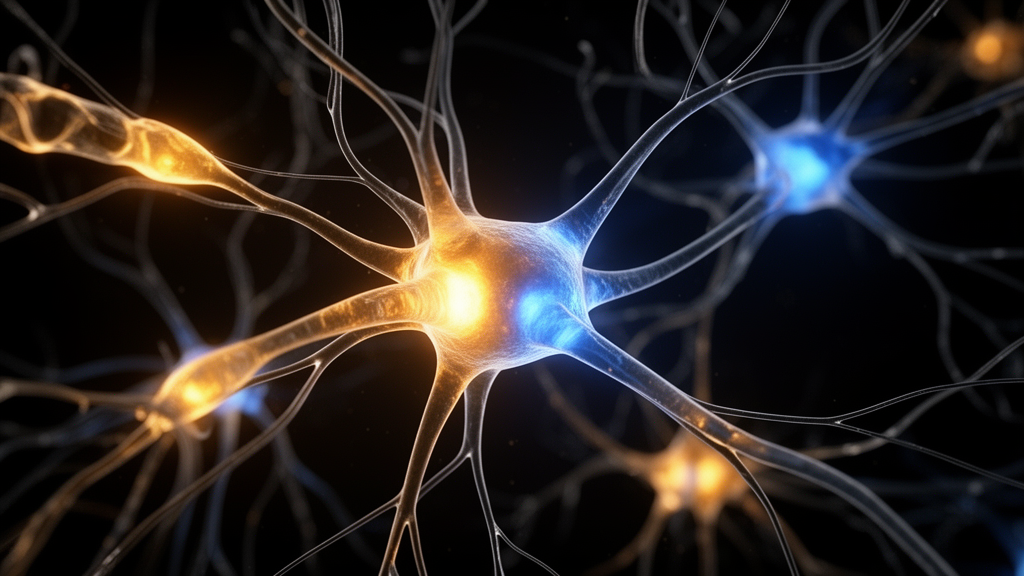
Functionally and mathematically, Schiffer models this interaction on the operation of an electronic solid-state transistor to illustrate biological steering. In a transistor, a large collector current supplied by a battery is held behind a barrier until a minuscule base current alters internal electric fields, lowering the activation barrier and permitting current to flow according to a specific gain factor. The base control signal does not supply the mechanical or electrical energy that drives the underlying motor; it merely gates and steers the external power source. Within the living neural system, stored metabolic potential in the form of adenosine triphosphate and membrane voltage represents the battery, while the synaptic activation threshold represents the gating mechanism. The force of experience functions as the minute base control signal, altering the probability landscape of neural logic gates. Because the far-from-equilibrium nervous system sits poised at critical dynamical thresholds, a microscopic bias in gating probabilities triggers a macroscopic release of internally stored metabolic power along targeted neural pathways.
The theoretical perspective further describes the thermodynamics of meaning by dividing experiential interactions into exothermic integration events and activation resistance. Drawing on principles from physical chemistry, where substrate binding or protein folding liberates energy as systems settle from disordered states into stable native configurations, Schiffer models the mind as a high-dimensional attractor landscape established by developmental learning and prior history. When incoming experiential input resonates with this stored informational structure, the living neural system undergoes a rapid phase transition characterized by a collapse of neural entropy. Because this transition occurs within an energized metabolic medium, the successful integration of meaning triggers a rapid exothermic release of stored metabolic potential. The author notes that this thermodynamic transition provides a physical correlate for the clinical phenomenology of insight or sudden comprehension, where the resolution of cognitive dissonance converts high-entropy internal fluctuations into purposeful action, whereas failed integration leaves systems consuming metabolic resources without productive behavioural output.
Conversely, the hypothesis addresses why therapeutic transformation and behavioral change are often difficult and gradual by examining activation energy barriers and attractor basin depth. In this model, an individual carrying traumatic history operates within deep attractor basins termed trauma wells, where neural logic gates have been calibrated by survival experience to maintain low thresholds for perceived danger and high activation barriers for vulnerability or safety cues. When therapeutic interactions introduce reassuring experiential inputs, the incoming force encounters substantial structural resistance. The paper characterizes psychological resistance not as behavioral obstinance, but as thermodynamic inertia, wherein neural gates resist state transitions to preserve established stability. Overcoming such entrenched attractor landscapes requires sustained physical work, defined classically as force acting across distance. Consequently, repeated therapeutic experiences are necessary over extended timeframes to gradually reshape the activation barriers of rigid neural gates before an exothermic integration event can reorganize the underlying cognitive landscape into stable health.
To support the principle that this causal interaction operates locally based on internal history rather than uniformly from external sensory inputs, the paper cites experimental observations from dual-brain psychology involving hemispheric dissociation. Using interventions such as lateral visual field stimulation and unilateral transcranial photobiomodulation, researchers selectively stimulate individual cerebral hemispheres, revealing distinct hemispheric personalities shaped by divergent developmental histories. In clinical demonstrations documented by the author, a patient exhibiting a traumatized right hemisphere and a mature left hemisphere was presented with identical visual stimuli depicting an angry face. When the right hemisphere was activated, the patient reported anxiety, triggering amygdala activation, elevated cortisol release, and physiological avoidance behavior. However, when the left hemisphere observed the identical image moments later, the patient reported emotional calm, arresting the biological stress response and adopting physical approach behavior, indicating that identical environmental inputs produce opposing physical forces depending on the specific history of the attending hemispheric system.
Schiffer situates the biophysical proposal within broader intellectual histories of nonreductive causation while highlighting differences in physical specificity. The paper references Helen Steward’s philosophical arguments for irreducible animal agency, Mumford and Anjum’s dispositional causation framework involving contextual modal tendencies, and nonreductive psychological lineages developed by Lev Vygotsky, Alexander Luria, and Friedrich Engels. While those traditions asserted that culturally mediated meanings exert material effects across psychological development, they stopped short of identifying how meaningful information physically moves matter. Similarly, contemporary perspectives in basal cognition, cognitive biology, and constraint-based biological theory treat goal-directed agency as an intrinsic organizational property of living matter rather than an external imposition. The present model seeks to advance these conceptual foundations by detailing a specific biophysical mechanism wherein physically instantiated informational structures—operating across electrochemical, molecular, or photonic substrates—exert directional forces that lower synaptic barriers and catalyze exothermic metabolic transitions.
The author also explicitly addresses anticipated philosophical objections, focusing on charges of panpsychism, the homunculus fallacy, and vitalism. Addressing panpsychism, Schiffer argues that proposing a fundamental field does not require all matter to exhibit conscious properties, just as the presence of the universal Higgs field does not grant mass to photons lacking coupling mechanisms. By restricting coupling to coherent, living biological information, the model rejects attributing subjectivity to rocks or inorganic devices. In responding to the homunculus critique, the paper clarifies that the hemispheric self is not an external observer directing neural machinery from outside, but rather a descriptive label for the self-organizing dynamical topology of learned attractor landscapes, synaptic weights, and epigenetic configurations. Finally, rejecting accusations of vitalism, the author argues that living systems do not defy universal physics with supernatural vital forces; instead, living matter occupies a specialized thermodynamic phase space governed by symmetry breaking, negentropy, and macroscopic coherence, creating bounded conditions where subjective meaning physically directs neural dynamics.
Concluding the theoretical inquiry, Schiffer emphasizes that treating subjective experience as a biologically confined physical force offers a naturalistic resolution to mental causation that respects both the standard model of particle physics and thermodynamic conservation. The perspective frames the hemispheric self as an active steering agent that navigates biological systems by biasing neural logic gates and deploying internally stored energy. The paper invites empirical investigation of this model, predicting that rigorous thermodynamic auditing of living neural systems will reveal measurable energetic anomalies where metabolic work performed by neural circuits correlates more strongly with the contextual meaning of a stimulus relative to individual experiential history than with raw sensory input energy or Shannon information metrics. Schiffer argues that formally incorporating subjective experience into physical dynamics does not abandon naturalistic physicalism, but rather broadens scientific paradigms to accommodate the causal reality of living conscious observers.
Subject of Research: Biophysical hypothesis of subjective experience as a biologically confined force in neural systems
Article Title: The Force of Experience: A Biophysical Hypothesis of a Confined Interaction in Living Neural Systems
Article References: Schiffer, F. (2026). The Force of Experience: A Biophysical Hypothesis of a Confined Interaction in Living Neural Systems. Biological Theory, 21(3), 278-286. https://doi.org/10.1007/s13752-026-00534-x
Image Credits: AI Generated
DOI: 10.1007/s13752-026-00534-x
Keywords: subjective experience, mental causation, biological confinement, neural logic gates, thermodynamic steering, metabolic potential, epiphenomenalism, causal exclusion, dual-brain psychology, hemispheric dissociation, attractor landscape, exothermic integration, activation barriers, biological theory, Fredric Schiffer, open thermodynamic systems, dissipative structures
News Source: Cassandra Pierce. (November 24, 2026). Theoretical Model Proposes Subjective Experience Acts as Confined Neural Force. Scienmag.