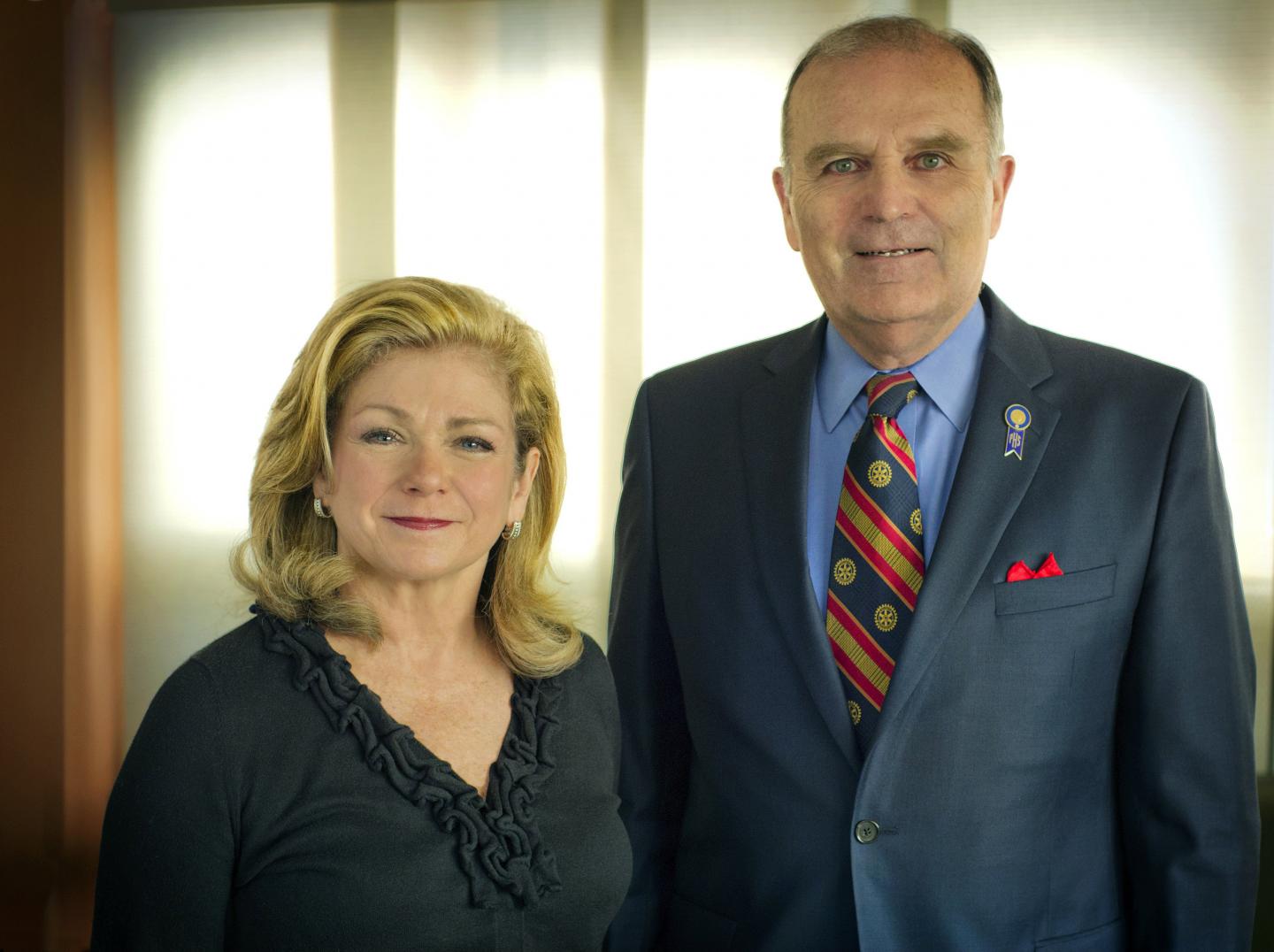
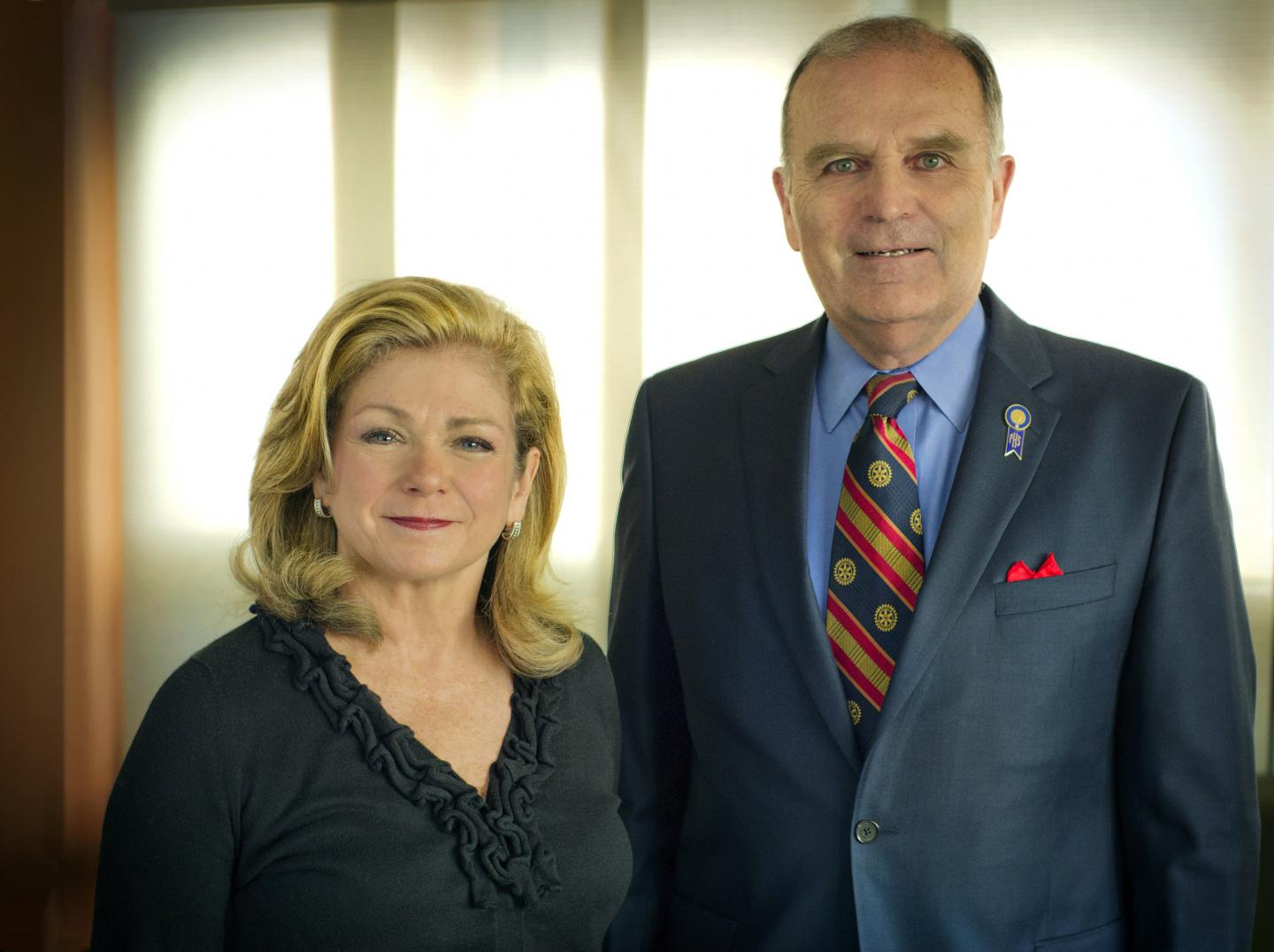
Credit: UT Arlington
Two University of Texas at Arlington researchers have revisited workplace sexual harassment issues after the initial study was done nearly 20 years ago.
How well is society doing?
The answer is mixed. Although there has been a 28 percent decline in complaints, sexual harassment is a continuing, chronic occupational health problem in the workplace.
James Campbell Quick, the John and Judy Goolsby-Jacqualyn A. Fouse Endowed Chair in UTA's Goolsby Leadership Academy, initially published the report in a 1998 special section on sexual harassment in the Journal of Occupational Health Psychology.
Quick and M. Ann McFadyen, a UTA associate professor of strategic management, conducted the review earlier this year. It comes at a time when noteworthy sexual harassment and assault incidents have permeated all aspects of American society.
"Our current examination of the evidence suggests that sexual harassment is a continuing occupational problem," Quick said. "Have we made progress? Yes, there has been progress on some fronts but not on others and the problem has morphed, becoming more complicated for a variety of reasons found in the current data."
Society and the workplace continue to struggle with the very definition of sexual harassment, which limits the ability to develop effective strategies in the workplace.
Plus, McFadyen said that the workforce is changing.
"Sexual harassment in the workplace is costly, not just to the organization," McFadyen said. "The behavior impacts the victim, the aggressor, bystanders, customers, suppliers and other stakeholders in terms of tarnished reputations and trust, disengaged employees, decreased commitment, turnover, depression, stress, eating and other health disorders and in extreme cases bodily harm, even death."
She said that the recent publicity regarding sexual harassment is a signal of the beginning of a revolutionary change in the workplace demanding a different type of training.
"Training not only for leaders and management but employees at all ranks, customers, suppliers and other stakeholders," McFadyen said. "Successful leaders and management of organizations cannot afford to simply maintain the status quo."
Both believe that there is a real need from a public heath perspective to know more about the aggressors' use of power in sexual harassment cases.
The two professors believe that if the workplace is equipped with this information, surveillance indicators and systems can be put into place to address this preventable occupational health problem.
Antonio Puente, the American Psychological Association president, used the Quick-McFadyen report in a letter to members last month.
"Sexual harassment in the workplace is a significant occupational health psychology problem," Puente said. "Psychological research has offered understanding into the causes of workplace harassment, as well as some strategies for preventing or reducing it. However, there is limited research regarding the characteristics of harassers, which makes it difficult to predict who will do it and where and when it might happen. What we do know is that harassers tend to lack a social conscience and engage in manipulative, immature, irresponsible and exploitative behaviors."
He said organizations need to be proactive in establishing policies prohibiting sexual harassment, raising employee awareness, establishing reporting procedures and educating employees about these policies.
"More research is needed to identify the antecedents to harassment that will help employees and managers identify and respond appropriately," Puentes said.
###
Quick and McFadyen's previous 2014 article on dangerous employees looked at the broader issue of psychological health in the workplace and the consequences when employees become really unhealthy, which includes suicide, homicide, assaults and workplace violence.
McFadyen's research examines strategic implications of knowledge creation, exchange networks and strategic alliances on performance. She was on faculty at North Carolina State University prior to coming to UTA. Prior to her career in academics, she spent 14 years in new product development with a large global financial institution.
Quick also is a fellow of the Lancaster Leadership Center, Lancaster University Management School, United Kingdom. His most recent research focuses on character and leadership. Col. Quick retired from the U.S. Air Force in 2000 after 25 years of active commissioned service.
Media Contact
Herb Booth
[email protected]
817-272-7075
@utarlington
http://www.uta.edu
Original Source
https://www.uta.edu/news/releases/2017/12/sexual-harassment-quick-mcfadyen.php