• HOME
  • NEWS
  • EXPLORE
    • CAREER
      • Companies
      • Jobs
    • EVENTS
    • iGEM
      • News
      • Team
    • PHOTOS
    • VIDEO
    • WIKI
  • BLOG
  • COMMUNITY
    • FACEBOOK
    • INSTAGRAM
    • TWITTER
Saturday, February 7, 2026
BIOENGINEER.ORG
No Result
View All Result
  • Login
  • HOME
  • NEWS
  • EXPLORE
    • CAREER
      • Companies
      • Jobs
        • Lecturer
        • PhD Studentship
        • Postdoc
        • Research Assistant
    • EVENTS
    • iGEM
      • News
      • Team
    • PHOTOS
    • VIDEO
    • WIKI
  • BLOG
  • COMMUNITY
    • FACEBOOK
    • INSTAGRAM
    • TWITTER
  • HOME
  • NEWS
  • EXPLORE
    • CAREER
      • Companies
      • Jobs
        • Lecturer
        • PhD Studentship
        • Postdoc
        • Research Assistant
    • EVENTS
    • iGEM
      • News
      • Team
    • PHOTOS
    • VIDEO
    • WIKI
  • BLOG
  • COMMUNITY
    • FACEBOOK
    • INSTAGRAM
    • TWITTER
No Result
View All Result
Bioengineer.org
No Result
View All Result
Home Headlines

$27.9 million from NIH to support Baylor College of Medicine’s Knockout Mouse…

Bioengineer.org by Bioengineer.org
January 29, 2018
in Headlines, Health, Science News
Reading Time: 2 mins read
0
Share on FacebookShare on TwitterShare on LinkedinShare on RedditShare on Telegram
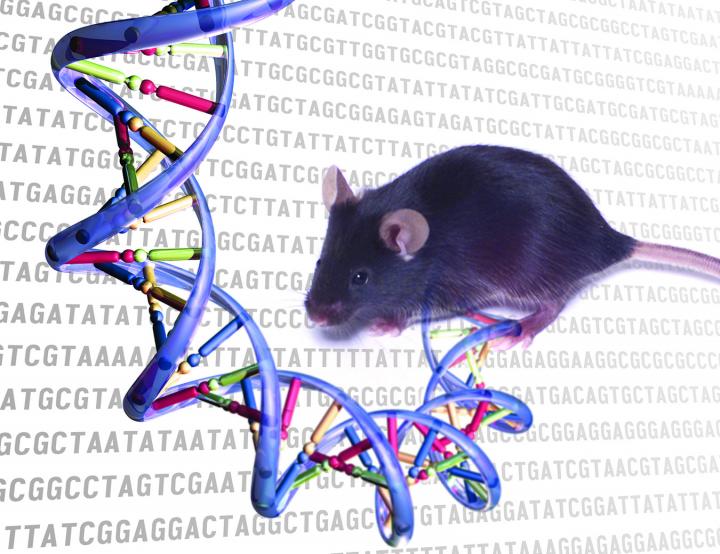
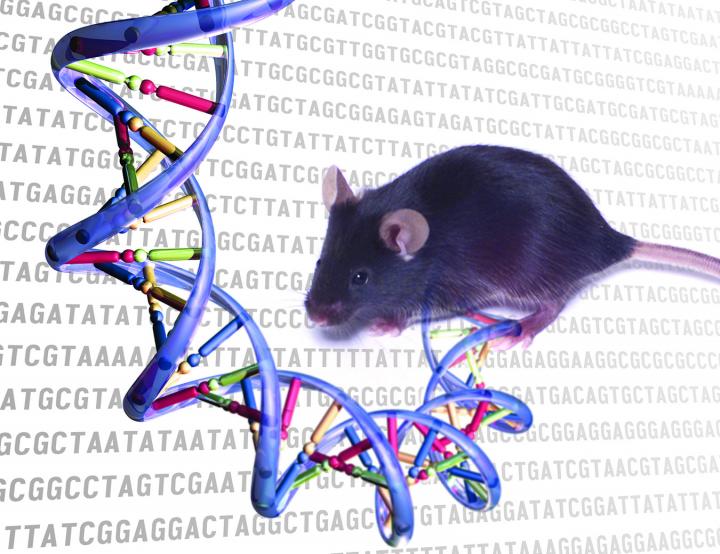
IMAGE

Credit: Darryl Leja, National Human Genome Research Institute.

Nearly $28 million has been awarded to Baylor College of Medicine's Knockout Mouse Project led by Dr. Arthur Beaudet, professor of molecular and human genetics, and Dr. Mary Dickinson, professor of molecular physiology and biophysics. The grant, to be used over 5 years, was awarded by the National Institutes of Health as a renewal of a previous grant to generate modified mice and establish primary phenotype analysis as a resource for researchers world-wide. This grant is a collaborative effort between Baylor and the Mary Lyon Centre in Harwell, UK.

"Being able to knockout or delete genes in animal models is an important way to understand how genes work and what functions they are responsible for," said Dickinson, who also holds the Kyle and Josephine Morrow Endowed Chair. "This support not only provides mice and phenotype data to the community but allows for a systematic understanding of gene function in a mammalian model system."

With the renewed funding, Baylor will generate and phenotype lines for 1,000 new genes using Cas9/CRISPR technology.

"Since the project began, 5,000 mouse gene lines have been produced, and we hope to continue," said Beaudet, who also holds the Henry and Emma Meyer Endowed Chair

Baylor College of Medicine is one of three sites with renewed funding from the NIH for Knockout Mouse Projects, all of which are part of the International Mouse Phenotyping Consortium (IMPC). The goal of the IMPC is to discover functional insight for every gene by generating and systematically phenotyping 20,000 knockout mouse strains.

Baylor's latest research contributing to the IMPC's work helped to characterize more than 1,000 genes showing that nearly one-third are essential for life (Dickinson et al, Nature 537, 508-514 (22 September 2016). Read more about those findings here.

"This work at Baylor has been a great collaborative effort including the team at Harwell led by Drs. Steve Brown and Sara Wells, as well as several Baylor faculty members, including Drs. John Seavitt, Corey Reynolds, Jason Heaney, Rodney Samaco, Christine Beeton, Jianming Xu, and instructor of molecular and human genetics Isabel Lorenzo.

Much of the work at Baylor is carried out in our Advanced Core Labs," said Dickinson. The Advanced Core Labs are state-of-the-art facilities that provide instrumentation and technologies to support a wide array of research.

###

Those used for the Knockout Mouse Project include:

  • Optical Imaging and Vital Microscopy
  • Cytometry and Cell Sorting
  • Genetically Engineered Mouse
  • Mouse Embryonic Stem Cell
  • Mouse Phenotyping

Media Contact

Graciela Gutierrez
[email protected]
713-798-4710
@bcmhouston

https://www.bcm.edu/news

Share12Tweet8Share2ShareShareShare2

Related Posts

Evaluating Pediatric Emergency Care Quality in Ethiopia

February 7, 2026

TPMT Expression Predictions Linked to Azathioprine Side Effects

February 7, 2026

Improving Dementia Care with Enhanced Activity Kits

February 7, 2026

Decoding Prostate Cancer Origins via snFLARE-seq, mxFRIZNGRND

February 7, 2026
Please login to join discussion

POPULAR NEWS

  • Robotic Ureteral Reconstruction: A Novel Approach

    Robotic Ureteral Reconstruction: A Novel Approach

    82 shares
    Share 33 Tweet 21
  • Digital Privacy: Health Data Control in Incarceration

    63 shares
    Share 25 Tweet 16
  • Study Reveals Lipid Accumulation in ME/CFS Cells

    57 shares
    Share 23 Tweet 14
  • Breakthrough in RNA Research Accelerates Medical Innovations Timeline

    53 shares
    Share 21 Tweet 13

About

We bring you the latest biotechnology news from best research centers and universities around the world. Check our website.

Follow us

Recent News

Evaluating Pediatric Emergency Care Quality in Ethiopia

TPMT Expression Predictions Linked to Azathioprine Side Effects

Improving Dementia Care with Enhanced Activity Kits

Subscribe to Blog via Email

Success! An email was just sent to confirm your subscription. Please find the email now and click 'Confirm' to start subscribing.

Join 73 other subscribers
  • Contact Us

Bioengineer.org © Copyright 2023 All Rights Reserved.

Welcome Back!

Login to your account below

Forgotten Password?

Retrieve your password

Please enter your username or email address to reset your password.

Log In
No Result
View All Result
  • Homepages
    • Home Page 1
    • Home Page 2
  • News
  • National
  • Business
  • Health
  • Lifestyle
  • Science

Bioengineer.org © Copyright 2023 All Rights Reserved.