• HOME
  • NEWS
  • EXPLORE
    • CAREER
      • Companies
      • Jobs
    • EVENTS
    • iGEM
      • News
      • Team
    • PHOTOS
    • VIDEO
    • WIKI
  • BLOG
  • COMMUNITY
    • FACEBOOK
    • INSTAGRAM
    • TWITTER
Saturday, March 28, 2026
BIOENGINEER.ORG
No Result
View All Result
  • Login
  • HOME
  • NEWS
  • EXPLORE
    • CAREER
      • Companies
      • Jobs
        • Lecturer
        • PhD Studentship
        • Postdoc
        • Research Assistant
    • EVENTS
    • iGEM
      • News
      • Team
    • PHOTOS
    • VIDEO
    • WIKI
  • BLOG
  • COMMUNITY
    • FACEBOOK
    • INSTAGRAM
    • TWITTER
  • HOME
  • NEWS
  • EXPLORE
    • CAREER
      • Companies
      • Jobs
        • Lecturer
        • PhD Studentship
        • Postdoc
        • Research Assistant
    • EVENTS
    • iGEM
      • News
      • Team
    • PHOTOS
    • VIDEO
    • WIKI
  • BLOG
  • COMMUNITY
    • FACEBOOK
    • INSTAGRAM
    • TWITTER
No Result
View All Result
Bioengineer.org
No Result
View All Result
Home Headlines

Superstorm Sandy five years later: How NJIT assisted with recovery…

Bioengineer.org by Bioengineer.org
January 29, 2018
in Headlines, Health, Science News
Reading Time: 2 mins read
0
Share on FacebookShare on TwitterShare on LinkedinShare on RedditShare on Telegram
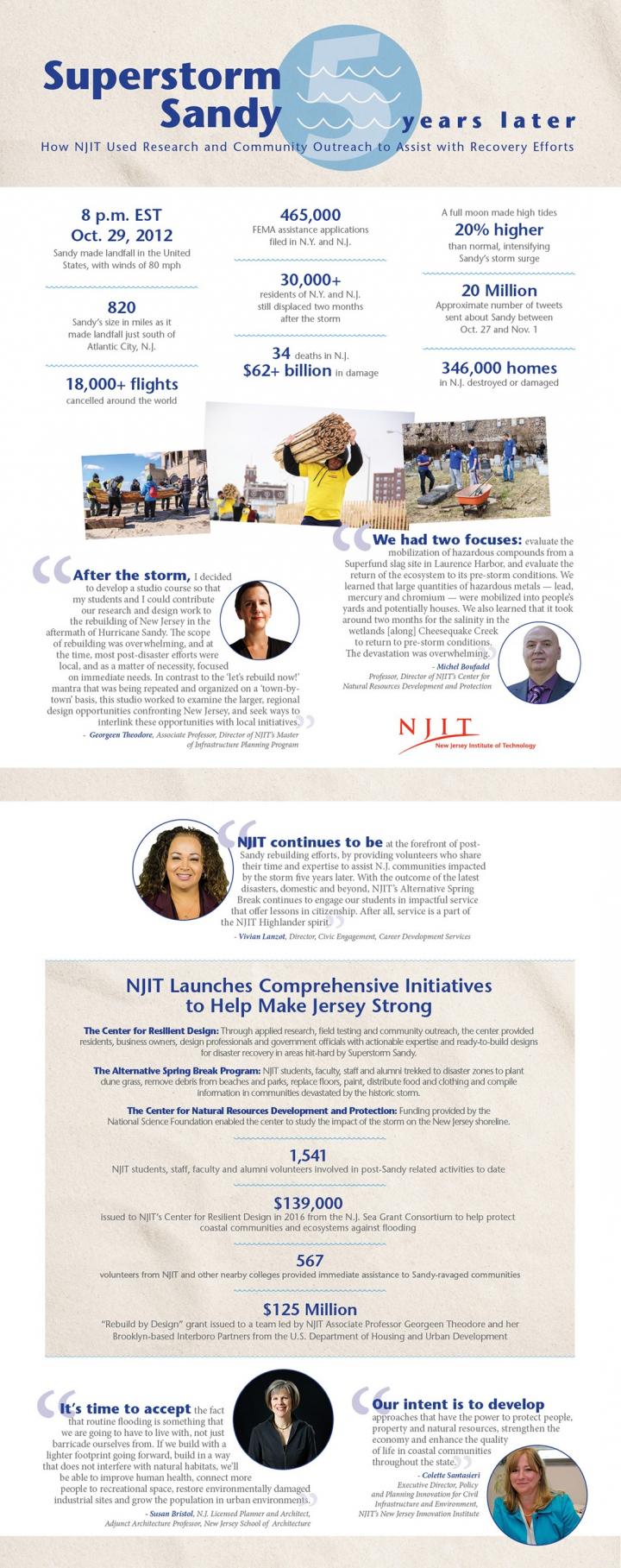
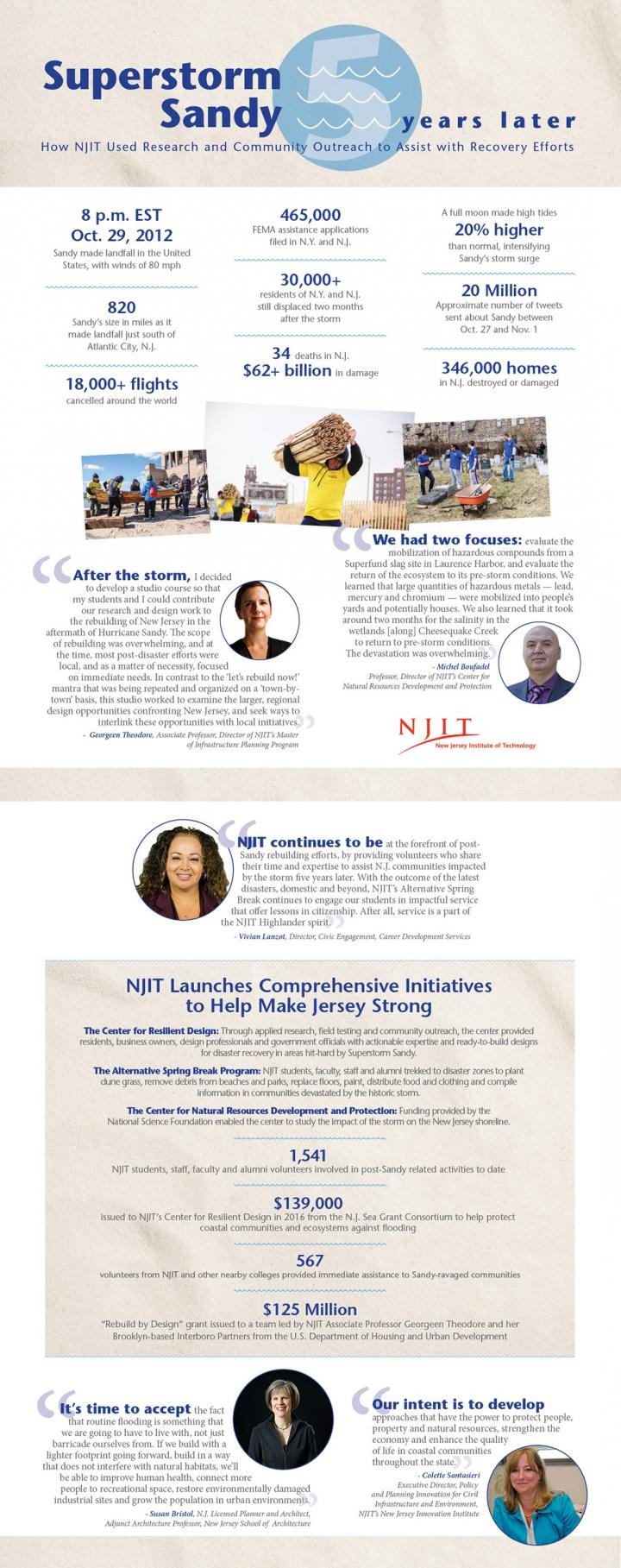
IMAGE

Credit: NJIT

Five years ago, Superstorm Sandy devastated the U.S. east coast, taking the lives of 34 New Jersey residents, destroying hundreds of thousands of homes and businesses, and causing over $62 billion in damage.

The NJIT community responded to the disaster with immediate assistance and farsighted planning for the future.

During the height of the storm, NJIT graduate students studying emergency management were embedded in Newark's Office of Emergency Management to help the city's administration respond to the disaster.

In the immediate aftermath of Sandy, NJIT students serving as emergency-management interns in the Business Emergency Operations Center, supported by the Federal Emergency Management Agency, worked to help ensure that donations which included food and clothing reached the Newark area's neediest residents.

Alternative Spring Break in the years following saw hundreds of students and other volunteers from NJIT assisting with the cleanup of debris, the renovation of homes and businesses, and the planting of protective dune grass on beaches in communities hard-hit by the storm. Lieutenant Governor Kim Guadagno expressed special appreciation on behalf of the state for these efforts in 2014.

Taking a longer and more comprehensive view of events such as Sandy, NJIT established the Center for Resilient Design, an architectural think tank dedicated to the rebuilding of storm-afflicted areas in sustainable ways that can withstand future natural disasters.

Through applied research, experiential learning and civic engagement, NJIT continues to be at the forefront of post-Sandy rebuilding efforts, addressing issues such as climate change and sea level rise to provide residents, business owners, design professionals and government officials with actionable 21st century, ready-to-build designs and expertise.

###

About NJIT

One of the nation's leading public technological universities, New Jersey Institute of Technology (NJIT) is a top-tier research university that prepares students to become leaders in the technology-dependent economy of the 21st century. NJIT's multidisciplinary curriculum and computing-intensive approach to education provide technological proficiency, business acumen and leadership skills. With an enrollment of 11,400 graduate and undergraduate students, NJIT offers small-campus intimacy with the resources of a major public research university. NJIT is a global leader in such fields as solar research, nanotechnology, resilient design, tissue engineering, and cybersecurity, in addition to others. NJIT is among the top U.S. polytechnic public universities in research expenditures, exceeding $130 million, and is among the top 1 percent of public colleges and universities in return on educational investment, according to PayScale.com. NJIT has a $1.74 billion annual economic impact on the State of New Jersey.

Media Contact

Tanya Klein
[email protected]
973-596-3433
@njit

http://www.njit.edu

Share13Tweet7Share2ShareShareShare1

Related Posts

Cutaneous Lesion Location: Key to Head Injury Risk?

March 27, 2026
Biochar Boosts Forest Resilience Against Acid Rain by Restoring Essential Soil Nitrogen

Biochar Boosts Forest Resilience Against Acid Rain by Restoring Essential Soil Nitrogen

March 27, 2026

Two Salk Scientists Honored as 2025 AAAS Fellows

March 27, 2026

Starburst Winds Drain Supernova Energy Quickly

March 26, 2026
Please login to join discussion

POPULAR NEWS

  • blank

    Revolutionary AI Model Enhances Precision in Detecting Food Contamination

    96 shares
    Share 38 Tweet 24
  • Imagine a Social Media Feed That Challenges Your Views Instead of Reinforcing Them

    1003 shares
    Share 397 Tweet 248
  • Uncovering Functions of Cavernous Malformation Proteins in Organoids

    54 shares
    Share 22 Tweet 14
  • Promising Outcomes from First Clinical Trials of Gene Regulation in Epilepsy

    51 shares
    Share 20 Tweet 13

About

We bring you the latest biotechnology news from best research centers and universities around the world. Check our website.

Follow us

Recent News

In-Sensor Cryptography Links Physical Process to Digital Identity

Can Psychosocial Factors Influence Cancer Risk?

Depression Factors in Elderly: Pre vs. Post-COVID Analysis

Subscribe to Blog via Email

Success! An email was just sent to confirm your subscription. Please find the email now and click 'Confirm' to start subscribing.

Join 78 other subscribers
  • Contact Us

Bioengineer.org © Copyright 2023 All Rights Reserved.

Welcome Back!

Login to your account below

Forgotten Password?

Retrieve your password

Please enter your username or email address to reset your password.

Log In
No Result
View All Result
  • Homepages
    • Home Page 1
    • Home Page 2
  • News
  • National
  • Business
  • Health
  • Lifestyle
  • Science

Bioengineer.org © Copyright 2023 All Rights Reserved.