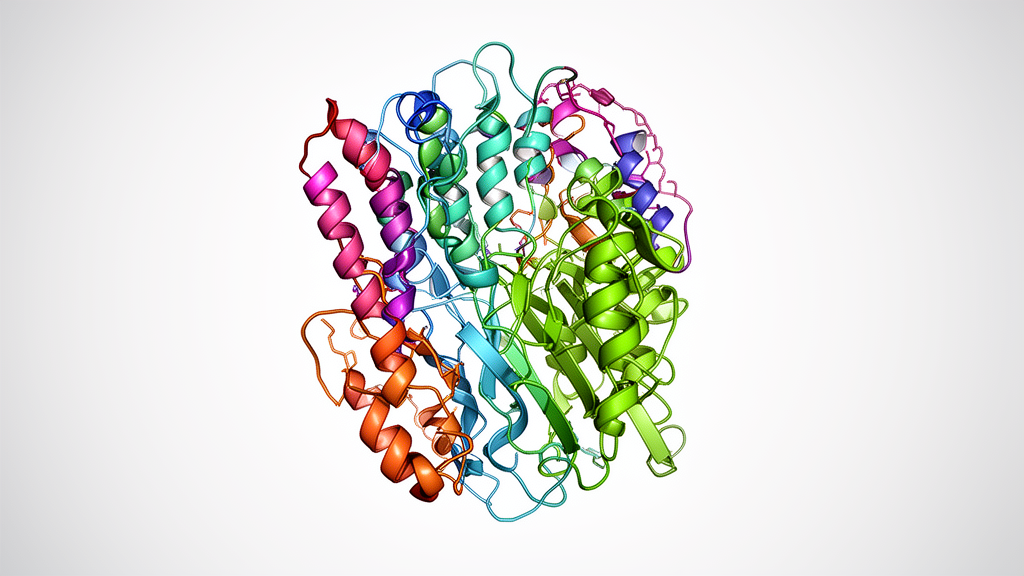
A computational investigation examining hundreds of thousands of predicted protein models has demonstrated that the fundamental structural and chemical attributes of proteins exhibit systematic, organism-specific variations capable of reconstructing major evolutionary lineages across the tree of life. Conducted by researchers at the University of Edinburgh and published in PLOS Computational Biology, the study evaluated whether higher-order physicochemical descriptors could uncover evolutionary constraints embedded directly within protein geometry and surface chemistry. By analysing 373,779 confident structural models generated by AlphaFold2 across 48 diverse model organisms, the research team discovered that proteome-wide structural patterns do not merely reflect isolated functional adaptations but instead form coherent, species-level signatures that align closely with phylogenetic relationships established through traditional genomic sequencing.
The recent maturation of highly accurate machine learning algorithms, notably AlphaFold and ESMFold, has fundamentally transformed structural biology by generating hundreds of millions of high-confidence three-dimensional predictions. The AlphaFold Database now encompasses more than 200 million predicted structures, mirroring the vast catalog of the UniProt knowledgebase across diverse biological taxa. By taking advantage of this unprecedented volume of structural data, the investigators sought to explore whether the collective biophysical and geometric properties of structural models contain systematic signals shaped by organismal biology and distinct cellular environments, extending beyond what is observable from primary amino acid sequences alone.
To systematically profile these macromolecular models, the researchers leveraged DE-STRESS, a specialised structural model evaluation platform that calculates approximately 70 distinct physical, energetic, and geometric features for any given folded coordinate file. These calculated metrics encompass all-atom empirical scoring terms derived from the Rosetta software suite, geometric evaluations of internal packing density and hydrogen-bonding network quality, BUDE force field desolvation energies, predicted aggregation propensities calculated via Aggrescan3D, and global electrostatic indicators such as the isoelectric point. Importantly, the authors deliberately removed direct amino acid composition metrics and secondary structure composition percentages from the principal analytical pipelines. This methodological exclusion ensured that downstream clustering and dimensionality reduction were driven by holistic three-dimensional chemistry and packing arrangements rather than trivial sequence composition artifacts.
Initial global evaluation across the complete repository of 373,779 high-confidence AlphaFold2 structures—defined by a predicted local distance difference test score of at least 70—revealed that secondary structural architecture and electrostatic charge represent the dominant sources of variance across protein universe coordinates. Principal component analysis demonstrated that the first two principal components accounted for more than 50 percent of the total variance across the dataset. The resulting distribution clearly separated alpha-helix-rich folds, beta-sheet-dominated architectures, and flexible loop-dense configurations, with short-range backbone hydrogen bonding, side-chain hydrogen bonds, rotamer preferences, and desolvation energies acting as primary mathematical contributors. The authors observed consistent topological patterns when repeating the evaluation using alternative data-scaling methodologies and when benchmarking against an independent empirical dataset of 183,549 experimentally determined structures sourced from the Protein Data Bank.
To investigate species-level differences without redundancy artifacts, the research team assembled a curated subset of 251,376 non-redundant structural models by randomly selecting a single representative protein for each Foldseek structural cluster within each organism. When average physicochemical properties were evaluated for each of the 48 model organisms, principal component analysis clearly partitioned prokaryotic and eukaryotic species into separate clusters. Within these broad divisions, finer subgroupings appeared among fungal and animal species. Key contributors driving this separation along the first principal component included Rosetta rotamer preferences, van der Waals interactions, side-chain hydrogen bonding energies, and Aggrescan3D aggregation propensity metrics. The prominent role of aggregation metrics indicated that overall molecular solubility and solvent-exposed surface properties differ consistently and systematically between eukaryotic and prokaryotic proteomes.
Recognising that global differences between domains of life could potentially stem from differing proportions of specialised cellular compartments, the investigators explicitly tested whether subcellular localisation accounted for these variations. Restricting their non-redundant proteome dataset to proteins exclusively localized to the cytoplasm, nucleus, or cellular membrane, they computed mean biophysical metrics across organism-compartment pairs. The resulting mapping formed three sharply defined clusters corresponding to the three subcellular environments, with membrane proteins segregating strongly along the primary principal component due to elevated hydrophobic surface exposure and aggregation propensity. Crucially, within both the cytoplasmic and membrane groupings, subclusters corresponding to eukaryotic and prokaryotic species remained clearly distinguishable, proving that organism-specific physical chemistry persists even when confining observations strictly to equivalent cellular compartments.
The study subsequently demonstrated that species-level averages of macromolecular structural metrics contain sufficient phylogenetic signal to reconstruct major branches of the tree of life. Using hierarchical agglomerative clustering across all 48 organisms under multiple distance metrics and linkage criteria, the investigators generated dendrograms solely from average protein physical descriptors. Comparing these structure-derived dendrograms against an established NCBI taxonomic reference tree using the Clustering Information Distance metric revealed significant topological alignment. While 1,000 randomly simulated 48-leaf trees yielded an expected information distance of 0.89, the top-performing structure-based tree achieved an information distance of 0.40, with an overall mean distance of 0.48 across evaluated parameters, indicating substantial biological concordance between structural physical chemistry and sequence-based evolutionary history.
Qualitative inspection of the resulting structural trees confirmed accurate clustering of closely related mammalian species, including humans, brown rats, and house mice, alongside coherent groupings of crop plants like maize, rice, and soybean, and enteric pathogenic bacteria such as Escherichia coli and Salmonella typhimurium. Notable evolutionary anomalies also emerged, including the grouping of the thermophilic methanogenic archaeon Methanocaldococcus jannaschii alongside bacteria, which may reflect shared biophysical demands or the limitation of having only one archaeal representative in the dataset. Similarly, Mycobacterium ulcerans formed an isolated branch detached from other mycobacteria, likely reflecting the biophysical consequences of significant genome reduction associated with its restricted pathogenic niche, while the slime mold Dictyostelium discoideum clustered nearer to fungi than protozoans, possibly mirroring its complex life cycle involving transitions from unicellular amoebae to multicellular fruiting structures.
To evaluate whether this evolutionary signature endures at the level of individual protein families, the authors examined single Foldseek clusters containing orthologous proteins shared across at least 40 of the 48 model organisms. Analysing 56 superoxide dismutase structures spanning diverse taxonomic kingdoms revealed that principal component projections continued to group organisms by evolutionary domain and kingdom based purely on local physical properties like desolvation energy, isoelectric point, and aggregation scores. Across all 11 ubiquitously conserved functional protein clusters tested, hierarchical clustering produced structural trees with Clustering Information Distance values systematically lower than those obtained from random tree distributions, confirming that organism-specific biophysical imprints are retained even within tightly constrained, structurally homologous enzyme active sites and core folds.
Extending these analytical observations to practical biotechnology, the research team examined whether DE-STRESS structural descriptors could facilitate candidate selection and expressibility ranking in de novo protein engineering. Evaluating 192 computationally designed single-chain variable fragment antibodies with known yeast display expression measures alongside 35 experimentally verified antibody fragments from the Structural Antibody Database, the researchers found that principal components cleanly partitioned designs into low, medium, and high production classes. Key predictive features included Aggrescan3D aggregation propensities, core hydrophobic fitness, and electrostatic terms capturing buried unpaired charges and backbone-sidechain hydrogen bonding networks. Using stratified cross-validation, a trained Naive Bayes classifier achieved a weighted area under the receiver operating characteristic curve of 0.78, validating the utility of structural physicochemical profiling for filtering out poorly expressing computational designs prior to experimental synthesis.
The authors contextualised their findings by highlighting specific methodological limitations inherent to their study design. The metric suite evaluated by DE-STRESS covers an informative but non-exhaustive spectrum of molecular properties, omitting higher-order attributes such as global contact order, precise fold classification taxonomies, and the structural stabilization provided by bound cofactors, metal ions, or specific ligand complexes. Furthermore, the dataset was constrained to the 48 organism proteomes initially highlighted within the AlphaFold Database, resulting in an uneven sampling of biological diversity that favoured eukaryotic model organisms and included only a single archaeal representative. Consequently, future research will need to establish whether these biophysical evolutionary signatures remain equally robust across underrepresented microbial phyla and extremophilic taxa.
Ultimately, this extensive investigation demonstrates that proteins are structurally and chemically tuned to the specialized intracellular environments of the organisms in which they function. By systematically linking predicted macromolecular geometry to organismal biology and demonstrating its predictive power in synthetic antibody production, the researchers have revealed a fundamental layer of evolutionary information within structural models that promises to advance both evolutionary biology and the rational design of viable synthetic proteins.
Subject of Research: Organism-specific physicochemical signatures in predicted protein structures
Article Title: Large-scale analysis of AlphaFold structures reveals organism-specific physicochemical signatures
Article References: Stam, M. J., Oyarzún, D. A., Laohakunakorn, N., & Wood, C. W. (2026). Large-scale analysis of AlphaFold structures reveals organism-specific physicochemical signatures. PLOS Computational Biology, 22(11), e1014929. https://doi.org/10.1371/journal.pcbi.1014929
Image Credits: AI Generated
DOI: 10.1371/journal.pcbi.1014929
Keywords: AlphaFold, Protein Structure Prediction, Physicochemical Properties, Tree of Life, Phylogenetics, DE-STRESS, Foldseek, Structural Biology, Proteomics, Subcellular Localization, Protein Design, Antibody Engineering, Single-Chain Variable Fragments, Aggrescan3D, Rosetta Energy, Isoelectric Point, Evolutionary Biology
News Source: Gavin Prescott. (November 23, 2026). AlphaFold Structure Analysis Uncovers Organism Signatures That Reconstruct Evolutionary Relationships. Scienmag.