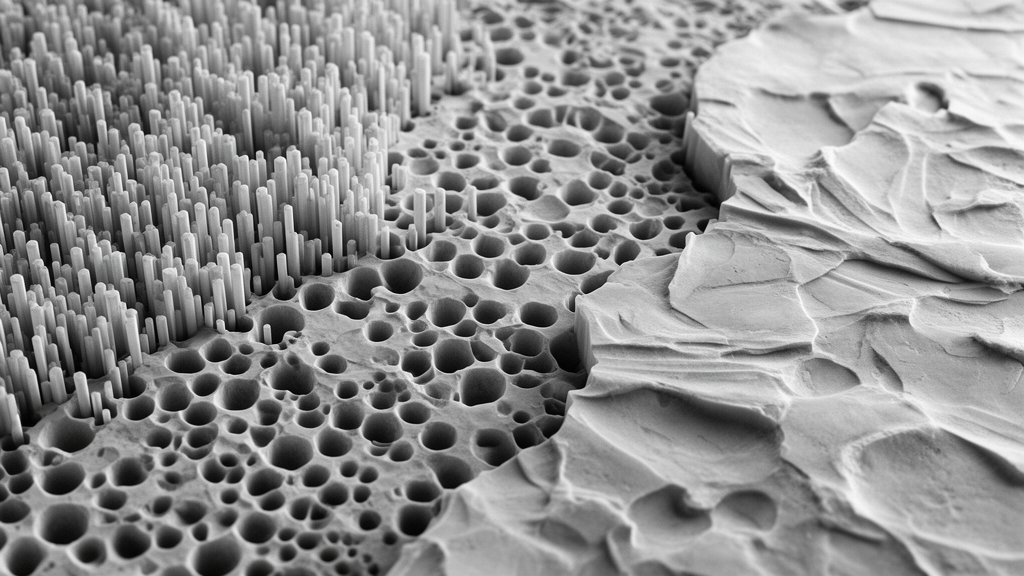
In an exploratory pilot case series, complementary microscopic imaging revealed distinct surface morphologies and mechanical characteristics across untreated developmental defects of enamel. Researchers evaluated four human enamel specimens using atomic force microscopy, scanning electron microscopy, and digital microscopy to describe structural variations across specific defect phenotypes.
The evaluation focused on quantitative and topographical parameters derived from microscopic imaging. The investigators measured enamel surface topography, height profiles, average roughness, root mean square roughness, and DMT-modulus to assess the physical properties of the affected surfaces.
The four analyzed specimens represented distinct developmental enamel defect phenotypes, including injury-based hypoplasia, inflammation-based hypoplasia, diffuse opacity, and demarcated opacity. In addition to the defect sites, a region of healthy enamel from the demarcated opacity specimen was examined to serve as a reference area.
Complementary imaging demonstrated distinct surface morphologies across the individual specimens, providing descriptive measurements of roughness, height profiles, and DMT-modulus. The researchers noted that the hypotheses generated from this four-specimen pilot evaluation will be tested in a planned study of approximately 300 enamel specimens employing standardized imaging protocols and independent biological samples.
Within the sample selection, four human enamel samples were selected to represent different developmental defect phenotypes. The researchers categorized these investigated lesions into injury-based hypoplasia (H-injury), inflammation-based hypoplasia (H-infection), diffuse opacity (DifO), and demarcated opacity (DemO). To establish a baseline for comparison against the defect phenotypes, a healthy enamel area identified on the demarcated opacity (DemO) specimen was also examined as a reference region.
Methodologically, the pilot study characterized the surface morphology and mechanical parameters of developmental defects of enamel using atomic force microscopy (AFM), digital microscopy (DM), and scanning electron microscopy (SEM). Complementary imaging with AFM, SEM, and DM demonstrated distinct surface morphologies in the individual specimens. Enamel surface topography (ST) was evaluated alongside descriptive AFM-derived parameters, which included surface height profiles (HP), average roughness (Ra), root mean square roughness (Rq), and DMT-modulus (DMT).
In their conclusion, the authors described this work as an exploratory pilot case series presenting surface morphology and selected AFM-derived parameters across four untreated enamel specimens representing different DDE phenotypes. Because of the pilot nature of the study, the generated hypotheses will be examined in a planned larger study of approximately 300 enamel specimens. That planned future research will use standardized imaging protocols and independent biological samples. Ultimately, the evidence from adequately powered studies may then contribute to more individualized, evidence-based care.
Subject of Research: Multimodal microscopic characterization of untreated developmental defects of enamel
Article Title: Exploratory pilot study describing multimodal microscopic characterization of untreated developmental enamel defects
Article References: Míšová, E., Schwarz, M., Klíma, K., Hyšpler, P., Žižka, R., Marek, I., Kolářová, H., & Tománková, K. B. (2026). Exploratory pilot study describing multimodal microscopic characterization of untreated developmental enamel defects. Discover Materials. https://doi.org/10.1007/s43939-026-01087-3
Image Credits: AI Generated
DOI: 10.1007/s43939-026-01087-3
Keywords: developmental defects of enamel, enamel surface morphology, atomic force microscopy, scanning electron microscopy, digital microscopy, injury-based hypoplasia, inflammation-based hypoplasia, diffuse opacity, demarcated opacity, surface topography, height profile, average roughness, root mean square roughness, DMT-modulus, human enamel, healthy enamel reference, pilot case series
News Source: Denise Maddox. (November 23, 2026). Pilot Microscopy Study Reveals Distinct Surface Morphologies Across Four Enamel Defects. Scienmag.