Credit: Mary Ann Liebert, Inc., publishers
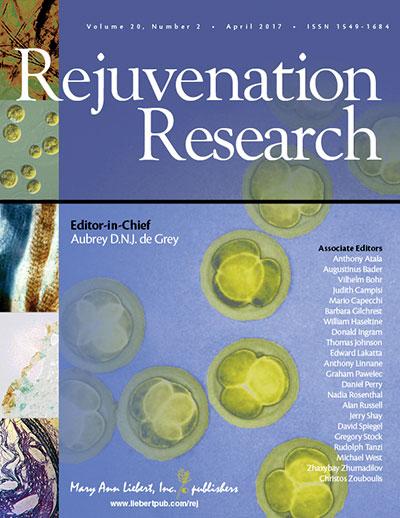
New Rochelle, NY, October 31, 2017–Researchers studying the mechanism of action of the natural, plant-derived compound berberine have linked its anti-inflammatory activity and ability to regulate levels of stress-response proteins including sirtuin to berberine positive effects on memory loss and impaired learning in an aging diabetic mouse model. In addition to improving diabetic encephalopathy and slowing central nervous system degeneration, berberine was also associated with better lipid metabolism and decreased fasting glucose in the diabetic mice, as reported in Rejuvenation Research, a peer-reviewed journal from Mary Ann Liebert, Inc., publishers. The article is available free on the Rejuvenation Research website until November 30, 2017.
The article entitled "Berberine Improves Diabetic Encephalopathy Through the SIRT1/ER Stress Pathway in db/db Mice" was authored by a team of researchers from Guangzhou University of Chinese Medicine, led by Shi-Jie Zhang and Yun-Bo Chen. The researchers focused on the effects of berberine on a stress protein-mediated signaling pathway in the endoplasmic reticulum (ER). Diabetes can induce ER stress and has been linked to hyperglycemia-induced dysfunction of neuronal synapses in the brain and cognitive impairment. Based on the results of this study, the authors concluded that berberine might be able to protect against the effects of diabetic encephalopathy by intervening in the SIRT1/ER stress pathway.
"Diabetes is a key example of the intertwined nature of the age-related decline in different tissues; though it nominally centers on excess fat and glycogen storage, the brain cannot escape its effects," says Editor-in-Chief Aubrey D.N.J. de Grey, SENS Research Foundation, Mountain View, CA. "While we continue the development of bona fide repair (i.e., rejuvenation) therapies for such damage, it is vital to identify the most effective 'stopgaps' that we can provide already. Here it is shown that berberine must be considered a highly promising intervention for diabetic encephalopathy."
###
About the Journal
Rejuvenation Research is the premier peer-reviewed journal providing cutting-edge research on rejuvenation therapies in the laboratory and clinic. Led by Editor-in-Chief Aubrey D.N.J. de Grey, PhD, SENS Foundation, Mountain View, CA, the Journal provides key explorations and advances that may ultimately contribute to slowing or reversing the aging process, and covers topics such as cardiovascular aging, DNA damage and repair, cloning, and cell immortalization and senescence. Rejuvenation Research is the Official Journal of the European Society of Preventive, Regenerative and Anti-Aging Medicine (ESAAM) and the World Federation & World Virtual Institute of Preventive & Regenerative Medicine (PYRAMED). Complete tables of content and a sample issue may be viewed on the Rejuvenation Research website.
About the Publisher
Mary Ann Liebert, Inc., publishers is a privately held, fully integrated media company known for establishing authoritative peer-reviewed journals in many promising areas of science and biomedical research, including Stem Cells and Development, Cellular Reprogramming, DNA and Cell Biology, and Human Gene Therapy. Its biotechnology trade magazine, GEN (Genetic Engineering & Biotechnology News), was the first in its field and is today the industry's most widely read publication worldwide. A complete list of the firm's 80 journals, books, and newsmagazines is available on the Mary Ann Liebert, Inc., publishers website.
Mary Ann Liebert, Inc. 140 Huguenot St., New Rochelle, NY 10801-5215
Phone: (914) 740-2100 (800) M-LIEBERT Fax: (914) 740-2101
http://www.liebertpub.com
Media Contact
Kathryn Ryan
[email protected]
914-740-2250
@LiebertPub
http://www.liebertpub.com
Original Source
http://www.liebertpub.com/global/pressrelease/how-berberine-works-to-slow-diabetes-related-cognitive-decline-reported-in-rejuvenation-research/2279/ http://dx.doi.org/10.1089/rej.2017.1972