• HOME
  • NEWS
  • EXPLORE
    • CAREER
      • Companies
      • Jobs
    • EVENTS
    • iGEM
      • News
      • Team
    • PHOTOS
    • VIDEO
    • WIKI
  • BLOG
  • COMMUNITY
    • FACEBOOK
    • INSTAGRAM
    • TWITTER
Monday, November 23, 2026
BIOENGINEER.ORG
No Result
View All Result
  • Login
  • HOME
  • NEWS
  • EXPLORE
    • CAREER
      • Companies
      • Jobs
        • Lecturer
        • PhD Studentship
        • Postdoc
        • Research Assistant
    • EVENTS
    • iGEM
      • News
      • Team
    • PHOTOS
    • VIDEO
    • WIKI
  • BLOG
  • COMMUNITY
    • FACEBOOK
    • INSTAGRAM
    • TWITTER
No Result
View All Result
Bioengineer.org
No Result
View All Result
Home NEWS Science News Health

Vascular Ring Compression Can Cause Dynamic Hyperinflation in Mechanically Ventilated Adults

by
November 23, 2026
in Health
Reading Time: 2 mins read
0
Vascular Ring Compression Can Cause Dynamic Hyperinflation in Mechanically Ventilated Adults

Vascular Ring Compression Can Cause Dynamic Hyperinflation in Mechanically Ventilated Adults

Share on FacebookShare on TwitterShare on LinkedinShare on RedditShare on Telegram

Dynamic hyperinflation, defined as an increase in end-expiratory lung volume resulting from incomplete exhalation, typically develops from airflow-limiting disorders such as chronic obstructive pulmonary disease exacerbations or asthma, or from high minute ventilation paired with insufficient expiratory time. In mechanically ventilated patients, ventilator waveforms demonstrate incomplete expiration when airflow fails to reach baseline, and an end-expiratory hold maneuver reveals intrinsic positive end-expiratory pressure. This condition can diminish venous return and cardiac output, potentially leading to cardiac arrest.

Standard clinical management of dynamic hyperinflation focuses on treating the underlying etiology and decreasing the inspiratory-to-expiratory ratio during mechanical ventilation. In severe instances, clinicians must disconnect the mechanical ventilator to allow the patient’s lungs to deflate rapidly. Beyond common obstructive causes, distinct mechanical abnormalities can also trigger severe hyperinflation by directly compressing the central airways.

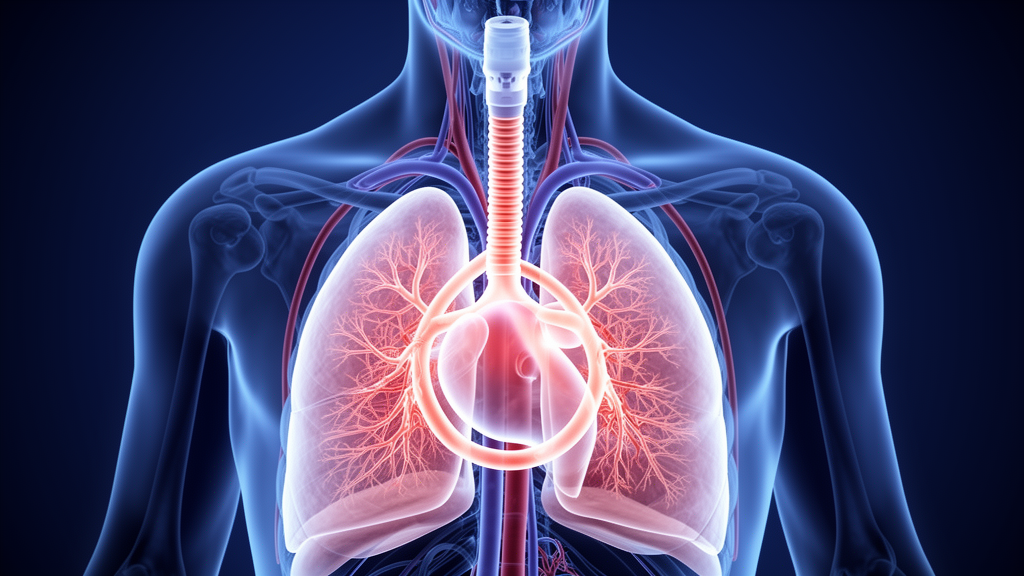
Ventilator waveforms may display regular expiratory oscillations that occur synchronously with the arterial pressure tracing, an observation consistent with dynamic tracheal compression exerted by pulsating arteries. Diagnostic bronchoscopy can reveal an extrinsic pulsatile mass compressing the airway, while computed tomography imaging can identify structural vascular anomalies, including a right aortic arch accompanied by an aberrant pretracheal left brachiocephalic artery.

Vascular rings represent developmental abnormalities that are rarely encountered in adult populations because they typically become symptomatic during infancy. When such vascular anomalies cause mechanical airway obstruction and subsequent hyperinflation, surgical bypass can successfully resolve the hyperinflation and enable weaning from mechanical ventilation.

Direct bronchoscopy specifically reveals that the pulsatile compressive mass is situated on the right side of the airway. Furthermore, computed tomography demonstrates external airway compression directly involving the trachea, the aorta, and the aberrant pretracheal left brachiocephalic artery. Presented as practical tips for intensivists, these diagnostic images confirm how developmental vascular rings cause direct arterial tracheal compression, providing vital visual evidence when investigating dynamic hyperinflation in adults.

Subject of Research: Dynamic hyperinflation caused by adult vascular ring airway compression

Article Title: Why is my patient hyperinflated?

Article References: Campanelli, F., Rodriguez, Y., & Mehdaoui, H. (2026). Why is my patient hyperinflated?. Intensive Care Medicine. https://doi.org/10.1007/s00134-026-08665-2

Image Credits: AI Generated

DOI: 10.1007/s00134-026-08665-2

Keywords: dynamic hyperinflation, mechanical ventilation, vascular ring, tracheal compression, intensive care medicine, intrinsic PEEP, expiratory airflow, bronchoscopy, computed tomography, right aortic arch, left brachiocephalic artery, ventilator waveforms, surgical bypass, cardiac output, ventilator weaning

News Source: Ophelia Keating. (November 23, 2026). Vascular Ring Compression Can Cause Dynamic Hyperinflation in Mechanically Ventilated Adults. Scienmag.


Tags: bronchoscopycardiac outputcomputed tomographydynamic hyperinflationexpiratory airflowintensive care medicineintrinsic PEEPleft brachiocephalic arteryMechanical ventilationright aortic archsurgical bypasstracheal compressionvascular ringventilator waveformsventilator weaning
Share12Tweet7Share2ShareShareShare1

Related Posts

Review Argues One Health and Person-Centred Care Must Address Shared Interdependence

Review Argues One Health and Person-Centred Care Must Address Shared Interdependence

November 23, 2026
Comprehensive Review Evaluates Engineered Immunomodulatory Peptides for Multimodal Cancer Immunotherapy

Comprehensive Review Evaluates Engineered Immunomodulatory Peptides for Multimodal Cancer Immunotherapy

November 23, 2026

Brain Perfusion Scans in Dementia Risk Errors Through Non-Interchangeable Measurements

November 23, 2026

Municipal Walking Event Linked to 500 Daily Steps in Older Adults

November 23, 2026

POPULAR NEWS

  • Clinical Trial Standardizes Multi-Center Protocol Testing Herbal Formula for Carotid Plaque

    Clinical Trial Standardizes Multi-Center Protocol Testing Herbal Formula for Carotid Plaque

    29 shares
    Share 12 Tweet 7
  • Plasma Protein Network Shows Divergent Cognitive Links in Cerebrospinal Fluid

    29 shares
    Share 12 Tweet 7
  • COVID-19 Surges Temporarily Cut Hospital Outpatient Therapy for Chronic Neurological Conditions

    29 shares
    Share 12 Tweet 7
  • Cardiovascular Disease Epidemiology Pioneer Henry Blackburn Dies at Age 101

    29 shares
    Share 12 Tweet 7

About

We bring you the latest biotechnology news from best research centers and universities around the world. Check our website.

Follow us

Recent News

Review Argues One Health and Person-Centred Care Must Address Shared Interdependence

Comprehensive Review Evaluates Engineered Immunomodulatory Peptides for Multimodal Cancer Immunotherapy

Review Identifies Cryptorchidism as Most Consistently Reported Reproductive Abnormality in Rare Syndrome

Subscribe to Blog via Email

Enter your email address to subscribe to this blog and receive notifications of new posts by email.

Join 88 other subscribers
  • Contact Us

Bioengineer.org © Copyright 2023 All Rights Reserved.

Welcome Back!

Login to your account below

Forgotten Password?

Retrieve your password

Please enter your username or email address to reset your password.

Log In
No Result
View All Result
  • Homepages
    • Home Page 1
    • Home Page 2
  • News
  • National
  • Business
  • Health
  • Lifestyle
  • Science

Bioengineer.org © Copyright 2023 All Rights Reserved.