• HOME
  • NEWS
  • EXPLORE
    • CAREER
      • Companies
      • Jobs
    • EVENTS
    • iGEM
      • News
      • Team
    • PHOTOS
    • VIDEO
    • WIKI
  • BLOG
  • COMMUNITY
    • FACEBOOK
    • INSTAGRAM
    • TWITTER
Monday, November 23, 2026
BIOENGINEER.ORG
No Result
View All Result
  • Login
  • HOME
  • NEWS
  • EXPLORE
    • CAREER
      • Companies
      • Jobs
        • Lecturer
        • PhD Studentship
        • Postdoc
        • Research Assistant
    • EVENTS
    • iGEM
      • News
      • Team
    • PHOTOS
    • VIDEO
    • WIKI
  • BLOG
  • COMMUNITY
    • FACEBOOK
    • INSTAGRAM
    • TWITTER
No Result
View All Result
Bioengineer.org
No Result
View All Result
Home NEWS Science News Technology

Federated Learning Predicts Fuel Cell Voltage Across Logical Load Regimes

by
November 23, 2026
in Technology
Reading Time: 2 mins read
0
Federated Learning Predicts Fuel Cell Voltage Across Logical Load Regimes

Federated Learning Predicts Fuel Cell Voltage Across Logical Load Regimes

Share on FacebookShare on TwitterShare on LinkedinShare on RedditShare on Telegram

Researchers evaluated an operating-regime-partitioned, sample-weighted federated averaging framework to predict one-step-ahead fuel cell voltage under dynamic loading conditions. Accurate proton exchange membrane fuel cell (PEMFC) voltage prediction remains challenging because stack voltage changes nonlinearly across varying operational states. To address this behavior, the investigation examined whether decentralized learning across partitioned operating regimes could forecast voltage variations without sharing raw measurement records among the logical partitions.

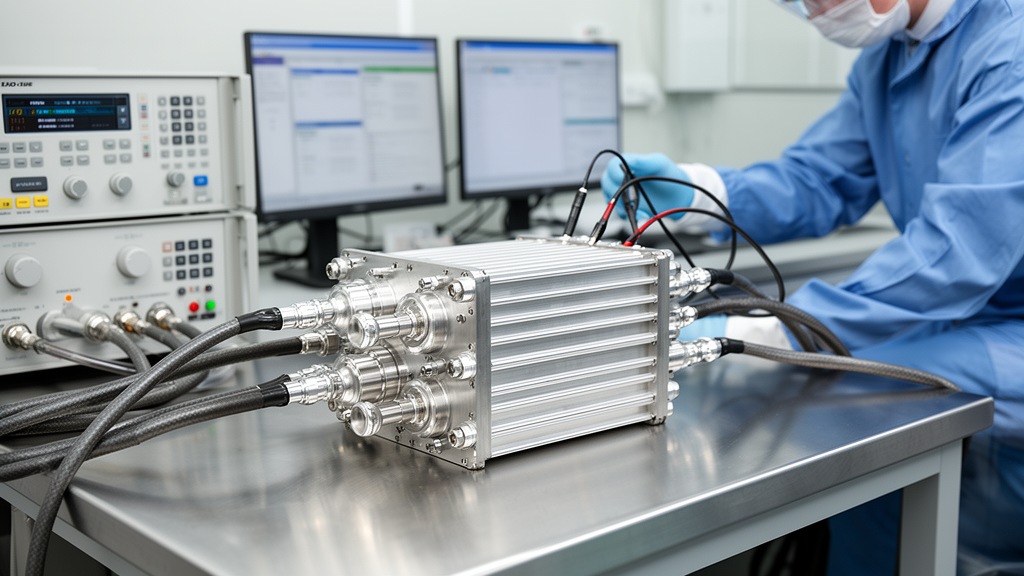
The experimental evaluation utilized recorded operational data gathered from a single 100-watt laboratory PEMFC stack. Across the study, a total of 1,706 recorded samples were categorized into logical low-, medium-, and high-load partitions. These specific partitions were established to simulate heterogeneous client datasets. Crucially, the authors noted that these simulated client partitions were purely logical divisions and did not represent physically independent fuel cell systems or separate edge computing devices deployed in practice.

A hybrid temporal convolutional network and long short-term memory (TCN–LSTM) predictor was implemented for the voltage estimation task. The research team trained this predictive model using both centralized learning and logical-client Federated Averaging (FedAvg). Under the federated learning protocol, model parameters were updated across the operating regimes while keeping the raw data records isolated within their respective logical partitions.

When evaluated on the held-out test dataset, the FedAvg TCN–LSTM model achieved an R² score of 0.8498. The predictive framework recorded a root mean square error (RMSE) of 3.5693, a mean absolute error (MAE) of 2.8483, and a mean absolute percentage error (MAPE) of 21.6090 percent. These statistical results offer a controlled proof of concept demonstrating voltage prediction capabilities across distinct logical operating regimes.

The authors emphasized several distinct operational boundaries regarding the findings. This investigation serves strictly as a proof of concept and does not demonstrate formal data privacy protection mechanisms. Furthermore, the analysis did not evaluate independent-device federation, deployed real-time digital-twin synchronization, or generalization across different fuel cell stacks.

Subject of Research: PEMFC voltage prediction using federated learning across operating regimes

Article Title: Operating-regime-aware weighted federated digital twin framework for PEMFC voltage prediction under dynamic operating conditions

Article References: Kurian, A. A., & O.V., G. S. (2026). Operating-regime-aware weighted federated digital twin framework for PEMFC voltage prediction under dynamic operating conditions. Discover Applied Sciences. https://doi.org/10.1007/s42452-026-09938-7

Image Credits: AI Generated

DOI: 10.1007/s42452-026-09938-7

Keywords: PEMFC voltage prediction, proton exchange membrane fuel cell, federated learning, FedAvg, TCN-LSTM, dynamic operating conditions, operating regime partitioning, sample-weighted FedAvg, 100 W fuel cell stack, one-step-ahead prediction, heterogeneous client data, digital twin framework, root mean square error, mean absolute percentage error, stack voltage dynamics, logical client partitions

News Source: Veronica Carney. (November 23, 2026). Federated Learning Predicts Fuel Cell Voltage Across Logical Load Regimes. Scienmag.


Tags: 100 W fuel cell stackdigital twin frameworkdynamic operating conditionsFedAvgfederated learningheterogeneous client datalogical client partitionsmean absolute percentage errorone-step-ahead predictionoperating regime partitioningPEMFC voltage predictionproton exchange membrane fuel cellroot mean square errorsample-weighted FedAvgstack voltage dynamicsTCN-LSTM
Share12Tweet7Share2ShareShareShare1

Related Posts

Wealthier American Neighborhoods Host Greater Diversity of Everyday Human Needs

Wealthier American Neighborhoods Host Greater Diversity of Everyday Human Needs

November 23, 2026
Rice Husk and Slag Stabilize Expansive Soil While Lowering Carbon Footprint

Rice Husk and Slag Stabilize Expansive Soil While Lowering Carbon Footprint

November 23, 2026

Carbon Nanotube Ternary Adder Cuts Energy Use in Image Fusion Computing

November 23, 2026

Knowledge-Based Generative Social Robot Boosts Perceived Tutoring Responsibility in University Study

November 23, 2026

POPULAR NEWS

  • Family History of Endometriosis Links to Digestive Deep Infiltrating Disease

    Family History of Endometriosis Links to Digestive Deep Infiltrating Disease

    29 shares
    Share 12 Tweet 7
  • Rice Husk and Slag Stabilize Expansive Soil While Lowering Carbon Footprint

    29 shares
    Share 12 Tweet 7
  • Carbon Nanotube Ternary Adder Cuts Energy Use in Image Fusion Computing

    29 shares
    Share 12 Tweet 7
  • Survey Finds Urban Clustering and Accreditation Gaps in European Simulation Centers

    29 shares
    Share 12 Tweet 7

About

We bring you the latest biotechnology news from best research centers and universities around the world. Check our website.

Follow us

Recent News

Two-Handed Neonatal Mask Ventilation Cuts Air Leak in Simulation Study

Lower Phenylalanine Levels Linked to Cognitive and Mood Gains in Adults With PKU

Toxic Metals Disrupt Essential Phosphate Metabolism in Human Lung Organoid Models

Subscribe to Blog via Email

Enter your email address to subscribe to this blog and receive notifications of new posts by email.

Join 88 other subscribers
  • Contact Us

Bioengineer.org © Copyright 2023 All Rights Reserved.

Welcome Back!

Login to your account below

Forgotten Password?

Retrieve your password

Please enter your username or email address to reset your password.

Log In
No Result
View All Result
  • Homepages
    • Home Page 1
    • Home Page 2
  • News
  • National
  • Business
  • Health
  • Lifestyle
  • Science

Bioengineer.org © Copyright 2023 All Rights Reserved.