Credit: CECAD Cologne
Since their discovery in 2006, induced pluripotent stem cells are a glimmer of hope for many diseases. But further research of the complex regulation of pluripotent stem cell identity revealed unexpected difficulties. A team of researchers at the Cluster of Excellence CECAD has now found an efficient way to produce neurons from pluripotent stem cells. Their research was published in Nature Communications.
As the origin of multicellular organisms, pluripotent stem cells can differentiate into all the cell types of the body. These cells can replicate indefinitely in culture and, therefore, are considered immortal. The gold standard of pluripotency is the embryonic stem cell (ESC). Somatic cells such as skin cells can be reprogrammed to generate induced pluripotent stem cells (iPSCs) that share similar characteristics with ESCs. As such, pluripotent stem cells hold a great promise for regenerative medicine as a potential source of healthy differentiated cells, including neurons. Moreover, these cells represent an invaluable resource to investigate human development and disease in the relevant cells (neurons) affected in disorders such as Alzheimer´s, Huntington's or Parkinson´s.
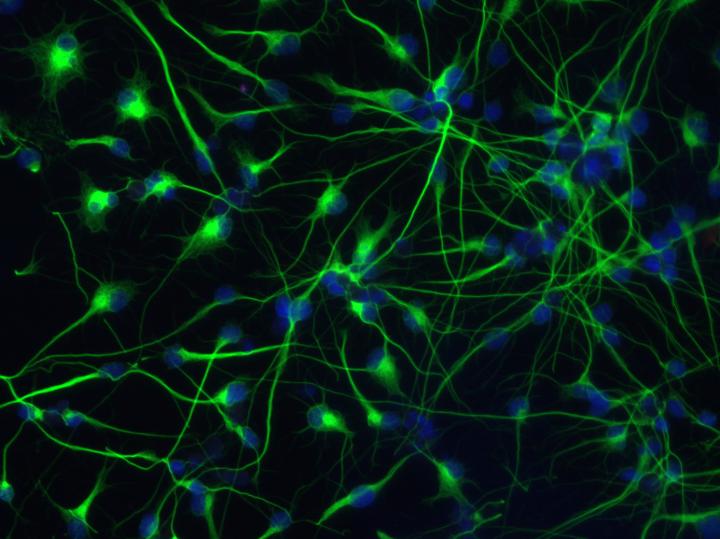
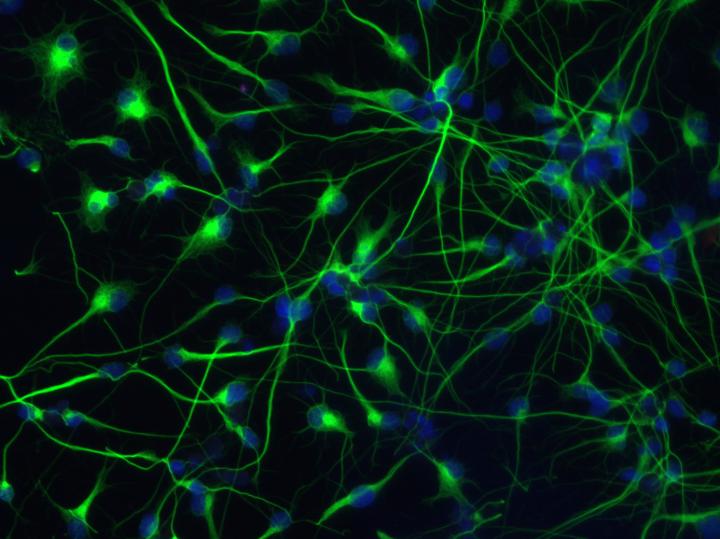
Neuronal differentiation protocols of pluripotent stem cells are usually expensive and generate a mixture of different neuronal cells and other cell types. By knocking down a single gene, the team led by David Vilchez, was able to produce neurons with 100% efficiency: "By silencing one single protein with the gene-editing method CRISPR, the cells spontaneously start to differentiate into neurons! That´s a great and much faster way to increase neurogenesis." In natural conditions, this factor called CSDE1 prevents differentiation and keeps the cells in a pluripotent state. "This could be a very powerful mechanism to have pure populations of neurons and to facilitate a better understanding of neurodegenerative diseases."
Hyun Ju Lee, first author of the study was most excited about the fast changes observed in her assays: "We could visualize the changes and really see it happening, the differentiation goes really fast. We also double-checked in multiple stem cell lines from different donors and induced pluripotent stem cells and got the same results." For the study, human embryonic stem cells, induced pluripotent stem cells and mouse stem cells were used.
By using the new approach, it would be possible to facilitate the generation of neurons from samples of different patients and study the disease or test pharmaceuticals on it. Even though those results are another step to clinical application, there is still a long way to go, says David Vilchez: "New neurons from the dish could be important for studying diseases like Parkinson´s, Alzheimer´s or Huntington´s, but we are still at the starting point of this exciting research." The research was a collaboration between CECAD, the Center for Molecular Medicine Cologne and the University Clinic Cologne.
###
Original Publication:
A post-transcriptional program coordinated by CSDE1 prevents intrinsic neural differentiation of human embryonic stem cells Hyun Ju Lee, Deniz Bartsch, Cally Xiao, Santiago Guerrero, Gaurav Ahuja, Christina Schindler, James J. Moresco, John R. Yates III, Fátima Gebauer, Hisham Bazzi, Christoph Dieterich, Leo Kurian and David Vilchez
Media Contact
Dr. David Vilchez
[email protected]
49-221-478-84172
@UniCologne
http://www.uni-koeln.de
Related Journal Article
http://dx.doi.org/10.1038/s41467-017-01744-5