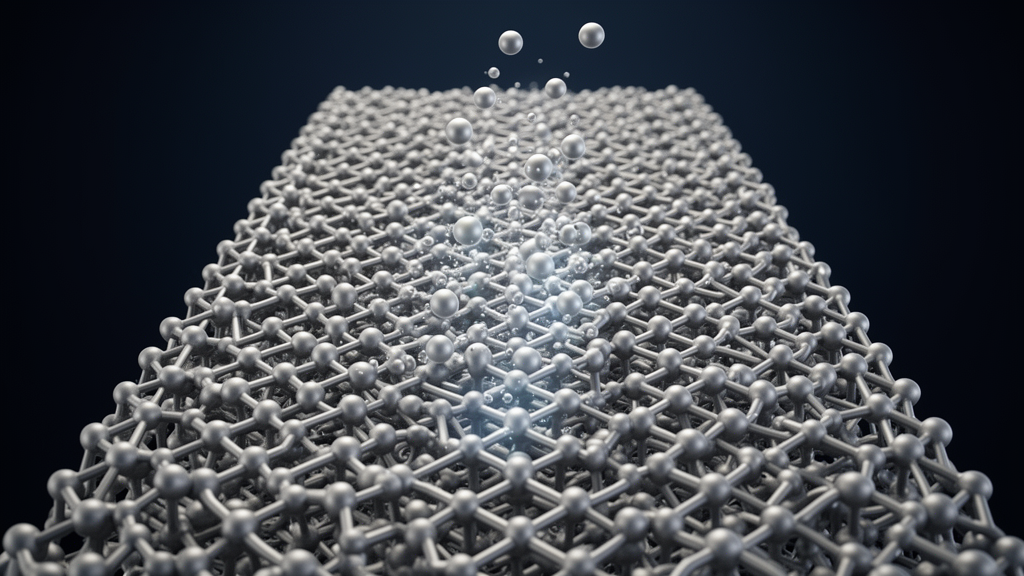
A comprehensive scientific review outlines a device-centered evaluation framework for next-generation electrode materials in hybrid supercapacitors, which occupy the critical energy-power domain between conventional capacitors and batteries. By coupling electrodes with complementary charge-storage mechanisms and operating potential windows, these systems achieve balanced performance. However, their technological advancement remains constrained by kinetic imbalance, unstable electrode-electrolyte interfaces, low practical mass loadings, inappropriate performance normalization, and limited translation of nanomaterials into manufacturable devices.
The review examines diverse electrode material classes, including advanced carbons, transition-metal oxides, hydroxides, chalcogenides, phosphides, nitrides, and carbides, alongside MXenes, conducting polymers, metal-organic frameworks, and covalent organic frameworks. Attention is also focused on Prussian blue analogs, emerging two-dimensional materials, and battery-type negative electrodes. Furthermore, the analysis details the essential interrelationships among charge-storage mechanisms, electronic and ionic transport, electrode polarity, structural reconstruction, defect and interface engineering, mass balance, and electrolyte compatibility.
Beyond material cataloging, the researchers establish rigorous operational criteria for assigning charge-storage mechanisms and provide explicit balancing equations for capacity, energy, and rate dependency. To address widespread discrepancies in device reporting, the framework introduces a quantitative benchmark that clearly distinguishes three-electrode experimental measurements from full-cell device data. In addition, binder-free, hierarchical, and composite architectures are evaluated alongside realistic performance metrics, operando characterization techniques, scalable synthesis, sustainability, and artificial-intelligence-assisted materials discovery.
The central contribution redirects electrode assessment away from isolated record capacitance toward device-constrained materials design. Under this paradigm, high-rate charge storage, voltage stability, electrode density, manufacturability, and service life must be optimized concurrently. The resulting integrated framework delineates practical design principles and targeted research priorities for translating advanced electrode chemistries into high-energy, high-power, durable, and commercially credible hybrid supercapacitors operated under relevant conditions and at industrial scale.
Subject of Research: Device-centered electrode materials design and balancing frameworks for hybrid supercapacitors
Article Title: Next-generation electrodes for advanced hybrid supercapacitors
Article References: Shah, S. S., & Aziz, M. A. (2026). Next-generation electrodes for advanced hybrid supercapacitors. Frontiers in Batteries and Electrochemistry, 5, Article 2020287. https://doi.org/10.3389/fbael.2026.2020287
Image Credits: AI Generated
DOI: 10.3389/fbael.2026.2020287
Keywords: hybrid supercapacitors, electrode materials, charge-storage mechanisms, kinetic imbalance, mass loadings, advanced carbons, transition-metal oxides, MXenes, conducting polymers, metal-organic frameworks, covalent organic frameworks, Prussian blue analogs, electrode balancing, full-cell benchmarking, binder-free architectures, interface engineering, operando characterization, scalable synthesis
News Source: Bethany Barker. (November 23, 2026). Device-Centered Framework Directs Next-Generation Electrode Design for Hybrid Supercapacitors. Scienmag.