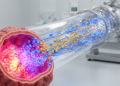
Researchers at Zhejiang University and the Ningbo Institute of Materials Technology and Engineering have developed a specialized surface-enhanced Raman scattering (SERS) bioprobe capable of detecting circulating tumor cells (CTCs) at a sensitivity of one cell per milliliter of blood. This approach addresses a critical challenge in cancer diagnostics: the ability to identify rare metastatic cells amidst a vast background of healthy blood components.
Circulating tumor cells are widely recognized as critical early indicators of cancer metastasis and pathological progression. These cells exist in chronically low concentrations, approximately one cell per milliliter of whole blood, making their detection technically demanding. The complex patterns of cell spread, combined with the inherent heterogeneity of tumor subclones and processes such as epithelial-mesenchymal transition, create significant barriers to using CTCs in clinical decision-making. In the absence of FDA-approved therapies that specifically target metastasis, robust detection strategies hold promise for improving prognosis and guiding treatment selection.
The core innovation of the new platform lies in the use of molecular iodine to facilitate oxidative self-cleaning of the SERS substrate. Traditional SERS substrates often suffer from background interference caused by contaminants, unbound molecular residues, or non-specifically adsorbed species. The research team demonstrated that iodine treatment effectively eliminates these impurities and inhibits the re-adsorption of weakly interacting species, leading to clearer spectral backgrounds. This self-cleaning mechanism is crucial for maintaining signal fidelity, particularly when analyzing low-concentration analytes in complex biological matrices.
The bioprobe, designated as Au@HOF/I2-4MBN@CS-HA@EpCAM, features a core-shell structure of gold nanoparticles modified with an ultra-thin HOF membrane. Transmission electron microscopy revealed a hexagonal morphology with an aspect ratio of 281 nm, while the HOF shell thickness was measured at 2.89 ± 0.20 nm. The HOF membrane serves as a selective molecular sieve, enhancing sensitivity by limiting analyte adsorption to specific hot spots. This nanoconfinement effect optimizes electromagnetic enhancement, allowing the platform to detect signaling molecules at extremely low concentrations.
To ensure specific targeting of tumor cells, the platform was functionalized with a chitosan-hyaluronic acid (CS-HA) microgel and anti-EpCAM antibodies. Hyaluronic acid enables tumor targeting by binding to CD44 receptors, which are overexpressed in many cancer cells, while chitosan provides biocompatibility and stability. The anti-EpCAM antibodies, grafted onto the CS-HA layer via EDC/NHS coupling chemistry, facilitate the selective capture of epithelial tumor cells. This multivalent binding strategy promotes effective interaction with the surface receptors of CTCs, enhancing the sensitivity of real-time detection.
In experimental evaluations using MCF-7 breast cancer and HeLa cervical cancer cell lines, the bioprobe demonstrated exceptional capture efficiencies. The team reported a capture efficiency of 98.8% for MCF-7 cells and 94.4% for HeLa cells after a 25-minute incubation period. In contrast, no selective capture or detectable SERS signals were observed from interactions with the non-cancerous breast cell line MCF-10A or monocytes in whole blood specimens. This high specificity confirms the bioprobe’s ability to distinguish between cancerous and healthy cells, a vital requirement for clinical application.
The sensitivity of the platform was further validated by assessing the limit of detection (LOD) for the signaling molecule 4-mercaptobenzonitrile (4-MBN). The research team achieved an LOD as low as 5.12 × 10⁻¹⁶ mol/L, a significant improvement over existing SERS-based CTC assays. The calibration results exhibited a superior linear regression curve with a correlation coefficient of 0.94588. Additionally, the SERS enhancement factor was calculated to be 9.01 × 10⁷, indicating a substantial amplification of the Raman signal compared to a standard silicon wafer substrate.
Stability and repeatability are critical factors for the clinical translation of SERS technologies. The Au@HOF/I2 nanoparticles maintained their signal enhancement without degradation after 90 days of storage at room temperature. Signal repeatability across 15 mapped positions showed a relative standard deviation of 11.23% at the 2226 cm⁻¹ Raman shift, demonstrating consistent performance. The clean surface provided by the iodine treatment ensures that the SERS signal predominantly originates from the target molecules, thereby improving the signal-to-noise ratio and reducing the risk of false positives.
The study also addressed the biocompatibility of the bioprobe through cytotoxicity assessments. Using a colorimetric cell counting kit-8 (CCK-8) assay, the team found that the survival rate of the probe exceeded 89% in both HeLa and MCF-7 cell lines, indicating minimal toxicity. The incorporation of the thin CS-HA microgel significantly enhanced molecular labeling while maintaining favorable biocompatibility.
Validation of the bioprobe’s selectivity was conducted through a trimodal imaging framework that integrated SERS, confocal laser scanning microscopy (CLSM), and scanning electron microscopy (SEM). Live SERS imaging revealed robust surface interactions via endocytosis in cancer cells, with heightened intensity in regions of higher probe concentrations. Immunofluorescence assays confirmed the targeting efficacy of the bioprobe, showing negligible binding to healthy breast cells. The preferential accumulation of probes on target cancer cells relative to white blood cells further substantiates the specificity of the detection method.
Despite these promising results, the study acknowledges certain limitations. The precise quantification of SERS hotspots remains an area of ongoing research, and the variability in spike uniformity of the star-shaped nanoparticles presents a challenge for consistent manufacturing. The phenotypic diversity among cancer cells, even within the same tumor, can lead to variable expression levels of markers, suggesting that the integration of multiple markers may be necessary for comprehensive detection.
The development of this iodine-mediated SERS platform represents a significant advancement in the field of biomedical sensing. By combining self-cleaning capabilities with high-sensitivity nanoconfinement, the research team has created a tool that could facilitate better risk stratification and optimize cancer treatment strategies. As the development of self-cleaning SERS-active substrates gains momentum, ensuring the purity of SERS bioprobes will remain a key focus. This methodology aligns with the broader goal of enhancing CTC diagnostics through predictive analytics and improved prognostic outcomes in both early and advanced diagnostic stages.
The synthetic protocol for the gold core and porous framework relied on specific chemical considerations to optimize surface cleanliness and stability. The organic linker for the framework shell, 5-(2,6-bis(4-carboxyphenyl)pyridin-4-yl)isophthalic acid, was prepared through a one-pot method before undergoing solvothermal synthesis with polyvinylpyrrolidone, dimethylformamide, ethanol, chloroauric acid, and formic acid. The mixture underwent reaction at 120 degrees Celsius for six hours in a stainless-steel autoclave. Notably, the researchers selected molecular iodine rather than potassium iodide for the oxidative degradation of organic residues. In aqueous environments, potassium iodide deactivates through the formation of triiodide ions, whereas molecular iodine retains its catalytic activity. To prepare the iodine solution, the researchers dissolved iodine pellets in deionized water through physical adsorption while stirring in the dark for 90 minutes.
Detailed crystallographic and surface charge analyses confirmed the structural integrity of the synthesized nanoparticles. High-resolution electron microscopy revealed an interplanar spacing of 0.229 nanometers, matching the gold (111) Miller index, while selected area electron diffraction patterns aligned with the metallic lattice. Powder X-ray diffraction indicated a cubic crystalline structure for the gold core accompanied by a semi-crystalline profile for the surrounding organic framework. Zeta potential measurements recorded an initial surface charge of negative 42.12 millivolts for the framework-coated gold particles in ethanol, shifting slightly to negative 40.89 millivolts after assembling the full bioprobe. Optical measurements under 488-nanometer excitation showed mild inherent fluorescence from the framework shell, which was substantially quenched upon applying the protective polysaccharide coating.
Spectroscopic characterization verified that the reporter molecules operated without spectral interference. The team selected non-resonant 4-mercaptobenzonitrile alongside 4-mercaptopyridine because their vibrational signatures occupy the silent region, mitigating background fluorescence that could undermine quantitative accuracy. Ultraviolet-visible spectrophotometry confirmed that reporter adsorption did not alter the localized surface plasmon resonance band of the gold core. Furthermore, Raman spectra exhibited a vibrational shift from 1580 reciprocal centimeters to 1600 reciprocal centimeters following iodine treatment, illustrating the surface modulation imparted by the halogen. When evaluating multiplex capabilities, mixtures of both reporter molecules generated resolved vibrational bands with minimal spectral overlap. Calibration of the primary reporter yielded the linear regression equation y = 6181.7 + 206.7x, supporting reliable quantification across varying analyte concentrations.
To simulate challenging diagnostic conditions, the researchers isolated monocytes measuring 15 to 18 micrometers in diameter from rabbit whole blood. Blood samples were diluted with phosphate-buffered saline, layered onto lymphocyte separation medium, and centrifuged at 1600 revolutions per minute for 25 minutes to isolate the target monocyte fraction. Tumor cells were then spiked into this white blood cell suspension before adding the bioprobes. During subsequent cell imaging, the strongest Raman signals emerged at shifts of 1072 and 1578 reciprocal centimeters in cancer cells. Capture efficiency was determined using fluorescence microscopy to count uncaptured cells, calculating the final percentage by subtracting uncaptured cells from total seeded cell density.
Subject of Research: Iodine-mediated hydrogen-bonded organic framework and noble metal nanomaterial: A high-performance SERS platform for the detection of circulating tumor cells
Article Title: Iodine-mediated hydrogen-bonded organic framework and noble metal nanomaterial: A high-performance SERS platform for the detection of circulating tumor cells
Article References: Onyemaobi, I. M., Sun, L., Xie, Y., Miao, X., Zheng, S., Lin, J., & Wu, A. (2026). Iodine-mediated hydrogen-bonded organic framework and noble metal nanomaterial: A high-performance SERS platform for the detection of circulating tumor cells. Advanced Sensor and Energy Materials, 5(3), Article 100208. https://doi.org/10.1016/j.asems.2026.100208
Image Credits: AI Generated
DOI: 10.1016/j.asems.2026.100208
Keywords: Iodine-mediated, hydrogen-bonded, organic, framework, noble, metal, nanomaterial, high-performance, SERS, platform, detection, circulating, tumor, cells
News Source: Nathaniel Bowman. (November 23, 2026). Iodine-Cleaned Gold Nanoparticles Detect Rare Circulating Tumor Cells. Scienmag.