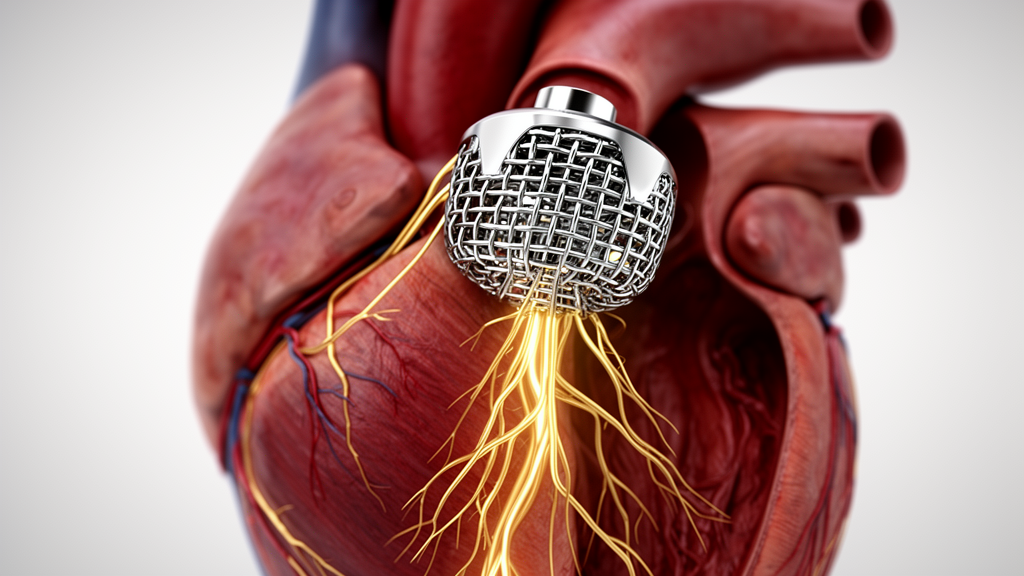
A large systematic review and meta-analysis pooling thirty observational studies and 223,419 patients with severe aortic stenosis undergoing transcatheter aortic valve implantation has revealed that developing new-onset persistent left bundle branch block is associated with measurable reductions in systolic cardiac function alongside elevated risks of serious secondary clinical endpoints. Transcatheter aortic valve implantation has become an established intervention across the spectrum of surgical risk in adults diagnosed with severe aortic stenosis, yet mechanical trauma to the cardiac conduction system during valve deployment continues to cause frequent conduction abnormalities. Persistent conduction disruption, particularly new-onset persistent left bundle branch block, represents a persistent complication that often complicates post-procedural recovery. Across the pooled cohorts analyzed in the new synthesis, 37,856 patients developed persistent bundle branch block following their valve procedure, whereas 185,563 individuals retained normal conduction pathways or did not develop this specific persistent conduction disturbance. When comparing these two distinct populations across studies with follow-up periods ranging from six months to five years, investigators discovered that the post-procedural emergence of persistent left bundle branch block was consistently linked to impaired recovery of left ventricular systolic performance, a more than twofold higher rate of permanent pacemaker implantation, a 48 percent increase in the relative risk of hospital admission for heart failure, and a modest yet statistically significant increase in overall all-cause mortality.
Conduction disturbances following transcatheter valve replacement have presented a persistent management challenge throughout fifteen years of technological and procedural evolution. Historically, permanent pacemaker implantation rates following traditional open surgical aortic valve replacement have remained relatively stable and low, typically falling within an established range between 3 percent and 7 percent. In sharp contrast, transcatheter aortic valve procedures carry considerably higher rates of permanent pacemaker implantation, generally documented between 10 percent and 25 percent across published studies. Within this broader clinical landscape, existing observational literature and multi-center clinical registries indicate that approximately 10 percent to 20 percent of transcatheter valve recipients who enter the procedure without pre-existing conduction abnormalities develop persistent left bundle branch block at the time of hospital discharge. Despite progressive mechanical and structural design refinements in transcatheter heart valve platforms, physical pressure, frame extension, and tissue injury within the left ventricular outflow tract continue to trigger delayed pacing requirements and conduction failure. In this anatomical setting, left ventricular ejection fraction serves as a critical measure of global systolic function that is tightly tied to long-term clinical survival, heart failure progression, and electrophysiological decline, underscoring the necessity of establishing clear prognostic associations across large patient populations.
To evaluate these clinical consequences within an exhaustive meta-analytic framework, investigators registered their study protocol in the International Prospective Register of Systematic Reviews under registration number CRD420261386921 and adhered to standard Preferred Reporting Items for Systematic Reviews and Meta-Analyses guidelines. Database searches conducted across PubMed, Embase, and the Cochrane Library screened records from inception through May 21, 2026, retrieving a total of 5,378 citations. After screening 4,400 non-duplicate records and conducting detailed full-text assessments of 69 articles, thirty observational studies met all rigorous inclusion criteria. The overall cohort comprised 223,419 elderly participants, with an average overall cohort age of 78.73 years and an approximately balanced sex distribution comprising 50.46 percent male patients. Study eligibility required direct comparative evaluations of post-procedural outcomes between patients with and without new-onset persistent left bundle branch block undergoing transcatheter valve implantation. To maintain clean comparison groups, patients who presented with pre-existing conduction abnormalities, pre-existing bundle branch block, or prior permanent pacemakers on their pre-procedural electrocardiograms were systematically excluded from primary analyses whenever individual studies reported this information, and instances of unconfirmed exclusions were formally evaluated as potential sources of bias during standardized quality assessment.
The quantitative evaluation of ventricular performance demonstrated that patients developing new-onset persistent left bundle branch block experienced an overall pooled mean difference in left ventricular ejection fraction of negative 4.65 percent compared with those who did not develop the conduction block, characterized by a 95 percent confidence interval spanning from negative 6.03 percent to negative 3.27 percent and an inconsistency index of 76.1 percent. The calculated 95 percent prediction interval for this primary continuous outcome ranged from negative 8.11 percent to negative 1.19 percent, indicating that future comparable studies would also be expected to observe a decline. While valve replacement typically relieves pressure overload and permits left ventricular systolic recovery, the presence of persistent left bundle branch block appears to attenuate or entirely eliminate this expected reverse remodeling. Subgroup evaluations examining left ventricular ejection fraction over sequential observation windows identified statistically significant relative reductions among patients with persistent bundle block at one month, showing a mean difference of negative 2.91 percent with a 95 percent confidence interval from negative 3.10 percent to negative 2.73 percent, at one year with a mean difference of negative 4.84 percent and a 95 percent confidence interval from negative 7.53 percent to negative 2.14 percent, and at two years with a mean difference of negative 4.68 percent and a 95 percent confidence interval from negative 8.87 percent to negative 0.48 percent.
Beyond functional left ventricular impairment, the quantitative pooling of binary clinical endpoints demonstrated substantial elevations in subsequent medical and electrophysiological complications. Across eighteen studies evaluating permanent pacemaker implantation, patients with persistent left bundle branch block faced more than double the likelihood of requiring device implantation, yielding a pooled risk ratio of 2.24 with a 95 percent confidence interval between 1.75 and 2.86, an inconsistency statistic of 55 percent, and a 95 percent prediction interval spanning from 0.97 to 5.16. In absolute terms across the pooled cohorts, this association translated to an estimated excess of approximately 54 permanent pacemaker placements per 1,000 treated patients, within a 95 percent confidence interval of 33 to 74. Time-stratified subgroup analyses confirmed that this pacing risk manifested within the first post-procedural year, where the risk ratio reached 1.99 with a 95 percent confidence interval of 1.21 to 3.30, and persisted through five years of follow-up with an elevated risk ratio of 2.56 with a 95 percent confidence interval of 1.90 to 3.45 and an inconsistency index of 0 percent. Because the 95 percent prediction interval at five years excluded unity, ranging from 1.26 to 5.22, the findings indicate that electrophysiological deterioration and late pacing indications continue to accumulate over prolonged surveillance horizons rather than resolving after an early post-operative plateau.
Hospital readmissions for decompensated heart failure similarly demonstrated an increased clinical burden among patients who experienced persistent bundle branch block following valve deployment. The overall meta-analysis identified a pooled risk ratio for heart failure hospitalization of 1.48, supported by a 95 percent confidence interval spanning from 1.10 to 1.98, an inconsistency index of 55.9 percent, and a 95 percent prediction interval of 0.73 to 2.97. This relative risk elevation corresponded to an estimated absolute excess of approximately 48 heart failure hospital admissions per 1,000 patients, bounded by a 95 percent confidence interval between 6 and 105. When examining hospitalizations specifically restricted to one year of follow-up across three reporting studies, the observed risk ratio of 1.07 with a 95 percent confidence interval of 0.71 to 1.60 did not achieve statistical significance, although this localized subgroup was markedly underpowered with an estimated post-hoc statistical power of only 10.8 percent. A focused sensitivity analysis restricted to two studies that strictly ascertained bundle branch block persistence at one month demonstrated an even stronger association with heart failure rehospitalization, yielding a pooled risk ratio of 2.07 with a 95 percent confidence interval from 1.40 to 3.05 and an inconsistency index of 0 percent, suggesting that standardized post-discharge rhythm assessment captures a clinically meaningful, high-risk patient subset.
Evaluations of post-procedural mortality revealed distinct divergence between overall survival and cause-specific cardiovascular death. Across twenty-eight studies contributing crude event data to the all-cause mortality synthesis, new-onset persistent left bundle branch block was associated with a modest but statistically significant relative increase in overall mortality, demonstrating a pooled risk ratio of 1.19 with a 95 percent confidence interval between 1.05 and 1.35 and an inconsistency index of 71.8 percent. In subgroup analyses stratified by follow-up duration, this survival difference was statistically significant at one year of observation, exhibiting a risk ratio of 1.26 with a 95 percent confidence interval from 1.05 to 1.51 and low heterogeneity. However, at longer intervals of two years, three years, and five years, pooled risk ratios did not reach statistical significance, including a five-year mortality risk ratio of 1.45 accompanied by a wide 95 percent confidence interval from 0.63 to 3.35 across three studies. In contrast to all-cause mortality, pooled analysis of thirteen studies reporting cardiovascular mortality identified no statistically significant association, yielding a pooled risk ratio of 1.29 with a 95 percent confidence interval of 0.93 to 1.81. Similarly, a composite endpoint combining cardiovascular mortality and heart failure admission produced a pooled risk ratio of 1.39 with a 95 percent confidence interval of 0.65 to 2.93, indicating that competing non-cardiovascular mortality in an elderly cohort may dilute long-term cardiovascular-specific signals.
Extensive methodological sensitivity checks confirmed the statistical stability of the primary findings while accounting for registry weighting, baseline risk, and exposure timing. Because the STS-ACC TVT Registry contributed the vast majority of participants within the broader synthesis, a post-hoc sensitivity analysis systematically excluded this single large registry cohort; the pooled risk ratio for all-cause mortality remained statistically significant at 1.19 with a 95 percent confidence interval between 1.03 and 1.36 across the remaining twenty-seven studies. When restricting the analysis to eighteen studies assessed at moderate risk of bias under the ROBINS-I V2 tool—excluding twelve studies categorized at serious risk due to confounding or participant selection—the associations remained consistent: all-cause mortality yielded a risk ratio of 1.23 with a 95 percent confidence interval of 1.02 to 1.49, permanent pacemaker implantation showed a risk ratio of 2.49 with a 95 percent confidence interval of 1.84 to 3.39, left ventricular ejection fraction showed a mean difference of negative 3.95 percent, and heart failure hospitalization retained borderline statistical significance with a risk ratio of 1.56 and a 95 percent confidence interval of 1.01 to 2.42. Furthermore, restricting the evaluation to eighteen cohorts matching the registered protocol exposure definition of block persistence assessed at hospital discharge or seven days confirmed directionally consistent and statistically significant estimates for mortality and pacemaker requirements.
Methodological quality assessments performed under the GRADE framework revealed that the overall certainty of the body of evidence across all evaluated outcomes ranged strictly from low to very low. For changes in left ventricular ejection fraction, certainty was rated as low due to serious risk of bias and serious inconsistency across contributing cohorts. Certainty ratings were downgraded to very low for all-cause mortality, cardiovascular mortality, heart failure hospitalization, and one-year pacemaker placement, driven by very serious risk of bias arising from non-randomized observational designs alongside substantial residual heterogeneity and imprecision. In publication bias assessments, contour-enhanced funnel plots displayed symmetry for mortality, heart failure, and pacemaker endpoints, but Egger’s regression test identified significant funnel plot asymmetry for the left ventricular ejection fraction outcome. An exploratory trim-and-fill computation imputing seven hypothetical studies yielded an adjusted mean difference of negative 2.94 percent with a 95 percent confidence interval from negative 4.60 percent to negative 1.29 percent, confirming that although small-study effects and selective reporting cannot be excluded, the directional signal of reduced ejection fraction remained statistically robust.
In their synthesis, the study authors emphasize that because all included investigations were observational and evidence certainty remained low to very low, these pooled associations must be interpreted as hypothesis-generating observations rather than direct proof of biological causality. Although meta-regression exploring transcatheter valve platforms was precluded by unbalanced reporting across cohorts, descriptive data indicated that self-expanding prostheses, which exert continuous radial force within the left ventricular outflow tract, were associated with higher baseline conduction disturbance burdens than balloon-expandable valves, while the directional adverse impact of persistent bundle block remained consistent across all device designs. The authors explicitly separated their empirical findings from external literature and prospective hypotheses, noting that while procedural trauma from valve oversizing, deep implantation, or post-dilation is well documented externally, specific clinical interventions such as structured serial echocardiography at fixed intervals, designated QRS duration thresholds of 150 milliseconds, avoidance of right ventricular apical pacing, or left bundle branch area pacing remain unproven hypotheses that require rigorous verification in future prospective trials.
Subject of Research: Meta-analysis evaluating the clinical and ventricular impact of new-onset persistent left bundle branch block following transcatheter aortic valve implantation
Article Title: Impact of persistent left bundle branch block on ventricular function and clinical outcomes after transcatheter aortic valve implantation: a systematic review and meta-analysis
Article References: de Aquino, R. G. F., Lobo Filho, H. G., Campane, R. Z., Figueirêdo Gurgel, B. T., & Kilic, A. (2026). Impact of persistent left bundle branch block on ventricular function and clinical outcomes after transcatheter aortic valve implantation: a systematic review and meta-analysis. The Cardiothoracic Surgeon, 34(1), Article 41. https://doi.org/10.1186/s43057-026-00224-1
Image Credits: AI Generated
DOI: 10.1186/s43057-026-00224-1
Keywords: transcatheter aortic valve implantation, TAVI, new-onset persistent left bundle branch block, NOP-LBBB, left ventricular ejection fraction, LVEF, permanent pacemaker implantation, heart failure hospitalization, all-cause mortality, cardiovascular mortality, severe aortic stenosis, ROBINS-I V2, GRADE framework, conduction disturbances, systematic review and meta-analysis, echocardiographic follow-up
News Source: Ophelia Keating. (November 23, 2026). Persistent Left Bundle Branch Block After TAVI Linked to Adverse Outcomes. Scienmag.