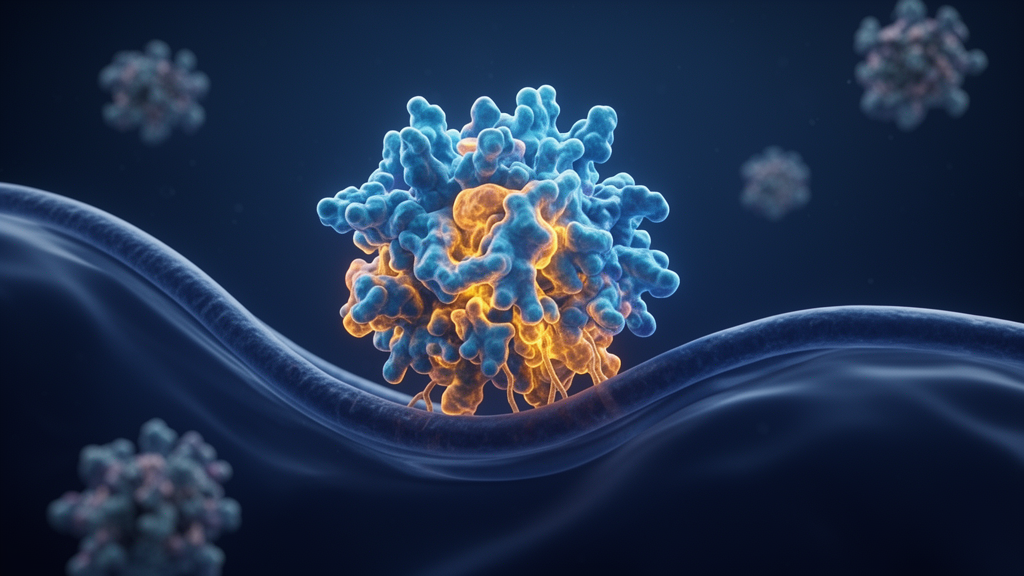
A computational comparative investigation of the human metapneumovirus fusion protein across five viral subtypes has uncovered distinct structural profiles, physicochemical properties, and predicted antigenic patterns that distinguish genotype B from genotype A variants. Human metapneumovirus represents an enveloped, non-segmented, single-stranded negative-sense RNA pathogen within the Pneumoviridae family and Metapneumovirus genus, recognized as a leading cause of acute respiratory tract infections in humans, particularly presenting severe risks for the elderly and immunocompromised individuals. Because the viral fusion protein mediates host cell attachment, membrane fusion, and viral entry via Arg-Gly-Asp integrin interactions, it serves as the primary target for neutralizing antibody responses and candidate vaccine design, though no approved vaccine currently exists.
To perform the comparative profiling, the study selected five representative reference GenBank accessions corresponding to genotypes A1, A2a, A2b, B1, and B2, specifically choosing accession records OL794389.1, PP086006.1, LC769208.1, OL794372.1, and OL794470.1. Each accession was chosen based on full-length sequence availability, unambiguous genotype annotation, absence of ambiguous amino acid residues, and frequent historical application in published literature to maintain analytical consistency. Sequence alignment across all five genotypes demonstrated that all examined fusion proteins share an identical length of 539 amino acids, encoded within viral genomes that range in length from 13,286 base pairs in subtype B2 to 13,440 base pairs in subtype A2b. Multiple sequence alignments and subsequent evolutionary modeling executed using MEGA X identified the Jones-Taylor-Thornton substitution model as the optimal fit for constructing a maximum-likelihood phylogenetic tree with 1,000 bootstrap replications, which was subsequently visualized using Figtree software.
Phylogenetic reconstruction segregated the five fusion protein sequences into three primary clades, displaying a branching topology consistent with previous whole-genome phylogenetic analyses. Clade 1 incorporated the subtype A2a and A2b fusion proteins with a 65.7 percent bootstrap support value, while Clade 2 consisted exclusively of the subtype A1 fusion protein. Clade 3 clustered both subtype B1 and B2 fusion proteins together with 100 percent bootstrap confidence, reflecting the robust evolutionary cohesion characteristic of B genotypes relative to the more divergent A lineage. This structural tree topology mirrors previous whole-genome evaluations demonstrating that subtype B strains form significantly stronger clades with one another than do genotype A representatives, providing an evolutionary backdrop for the accompanying biochemical and structural variations observed across the two major lineages.
Analysis of physicochemical parameters using ProtParam revealed distinct markers separating genotype B from genotype A fusion proteins, notably in their calculated theoretical isoelectric points, atomic compositions, and aliphatic indices. Both subtype B1 and B2 proteins exhibited an identical theoretical isoelectric point of 6.94, contrasting with the more basic isoelectric points observed across the A genotypes, which measured 8.10 for A1, 8.27 for A2a, and 7.84 for A2b. Elemental calculations also revealed that both subtype B proteins possess exactly 24 sulfur atoms, compared to 23 sulfur atoms in each of the three genotype A proteins, alongside close molecular weights ranging between 58,443.19 Daltons for B2 and 58,602.33 Daltons for A2b.
Thermodynamic and hydropathic evaluations indicated differences in thermal stability and hydrophobicity between the major subtype groupings. While the instability index across all five proteins fell below the threshold value of 40—ranging from 35.20 in subtype A1 to 36.71 in subtype B1—confirming that all examined structures are stable in silico, the aliphatic index was consistently higher in the B genotypes. Subtype B1 and B2 recorded aliphatic indices of 99.48 and 98.94 respectively, whereas all genotype A proteins registered values below 98.50, indicating greater relative thermal stability for the B genotype proteins. Similarly, the grand average of hydropathicity scores were elevated in subtype B1 at 0.045 and B2 at 0.044 compared to 0.028 in A1, 0.024 in A2a, and 0.027 in A2b, reflecting a greater overall nonpolar hydrophobic character that may influence protein folding, stability, and membrane-fusion activity.
Despite differences in molecular weight and aliphatic character, several structural parameters remained invariant across all five viral subtypes. The estimated protein half-life in silico remained constant at 30 hours in mammalian reticulocytes in vitro, exceeding 20 hours in yeast in vivo, and exceeding 10 hours in Escherichia coli in vivo, assuming methionine at the amino terminus. Detailed composition checks confirmed that the quantities of cysteine, tryptophan, histidine, and leucine residues were strictly conserved across all five proteins. In contrast, the counts of methionine, proline, isoleucine, and serine were uniquely conserved within subtype B fusion proteins, presenting a preliminary computational fingerprint to distinguish between subtypes A and B before proceeding to functional validation.
Post-translational modification profiling using NetPhos, NetNGlyc, NetCGlyc, and YinOYang demonstrated both conserved and subtype-specific enzymatic targeting sites. Across all examined variants, the predicted counts of tyrosine phosphorylation sites, potential N-type glycosylation sites, and potential C-mannosylation sites remained identical at 6, 3, and 4 sites, respectively. However, predicted serine phosphorylation varied from 32 sites in A2b and B2 to 35 sites in A1, while threonine phosphorylation sites ranged between 15 sites in A1 and 17 sites in A2a and B2. Potential O-type glycosylation sites spanned between 82 sites in A2a, A2b, and B1 to 83 sites in A1 and B2. In viral biology, phosphorylation influences cellular signaling and protein viability, whereas glycosylation patterns orchestrate viral binding, host membrane entry, structural stability, and antibody neutralization shielding.
Antigenic profiling performed with SVMTriP using a 0.5 threshold score and cross-referenced against the Immune Epitope Database revealed substantial divergence in predicted antigenic density between the lineages. Subtype B1 and B2 fusion proteins each yielded 10 predicted antigenic epitopes, whereas subtype A1 and A2a yielded only 6, and subtype A2b yielded 7. Across all genotypes, only three predicted epitope sequences were universally shared between both genotype groups, indicating that the two groups may maintain divergent mechanisms for navigating host immune pressure. High-scoring epitope clusters mapped predominantly to antigenic sites III and IV of the fusion protein, which represent canonical targets for neutralizing human antibodies such as MPV364, MPE8, and DS7, while additional predicted epitopes localized to structural interfaces adjacent to sites II and V.
Three-dimensional macromolecular modeling via Phyre2 in intensive mode, utilizing high-confidence paramyxovirus fusion protein structural templates exceeding 99 percent template coverage and 95 percent confidence, produced largely superimposable ectodomain backbones across all genotypes. The closest Protein Data Bank match for all predicted structures was identified as chain A of entry C5wb0, displaying 100 percent model confidence alongside 99 percent sequence identity for genotype A models and 95 to 96 percent identity for genotype B models. Ramachandran plot validation confirmed favorable stereochemical parameters across all models, with 94.98 percent of residues located within favored regions, 2.28 percent within allowed regions, and 2.74 percent within disallowed regions, the latter predominantly comprising glycine residues. The NCBI Conserved Domain Database identified the conserved functional fusion glycoprotein F0 domain spanning residues 21 through 495, while cellular localization algorithms predicted distribution in both the host cell membrane and endoplasmic reticulum.
Transmembrane topology assessments conducted with TMHMM version 2.0, SOSUI, and Phobius revealed structural variation in the predicted number of transmembrane helices, identifying three domains in subtypes A1, A2a, and B2, but only two in subtypes A2b and B1. All proteins contained an identical 18-amino-acid signal peptide from residues 1 to 18, a first transmembrane domain from residues 103 to 125, and a third domain from residues 491 to 513, while transmembrane domain 2 at residues 256 to 278 was absent in A2b and B1. The study author emphasized that these bioinformatic findings are strictly exploratory and hypothesis-generating, having been derived from five single-accession representatives. Consequently, all identified physicochemical discriminators, predicted epitopes, and topological variations represent provisional computational observations that require rigorous in vitro and in vivo experimental validation across wider sample cohorts before being applied to human clinical interventions or definitive vaccine formulations.
Subject of Research: Bioinformatic profiling of human metapneumovirus fusion proteins across five viral genotypes
Article Title: Analysis of five human metapneumovirus (hMPV) Fusion (F) proteins via a bioinformatic modus operandi
Article References: Lim, L. W. K. (2026). Analysis of five human metapneumovirus (hMPV) Fusion (F) proteins via a bioinformatic modus operandi. In Silico Research in Biomedicine, 2, Article 100230. https://doi.org/10.1016/j.insi.2026.100230
Image Credits: AI Generated
DOI: 10.1016/j.insi.2026.100230
Keywords: human metapneumovirus, fusion protein, bioinformatics, genotype A, genotype B, antigenic epitopes, phylogenetic analysis, isoelectric point, aliphatic index, hydropathicity, transmembrane domains, protein modeling, Phyre2, MEGA X, SVMTriP, vaccine development
News Source: Ophelia Keating. (November 23, 2026). Computational Study Identifies Distinct Structural and Epitope Patterns in Metapneumovirus Fusion Proteins. Scienmag.