Credit: UCLA
A study led by UCLA researchers found that in people with breathing difficulties caused by phrenic nerve injury surgical reconstruction of the nerve can lead to significant improvement in breathing and an increase in regular physical activities.
BACKGROUND
The phrenic nerve controls voluntary and involuntary breathing, such as during sleep, by transmitting signals from the brain and spinal cord to the esophagus. The signal originates in the C-3 through C-5 cervical spinal roots in the neck, and then travels through the chest between the heart and lungs to the diaphragm, which is the primary muscle involved in breathing. The nerve's signals cause the diaphragm to contract, resulting in expansion of the chest cavity and inhalation of air into the lungs. Individuals with phrenic nerve injury experience difficulty breathing and, depending on the severity of the injury, may become winded after climbing a flight of stairs or even tying their shoes. For some, difficulty in breathing while lying down can interfere with sleep, causing insomnia. Symptoms can include lethargy, headaches and blue-tinged lips or fingers. Some people develop the injury after a major operation such as neck dissection for head and neck cancer, lung surgery, coronary bypass surgery, heart valve or other vascular surgery and thymus gland surgery. After the surgery, sometimes scar tissue forms in the neck, which compresses the nerve. Injuries can also result from epidural injections or other types of nerve blocks, as well as chiropractic manipulation of the neck, which can disturb the roots of the spinal nerves.
The researchers report there are 5,000 to 10,000 new cases each year, according to conservative estimates.
You can watch a video of a patient story illustrating the condition and the surgery's impact at http://plasticsurgery.ucla.edu/body.cfm?id=408
METHOD
Researchers followed 180 people treated with phrenic nerve reconstruction for chronic paralysis of the diaphragm for a median of 2.7 years, assessing their physical function and reported outcomes.
IMPACT
Eighty-nine percent of those in the study reported an overall improvement in breathing function. The findings demonstrate the efficacy of the surgery in a large cohort of patients.
###
AUTHORS
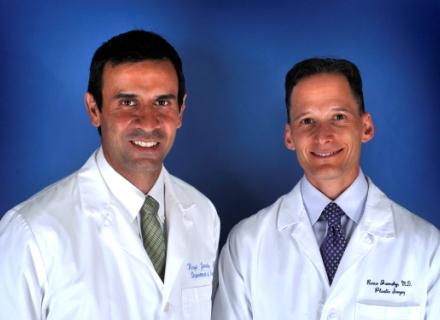
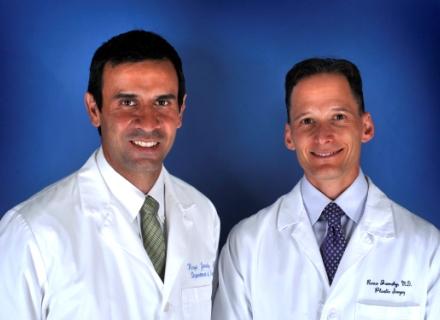
The study's first author is Dr. Matthew Kaufman of UCLA plastic and reconstructive surgery and Jersey Shore University Medical Center, New Jersey; the senior author is Dr. Reza Jarrahy of UCLA plastic and reconstructive surgery. Additional co-authors include Dr. Thomas Bauer, Dr. Andrew Elwood, John Cece and Catarina Martins of Jersey Shore University Medical Center, New Jersey; Dr. David Brown of John F. Kennedy Medical Center, New Jersey; Dr. Jason Weissler of Robert Wood Johnson University Medical Center, New Jersey; and Dr. Kameron Rezzadeh of UCLA plastic and reconstructive surgery.
JOURNAL
The research is published in the Journal of Reconstructive Microsurgery.
PRESENTATION
Kaufman will present the findings on Oct. 25 at the CHEST Annual Meeting in Los Angeles. The research will be presented from 4:30 to 5:30 p.m. during a session titled "A Multidisciplinary Approach to the Management of Diaphragmatic Paralysis."
Media Contact
Amy Albin
[email protected]
310-267-7095
@uclahealth
http://www.uclahealth.org/