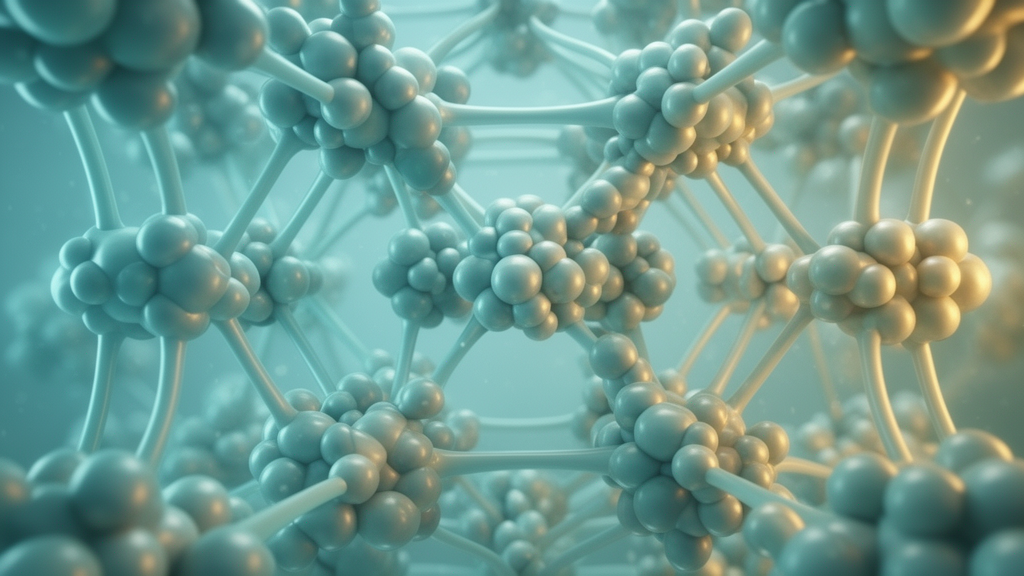
A theoretical perspective published in Quantitative Plant Biology proposes that biological complexity is fundamentally grounded in the network topology of interconnectivity among an organism’s constituent parts. Biologists have long debated whether macroevolution exhibits an intrinsic direction toward greater structural or functional elaboration, particularly because evolutionary lineages frequently display simultaneous instances of morphological simplification alongside phenotypic diversification. The authors argue that this historical debate has been clouded by narrow definitions of complexity, such as raw gene counts or superficial morphological divisions, as well as an oversimplified view of natural selection. By reframing organized complexity around network connectivity, the study posits that when novel parts and connections become embedded within functional networks, the metabolic and evolutionary cost of losing them scales with their depth of interdependency. This dynamic generates an operational asymmetry where gains require only functional toleration, whereas subsequent losses risk destabilizing coordinated biological architectures.
The conceptual framework distinguishes organized complexity from disorganized systems where components interact at random, such as particles within an ideal gas. Drawing upon classic systems theories, the paper emphasizes that organized complexity arises when non-random couplings produce higher-level systemic behaviors governed by connection topologies rather than sheer component quantities. As components increase, potential order-specific combinations expand combinatorially, moving from simple configurations to vast regulatory repertoires. The authors demonstrate that network interconnectivity can also intensify without adding physical parts through system densification. Guided by established network models, densification unfolds through mechanisms like triadic closure, which links neighboring parts, and preferential attachment, which routes new interactions toward older, established nodes. In biological systems, these topological processes find direct expression in protein interactomes, where ancient proteins frequently serve as multi-interface hubs that accumulate peripheral partners and anchor system stability over evolutionary timescales.
Crucially, the authors formulate this dynamic as a reversible ratchet rather than an immutable, unidirectional law of evolutionary progress. Because directionality depends on the prevailing regime of functional demand, shifts in external conditions can dismantle entrenched dependencies. When environmental buffering externalizes tasks previously managed internally, lineages can undergo extensive structural simplification. Clear precedents include parasitic crustaceans such as Sacculina, which abandon complex arthropod anatomy, the reduction of the apicoplast organelle in Plasmodium falciparum, and genome streamlining in prokaryotes that pares down non-essential pathways while promoting protein multifunctionality. In ancestral floral lineages, numerous ancestral parts were streamlined into fewer, highly specialized structures tied directly to ecological pollinators. These cases illustrate that part loss does not signify a failure of complexity; instead, physical reduction often coincides with tighter metabolic and environmental entanglement, redistributing functional dependencies into host relationships or external ecological partnerships.
To explain why the ratchet moves forward on average, the framework outlines two complementary mechanisms that create selective asymmetry: a neutral pathway and an explicitly selective pathway. The neutral pathway aligns with constructive neutral evolution, where genetic drift alone fixes neutral additions. Once a neutral connection is integrated into broader regulatory machinery, its subsequent deletion is no longer neutral but deleterious, meaning drift can drive net gains without positive selection. Conversely, the selective pathway operates as connections participate in increasing numbers of downstream physiological tasks, magnifying the immediate fitness penalty of complete removal. The ratchet’s asymmetry therefore widens over time: newly acquired novelties possess few dependents and can be shed with minimal penalty, but deeply entrenched elements resist elimination. Reversibility remains accessible during early stages of acquisition before the ratchet effectively clicks, creating an evolutionary window where weakly embedded traits are lost far more readily than ancient components.
The study formally positions interconnectivity’s reversible ratchet relative to five major evolutionary frameworks. It complements McShea and Brandon’s Zero Force Evolutionary Law, which treats complexity increases as a passive null expectation of unconstrained drift, by identifying an active topological asymmetry that stabilizes integrated features. Unlike the major transitions framework of Maynard Smith and Szathmary, which centers on rare evolutionary events where autonomous entities become obligately bound into higher-level individuals, the ratchet operates continuously across all organizational tiers. It extends Stoltzfus’s constructive neutral evolution by explaining how dependencies entrench without requiring presuppression mechanisms or the post factum logic of exaptation. It also broadens Wimsatt’s generative entrenchment from developmental timeframes to multi-level hierarchical networks, while incorporating the phenotype-first evolutionary tradition by treating developmental plasticity and subsequent genetic assimilation as upstream conduits through which new elements enter networks before becoming subject to downstream topological lock-in.
To assess the model empirically, the authors evaluate existing biological datasets using three primary proxies: component enumeration, connectance versatility, and structural globalization. For component counts, the researchers compiled estimates of cell-type numbers and protein-coding gene totals across metazoan and land plant phylogenies. Within metazoans, maximum cell types range from 16 to 18 in sponges to 122 in vertebrates, with humans estimated at 200 to 400 distinct types. In land plants, cell types progress from 1 to 13 in charophycean algae and 26 in bryophytes to 44 in derived angiosperms. However, the data confirm that part counts alone are incomplete proxies for organized complexity. Whole-genome duplication events cause pronounced spikes in protein-coding gene counts in sponges, cnidarians, and teleost fishes that exceed mammalian totals, while sea squirts illustrate substantial morphological simplification despite vertebrate affinities, underscoring that topological integration outweighs gross structural enumeration.
Addressing the limitations of raw component counts, the perspective examines bivariate scaling relationships linking cell-type diversity to proteome size and proteome versatility. Analyzing data across unicellular algae, multicellular algae, metazoans, and land plants, the authors plot cell-type numbers against total amino acids per proteome and intrinsically disordered residues. The resulting ordinary least-squares regressions yield log-log slopes substantially greater than unity: the regression of cell types against proteome amino acid content produces a slope of 2.36 with a coefficient of determination of 0.89, while cell types against disordered residues yields a slope of 2.18 with a coefficient of 0.71. For unicellular and simple multicellular algae, slopes do not differ significantly from unity. This non-linear scaling across complex multicellular lineages reveals that cell-type diversity expands far more rapidly than total proteome length, pointing to the compounding functional versatility afforded by intrinsically disordered domains in bridging diverse molecular interactions.
The perspective next examines empirical interactome datasets to evaluate direct connectivity metrics, focusing on protein-protein interaction totals, total interactome proteins, and their normalized connectivity quotient across four benchmark animal species. In Caenorhabditis elegans, an interactome of approximately 2,500 proteins displays more than 116,000 interactions, yielding a connectivity quotient of 46.4. Drosophila melanogaster exhibits roughly 3,700 proteins, over 100,000 interactions, and a quotient of 27.0. In vertebrates, the teleost Danio rerio possesses around 8,000 proteins and over 100,000 interactions, producing a quotient of 12.5, whereas Mus musculus incorporates roughly 15,000 proteins and over 700,000 interactions, returning a quotient of 46.7. Although derived mammals display elevated connectivity, the authors caution that incomplete datasets, experimental detection biases, and a severe scarcity of plant interactomes outside late-divergent angiosperms constrain current interpretations, emphasizing the urgent need for standardized interactome mapping across phylogenetically diverse organisms.
Moving from cellular networks to macroevolutionary physiology, the authors frame the emergence of bulk-flow transport as an evolutionary mechanism of topological globalization. In contrast to passive diffusion, which relies on concentration gradients and operates slowly over cell-to-cell distances with high local clustering, bulk-flow utilizes pressure gradients to transport fluids, nutrients, and hundreds to thousands of mobile signaling molecules rapidly between organs. Comparative analyses of the Cambrian and Devonian explosions show that bulk-flow transport was a prerequisite for exceeding diffusion-limited body sizes and enabling specialized organ systems. In early land plants, fossil microfossils like trilete spores and cuticular remains appeared in the Ordovician, but true organographic differentiation among roots, stems, and leaves accelerated only after vascular tissues evolved in the Silurian and Devonian. Guided by the phloem-first hypothesis, polar nutrient and hormone transport provided integrated symplastic infrastructure that permitted complex body plans to diversify while raising the selective cost of reversing vascular adaptations.
To guide future empirical testing, the authors formulate three explicit, falsifiable predictions derived from the interconnectivity framework. First, descendant lineages should exhibit greater depth of dependency among their internal systems over evolutionary time, manifesting intensified developmental and regulatory entanglement even when gross morphology remains unchanged. Second, evolutionary reversibility should remain fundamentally asymmetric, such that the statistical probability of retaining a biological feature correlates positively with its historical connectance, with phenotypic reductions requiring extensive compensatory network reorganization rather than simple, isolated gene deletions. Third, systemic character loss should occur primarily within buffered environments, such as parasitic or obligate symbiotic niches, where external interactions directly substitute for internal physiological responsibilities. These predictions establish an empirical roadmap that shifts evolutionary research away from broad debates about universal directional trends toward quantifiable investigations of network topology and historical constraint.
Ultimately, interconnectivity’s reversible ratchet reinterprets macroevolutionary complexity as an ongoing historical process governed by network topology rather than foresight or unconstrained adaptation. Evolution builds upon inherited layers of integration, meaning that anatomical and molecular components persist primarily because they have become deeply entangled with surrounding biological operations. By demonstrating how developmental plasticity, constructive neutrality, and selective filtering interact across physical and physiological networks, the authors provide a coherent quantitative structure connecting molecular interactomes to macroevolutionary transitions. The quantification of complexity thereby shifts from asking whether evolution possesses an inherent drive toward elaboration to determining the precise ecological and topological conditions under which historical interconnectivities become difficult to eliminate, offering a unified framework for assessing how life organizes, sustains, and periodically streamlines its functional networks across deep time.
Subject of Research: Evolutionary biology and network topology of biological complexity
Article Title: Interconnectivity’s reversible ratchet and complexity’s entanglement with evolution
Article References: Niklas, K., Crepet, W. L., & Owens, T. G. (2026). Interconnectivity’s reversible ratchet and complexity’s entanglement with evolution. Quantitative Plant Biology, 7, Article e20. https://doi.org/10.1017/qpb.2026.10059
Image Credits: AI Generated
Keywords: biological complexity, interconnectivity topology, evolutionary ratchet, constructive neutral evolution, generative entrenchment, phenotype-first evolution, cell-type diversity, proteome versatility, intrinsically disordered residues, protein-protein interactions, interactome networks, bulk-flow transport, Devonian explosion, Cambrian explosion, environmental buffering, system densification, preferential attachment
News Source: Gavin Prescott. (November 23, 2026). Interconnectivity Ratchet Explains How Evolutionary Complexity Deepens Across Biological Networks. Scienmag.