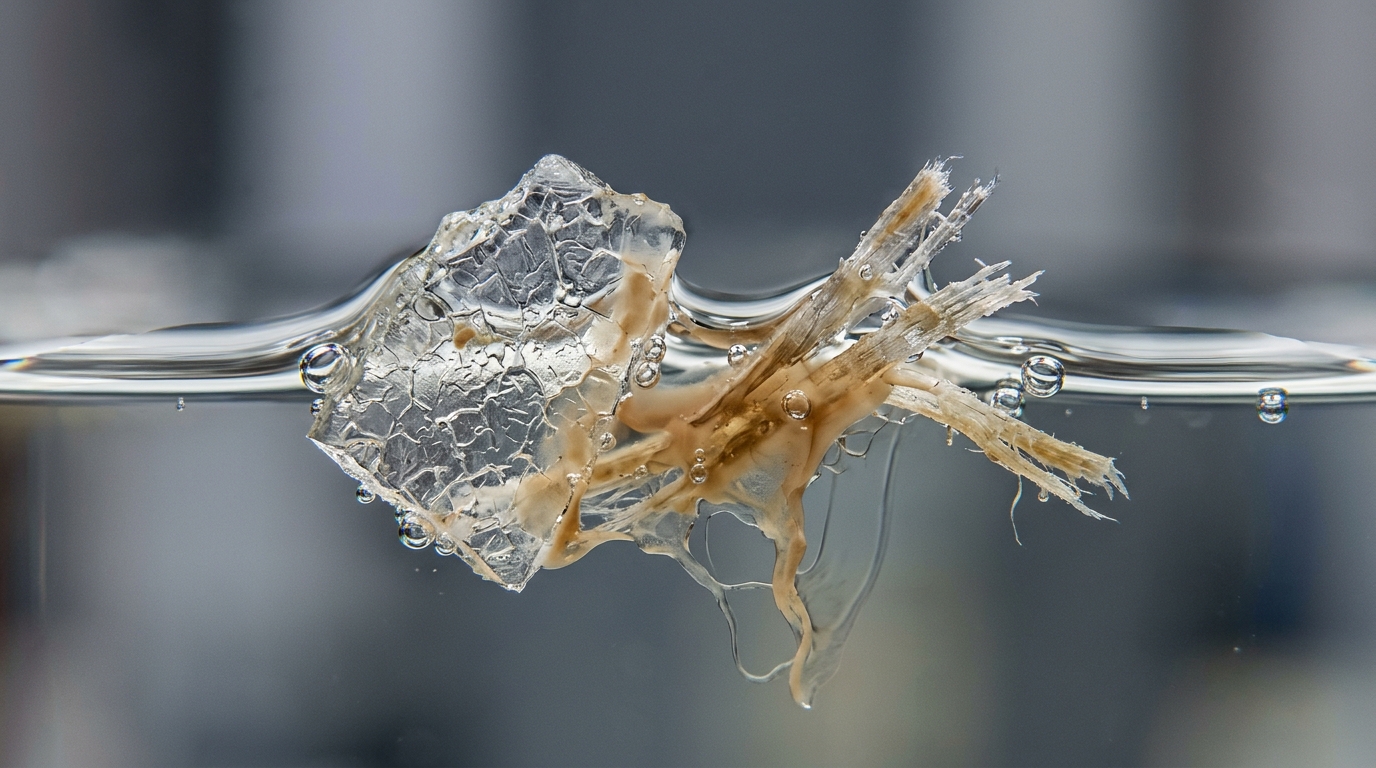
A comprehensive scientific review published in The Scientific World Journal examines the potential of deep eutectic solvents to tackle the accelerating convergence of microplastic pollution and antimicrobial resistance. Microplastics, defined as synthetic polymer particles measuring less than five millimeters, are persistent environmental contaminants that rapidly accumulate throughout urban zones, rural soils, freshwater networks, ocean sediments, and ambient air. Because of their pronounced surface hydrophobicity and high surface area to volume ratios, these microscopic particles serve as highly receptive physical substrates for microbial colonization. When bacteria and associated microorganisms adhere to plastic surfaces, they secrete protective extracellular polymeric substances composed of proteins, polysaccharides, extracellular deoxyribonucleic acid, and biogenic factors, establishing a specialized ecological niche designated as the plastisphere. Within these structured biofilms, bacterial communities achieve cell densities far exceeding those observed in planktonic states, fostering conditions that substantially promote the persistence, adaptation, and horizontal exchange of antibiotic resistance determinants across diverse microbial taxa.
The biological hazard posed by the plastisphere is intensified by the capacity of environmental microplastics to concentrate selective and coselective chemical agents from surrounding media. Field studies and laboratory analyses demonstrate that weathered microplastics adsorb significant concentrations of dissolved pharmaceuticals, biocides, pesticides, and toxic heavy metals such as cadmium, zinc, and lead, which frequently originate from industrial discharges, agricultural runoff, municipal sewage sludge, or leachate. Furthermore, commercial plastics routinely incorporate nonchemically bound functional additives, including flame retardants, plasticizers, thermal stabilizers, and antimicrobial agents like triclosan, which gradually leach into surrounding biofilm matrices as polymers undergo environmental weathering and solar ultraviolet degradation. The co-occurrence of concentrated antimicrobial residues and mobile heavy metals exerts sustained selective and coselective pressures on colonizing microbial populations, driving the enrichment of multidrug resistance genes through coregulated genetic mechanisms, whether through multiple resistance determinants positioned on shared plasmids or single efflux determinants conferring cross-resistance against chemically distinct antimicrobial classes.
Within the dense architecture of the plastisphere, the proliferation of antimicrobial resistance is primarily mediated by accelerated horizontal gene transfer among entrapped microorganisms. Unlike vertical transmission, which transfers genetic traits strictly from parent cells to dividing progeny, horizontal gene transfer facilitates the rapid lateral exchange of functional resistance determinants between disparate bacterial genera and species. This lateral genetic dissemination operates through conjugation, where plasmid DNA transfers via specialized pili or intercellular contact pores; natural transformation, in which competent bacterial cells internalize exogenous environmental DNA; bacteriophage-mediated transduction; and vesiduction through outer membrane extracellular vesicles. Physical confinement within the viscoelastic extracellular matrix brings diverse bacterial cells into sustained spatial proximity, while extracellular polymers shield delicate cellular machinery from environmental stresses and actively retain liberated genetic material. Consequently, bacteria residing within microplastic-associated biofilms exhibit between ten-fold and one-thousand-fold increases in phenotypic antibiotic tolerance and resistance compared with free-living planktonic counterparts, severely challenging conventional therapeutic interventions.
To confront the intertwined challenges of plastic contamination and antimicrobial resistance dissemination, researchers are evaluating deep eutectic solvents as adaptable, sustainable green chemical platforms. These solvent systems are synthesized by combining hydrogen bond donors and hydrogen bond acceptors in specific stoichiometric ratios, generating a eutectic mixture governed by intermolecular hydrogen bonding and characterized by a melting point substantially lower than that of either starting constituent. Operating in liquid phases below one hundred degrees Celsius, deep eutectic solvents share advantageous physical attributes with conventional ionic liquids, such as negligible volatility, wide polarity ranges, and high thermal stability, while offering marked advantages in economic preparation costs, biodegradability, and lower intrinsic toxicity. Depending on the chemical nature of their component salts and donors, these systems are categorized into four classic types incorporating quaternary ammonium salts with anhydrous or hydrated metal chlorides or organic hydrogen bond donors, alongside emerging nonionic hydrophobic Type Five formulations.
The therapeutic and remediation potential of these systems is further expanded through specialized configurations known as natural deep eutectic solvents and therapeutic deep eutectic solvents. Natural formulations are assembled exclusively from benign primary cellular metabolites, including natural organic acids, amino acids, sugars, sugar alcohols, and water, aligning directly with established green chemistry principles for sensitive environmental and biological applications. Meanwhile, therapeutic deep eutectic solvents incorporate active pharmaceutical ingredients, such as aspirin, lidocaine, or antimicrobial saponins, directly into the solvent network as donors or acceptors, substantially enhancing molecular solubility, tissue permeability, and targeted biological activity. Additionally, polymerizable formulations integrate functional monomeric units that can undergo in situ chemical reactions without secondary solvents, offering diverse functional platforms capable of modulating microbial interfaces, destabilizing protective organic matrices, and processing synthetic macromolecular polymers under comparatively benign operational conditions.
Experimental investigations confirm that deep eutectic solvents possess intrinsic antimicrobial and matrix-dissolving capabilities that directly dismantle mature biofilm architectures. In focused laboratory evaluations, natural eutectic mixtures formulated with betaine, urea, glucose, or lactic acid solubilized up to seventy percent of the extracellular matrix components shielding bacterial biofilms, effectively destabilizing their physical integrity. Acidic formulations demonstrated pronounced efficacy in controlling single-species and multispecies biofilms generated by common pathogens, including Escherichia coli and Staphylococcus aureus. Similarly, therapeutic formulations combining saponins with alpha-hydroxy acids, such as malic, citric, tartaric, or glycolic acid, disassembled established biofilms produced by opportunistic Pseudomonas aeruginosa. Furthermore, quaternary ammonium-based eutectic mixtures paired with glycerol or fructose displayed potent bactericidal activity against both gram-positive organisms, such as Bacillus cereus and Streptococcus pneumoniae, and gram-negative strains, thereby neutralizing the microbial reservoirs responsible for maintaining and propagating resistance genes.
Beyond neutralizing biological biofilms, deep eutectic solvents demonstrate significant catalytic and chemical capacity to depolymerize synthetic polymers that constitute environmental microplastics. In polyester substrates like polyethylene terephthalate, coordination occurs between Lewis acid components of the solvent, such as zinc chloride or iron chloride, and the carbonyl oxygen of the ester backbone, strongly polarizing carbon-oxygen bonds and rendering them highly vulnerable to nucleophilic cleavage. Concurrently, the hydrogen bond donor component interacts with nucleophilic reagents, such as ethylene glycol, weakening hydroxyl bonds and enhancing nucleophilic attack to cleave robust polymer chains into low molecular weight oligomers and monomers. Through controlled solvolysis, these solvents disrupt intermolecular cohesion and achieve approximately ninety percent yields of purified bis(2-hydroxyethyl) terephthalate monomer under energy-efficient conditions, while hydrophobic natural formulations demonstrate between fifty and ninety-three percent efficiency in extracting microplastics directly from aqueous phases.
Deep eutectic solvents also serve as powerful surface-modifying pretreatments that accelerate the subsequent biological decomposition of recalcitrant plastic particles in natural and engineered environments. When applied to synthetic polymers, deep eutectic solvent conditioning alters surface morphology and introduces abundant hydrophilic hydroxyl functional groups, counteracting the native hydrophobicity that typically delays enzymatic engagement. This engineered hydrophilicity encourages the uniform colonization of beneficial biodegrading microorganisms and promotes the adsorption of specialized depolymerizing enzymes. In controlled bioaugmented composting systems, pretreated polymer blends, such as polybutylene adipate terephthalate combined with starch films, exhibited approximately fifty percent faster reductions in molecular weight compared with untreated control materials. By destabilizing pathogenic plastisphere biofilms while simultaneously priming underlying plastic substrates for enzymatic assimilation, solvent treatments interrupt the foundational cycle that sustains microplastic-associated resistance dissemination.
Despite these demonstrable technical advantages, the transition of deep eutectic solvent remediation from bench-scale validation to widespread environmental and industrial deployment faces several critical engineering obstacles. Many formulated eutectic mixtures exhibit inherently high dynamic viscosities, which severely impede fluid mixing, retard internal mass transfer rates, and complicate downstream phase separation and solvent recovery. These hydrodynamic limitations elevate mechanical energy requirements and overall operational costs, hindering cost-effective manufacturing at industrial scales. Furthermore, although common solvent recycling methods, including membrane filtration, antisolvent precipitation, crystallization, and supercritical extraction, permit four to five reuse cycles with minimal degradation efficiency loss in select systems, other mixtures adhere strongly to reactor walls or possess elevated melting points that prevent efficient recovery, necessitating large volumes of wash water that may diminish net environmental benefits.
The toxicological safety of deep eutectic solvents represents another crucial parameter that requires comprehensive empirical validation prior to open environmental application. While individual precursors are frequently classified as nontoxic or biocompatible, complex eutectic formulations can display unexpected cytotoxicity, concentration-dependent cellular damage, or elevated in vivo toxicity, as evidenced by preclinical evaluations where specific natural eutectic mixtures provoked acute liver failure in animal models. Consequently, realizing the full potential of these green chemical tools requires systematic interdisciplinary investigation into solvent cytotoxicity, environmental fate, and low-viscosity molecular design. Integrating optimized, recyclable eutectic solvent formulations with advanced oxidation processes, bioaugmented composting protocols, and wastewater treatment infrastructure will be indispensable for establishing scalable, economically viable technologies capable of arresting the dual ecological threats of microplastic contamination and the global dissemination of antimicrobial resistance.
Subject of Research: Application of deep eutectic solvents in degrading microplastics and mitigating plastisphere-associated antimicrobial resistance dissemination
Article Title: Role of Deep Eutectic Solvents in Combating Microplastics‐Mediated Antimicrobial Resistance
Article References: Bastola, R., & Thapa, R. K. (2026). Role of Deep Eutectic Solvents in Combating Microplastics‐Mediated Antimicrobial Resistance. The Scientific World Journal, 2026(1), Article 3820846. https://doi.org/10.1155/tswj/3820846
Image Credits: AI Generated
DOI: 10.1155/tswj/3820846
Keywords: deep eutectic solvents, microplastics, antimicrobial resistance, plastisphere, horizontal gene transfer, biofilm disruption, polymer depolymerization, solvolysis, natural deep eutectic solvents, therapeutic deep eutectic solvents, polyethylene terephthalate, antibiotic resistance genes, coselection, extracellular polymeric substances, environmental biotechnology, green chemistry
News Source: Naomi Webster. (November 23, 2026). Deep Eutectic Solvents Offer Dual Mechanism Against Microplastic-Driven Antimicrobial Resistance. Scienmag.