A dual-modality mapping procedure that combines contrast-enhanced ultrasound-guided hookwire localization with conventional methylene blue dye achieved a 96.77 percent overall detection rate for sentinel lymph nodes, according to clinical findings published in the World Journal of Surgical Oncology. The single-center clinical study evaluated whether uniting preoperative imaging localization with standard intraoperative dye staining could overcome common technical detection gaps in surgical cancer staging.
Accurate identification of sentinel lymph nodes remains essential for establishing definitive tumor staging and guiding subsequent surgical decision-making. Standard clinical practice has frequently relied on dye-guided biopsy alone, but investigators noted that depending solely on a single detection modality can result in imprecise anatomical localization or completely missed sentinel nodes. Contrast-enhanced ultrasound has recently emerged as a promising technique designed to visualize lymphatic drainage pathways prior to incision.
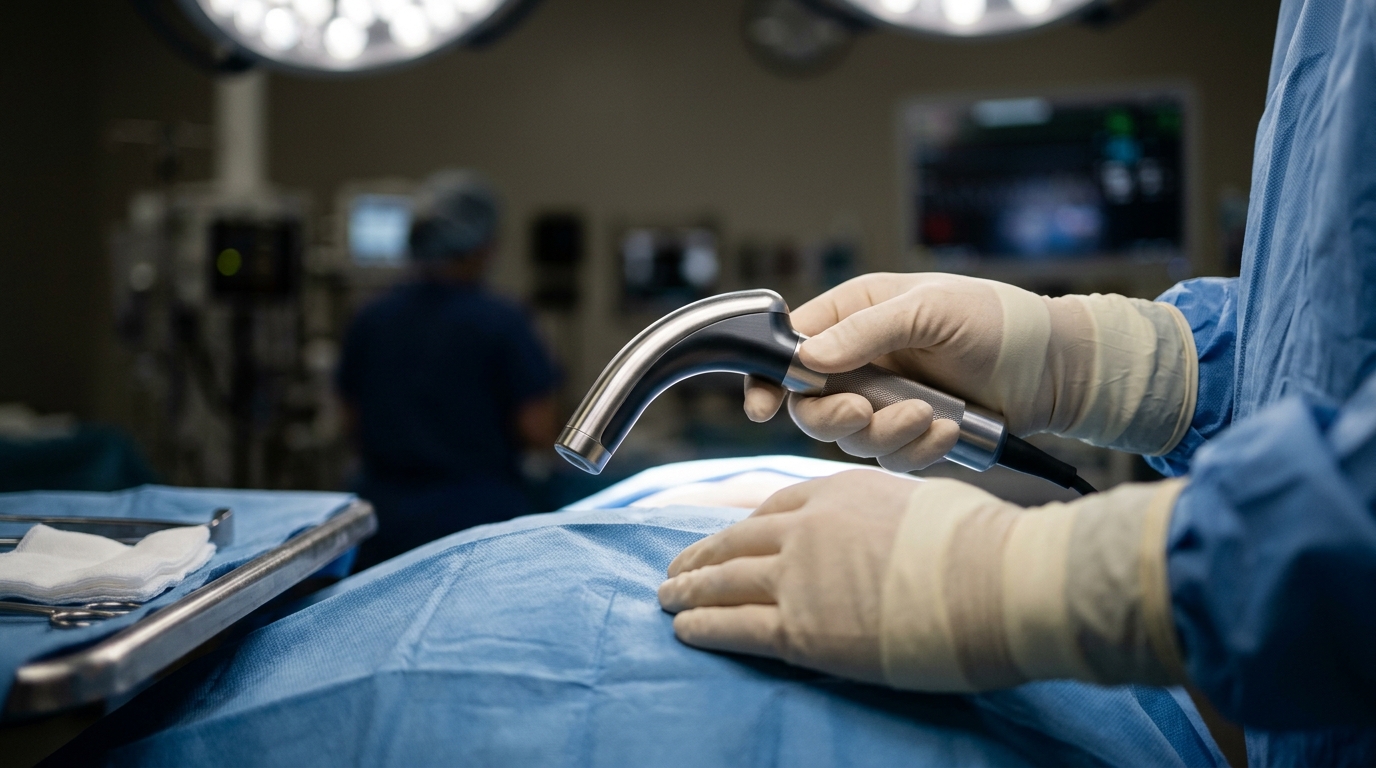
Under the study protocol, each patient received preoperative contrast-enhanced ultrasound-guided hookwire localization followed by intraoperative blue dye staining. Surgical teams documented the exact nodal detection patterns observed across both techniques to assess their degree of overlap and independent diagnostic contribution.
Beyond anatomical identification, the investigators classified target lymph nodes into three distinct imaging grades based on contrast-enhanced ultrasound characteristics: Grade I, Grade II, and Grade III. Pathological examinations were subsequently conducted on all excised tissue specimens to evaluate whether these ultrasound imaging grades correlated with confirmed nodal metastasis.
Surgical teams successfully identified sentinel lymph nodes in 60 of the 62 enrolled patients, removing a cumulative total of 222 sentinel nodes across the cohort. The operative procedures yielded an average of 3.63 excised nodes per patient. Histopathological examination confirmed sentinel lymph node metastasis in 6 patients, representing 9.68 percent of the study group, with all metastatic cases successfully detected by at least one modality.
A comparative evaluation of individual modal performance demonstrated distinct but complementary detection profiles across the cohort. Preoperative ultrasound-guided hookwire localization successfully identified sentinel nodes in 58 patients, or 93.54 percent of cases. Intraoperative methylene blue staining identified nodes in 59 patients, corresponding to 95.16 percent, confirming partial overlap between the two separate surgical techniques.
Pathological analysis also revealed an increasing trend in sentinel node positivity across the designated ultrasound classifications. Nodal metastasis was verified in 5.88 percent of patients presenting with Grade I features, rising to 11.54 percent in Grade II and 16.67 percent in Grade III. The authors emphasized that while these features suggest an observable trend toward higher positivity, the predictive value of contrast ultrasound grading for metastasis remains exploratory and requires cautious interpretation.
Subject of Research: Evaluation of dual-modality sentinel lymph node localization using contrast ultrasound and blue dye
Article Title: CEUS-guided hookwire localization combined with methylene blue staining for sentinel lymph node detection: a single-center clinical study
Article References: Wang, Y. (2026). CEUS-guided hookwire localization combined with methylene blue staining for sentinel lymph node detection: a single-center clinical study. World Journal of Surgical Oncology. https://doi.org/10.1186/s12957-026-04557-3
Image Credits: AI Generated
DOI: 10.1186/s12957-026-04557-3
Keywords: sentinel lymph node, contrast-enhanced ultrasound, hookwire localization, methylene blue, lymph node biopsy, surgical oncology, lymphatic drainage, nodal metastasis, tumor staging, surgical guidance, clinical study, preoperative imaging, intraoperative staining, diagnostic imaging, cancer staging, node detection
News Source: Nathaniel Bowman. (November 23, 2026). Dual Sentinel Node Biopsy Shows Complementary Detection in Clinical Study. Scienmag.