Researchers have formalized a comprehensive conceptual framework known as Multimodal Process Analysis to reconstruct, monitor, and optimize real-world business workflows by systematically integrating data across diverse observational channels. Developed by information systems engineering scholars Aleksandar Gavric, Henderik A. Proper, and Dominik Bork, the paradigm addresses critical limitations in conventional process mining methodologies that rely almost exclusively on structured, symbolic event logs generated by enterprise information systems. While classical log-based analysis successfully reconstructs automated and highly instrumented digital execution sequences, it remains largely blind to the physical actions, non-systemic collaborations, tacit decision-making, and situated context that define everyday operational practices. To bridge this persistent operational gap, the researchers position business processes as socio-technical systems that can be more faithfully observed through complementary data streams, including synchronized video recordings, ambient and spoken audio, unstructured textual communications, physical sensor streams, and granular user interaction traces.
Traditional business process management and process mining have long focused on the fundamental triad of discovery, conformance checking, and operational enhancement from discrete symbolic logs. Following modern conceptualizations that treat process mining as a broader family of techniques operating across multi-dimensional, graph-structured event data, the newly articulated framework extends this perspective to accommodate heterogeneous inputs while strictly preserving core analytical primitives such as cases, events, activity labels, control-flow constructs, and execution semantics. The authors explicitly position their multimodal approach alongside object-centric process mining, demonstrating that the two paradigms represent orthogonal and complementary methodological advancements. Whereas object-centric process mining relaxes the historical assumption of a single case identifier by tracking multiple interacting business artifacts such as orders and products, multimodal analysis relaxes the assumption of a single uniform data modality. Integrating multimodal content directly into object-centric event logs significantly improves both the structural fidelity of discovered models and the diagnostic accuracy of conformance checking.
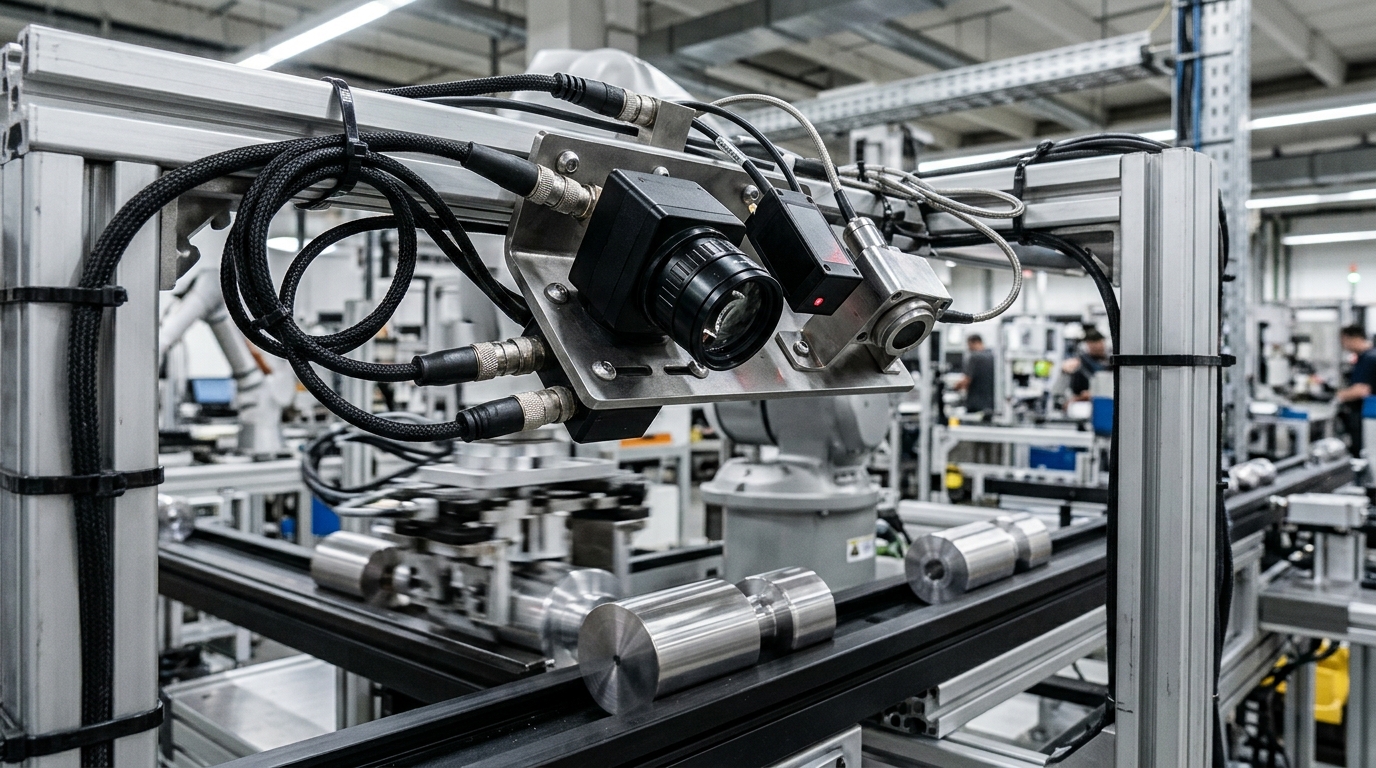
To demarcate the boundaries of their discipline, the researchers distinguish process-oriented multimodal analysis from generic multimodal artificial intelligence. Multimodal artificial intelligence typically treats high-dimensional data representation, predictive generalization, and cross-source generative modeling as its primary units of analysis. While these artificial intelligence architectures serve as an essential computational foundation, they do not inherently address process discovery, compliance verification, or formal workflow semantics. In an operational manufacturing setting, for example, a generic multimodal system might generate natural language captions for a workshop video; conversely, the process-oriented framework utilizes that same video alongside concurrent sensor telemetry and digital documentation to identify underlying control-flow patterns, evaluate real-world execution against normative models, and pinpoint operational bottlenecks. To achieve this, the authors synthesize four complementary paradigms: multimodal representation learning to map disparate signals into comparable numerical spaces, cross-modal retrieval to recover missing steps across parallel streams, formal domain knowledge modeling to ground outputs in established organizational rules, and simulation-driven reasoning to evaluate hypothetical operational scenarios.
At the mathematical core of the framework lies a rigorous six-level formal typology designed to standardize the synthesis of multiple observational channels, progressing systematically from isolated streams to fully unified representations. In classical monomodal process analysis, an event log is formalized as a set of case tuples composed of discrete events, each defined by an activity label, a timestamp, and data drawn strictly from a uniform modality. By contrast, the multimodal specification defines an event log over a set of k distinct data modalities, wherein each recorded event is tied to an empirical multimodal evidence bundle consisting of raw observational fragments such as video clips, audio segments, sensor windows, or textual exchanges. Crucially, activity labels and timestamps within this bundle are not observed as deterministic, absolute facts; instead, they are jointly derived as random variables governed by posterior probability distributions, formalizing the reality that real-world sensor evidence is inherently subject to noise, ambiguity, and measurement error.
The mechanics of event generation begin with modality-specific encoders that map raw perceptual inputs into dense high-dimensional vector representations. Modality-local decoders then generate candidate events, each accompanied by an explicit confidence metric bounded between zero and one. Because individual extractors are imperfect, each candidate maintains a probability distribution over potential activity labels alongside an uncertain temporal estimate. Building on these generated candidates, the framework defines crossmodal process analysis as the construction of a joint latent space across a strict subset of two or more modalities. This targeted integration permits selected channels to align, translate, and mutually reinforce one another while unselected modalities remain completely decoupled. At the upper theoretical boundary, transmodal process analysis embeds all available observational channels into a single unified latent space, ensuring seamless reasoning and complete representational interchangeability across all data inputs. Together, crossmodal and transmodal architectures constitute panmodal process analysis, an umbrella paradigm establishing modality-invariant representations across complex workflows.
A primary motivation for operationalizing multimodal extraction is the empirical capture of tacit operational knowledge, defined as the situated, unspoken know-how of experienced professionals that is rarely recorded in formal procedural manuals. In high-stakes organizational environments, vital coordination is often expressed exclusively through non-verbal gestures, bodily positioning, vocal intonation, rapid annotations, or improvised equipment manipulation. Under the proposed framework, synchronized cameras track physical trajectories, directional microphones record verbal instructions and acoustic machine states, digital logs record direct software actions, and wearable or ambient sensors monitor physical forces. Raw inputs from visual, auditory, and textual timelines are individually segmented into localized candidate events before any joint fusion occurs. By preserving the probabilistic uncertainty of these candidate extractions, the analytical architecture prevents premature commitments to erroneous classifications, maintaining a rich stochastic representation that can be refined through subsequent multi-stream corroboration.
Following candidate extraction, a temporal and semantic alignment phase synchronizes per-modality events into a unified cross-modal structure. Semantic compatibility between distinct candidate events is evaluated directly within the shared latent embedding space, merging overlapping events whose numerical vectors exhibit high proximity within concurrent timeframes. This aligned evidence directly grounds transitions in formalized process models, such as Petri nets or equivalent behavioral formalisms. The authors emphasize that incorporating multimodal inputs does not introduce novel control-flow primitives; rather, it greatly enriches the empirical foundation from which established workflow structures—including sequential execution, exclusive alternative choices, concurrent parallel branches, and iterative operational loops—are mathematically inferred. For example, distinct alternative event patterns recovered from corroborated visual and acoustic signals can reveal unrecorded branch pathways, while cyclical sensor patterns establish the occurrence of iterative operational loops, providing a sound basis for downstream simulation and extended-reality process elicitation.
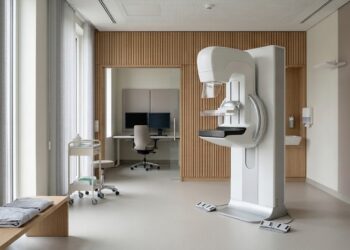
To illustrate the practical execution of this continuum, the authors examine a complex clinical workflow: laparoscopic gallbladder removal conducted within a hospital surgical suite. Viewed through a process-analytical lens, this surgical intervention represents a highly structured socio-technical workflow comprising defined clinical phases, including patient induction, trocar port placement, tissue dissection, vessel clipping, surgical cutting, specimen extraction, and abdominal closure. The operating theater acts as a physical instantiation of complex business processes, characterized by concurrent sub-processes managed by anesthesia and surgical teams, critical branching choices such as emergency conversion to open laparotomy, and strict adherence to normative safety checklists. In this challenging physical environment, individual observational modalities inevitably suffer from acute operational vulnerabilities: endoscopic cameras frequently experience visual occlusion from surgical smoke or bodily fluid, speech audio can be obscured by background operating room noise, and instrument sensor streams lack broader environmental context.
The surgical case study clearly demonstrates how the progression through integration levels alters analytical capabilities. Traditional monomodal analysis of surgical instrument force readings reveals the sequence and duration of cauterization activation but remains blind to surgeon visual cues or spoken warnings that explain why deviations from standard procedures occurred. Fusing synchronized video, team communication, and physiological monitors under basic multimodal analysis allows investigators to correlate sudden physiological fluctuations with explicit verbal alerts and camera shifts. Restricting alignment to a crossmodal space linking laparoscopic video with instrument force logs creates a targeted system capable of detecting instrument misapplication without the computational overhead of processing audio or vitals. Finally, transmodal integration embeds all visual, acoustic, mechanical, and physiological streams into a shared latent space. This full integration enables complex conformance queries—such as identifying every instance where an anesthesiologist issued an audible warning regarding low blood pressure within twenty seconds prior to the application of excessive cauterization force—directly connecting physical root causes to administrative and safety outcomes.
Despite its expressive power, establishing multimodal process analysis as a widespread scientific and industrial discipline presents major theoretical and computational challenges. While commercial foundation models offer pre-trained shared embeddings, the computational demand of constructing, updating, and maintaining continuous high-dimensional vector spaces across organizational scales remains substantial. Furthermore, processing probabilistic inputs requires fundamental reformulations of classical process discovery, conformance verification, and performance analysis algorithms, which were engineered exclusively for discrete, deterministic event logs. Researchers must establish rigorous mathematical methods to propagate uncertainty across entire analytical pipelines without incurring exponential computational complexity. Managing hours of continuous high-definition video, multi-channel audio, and dense high-frequency sensor telemetry per process case necessitates the development of streaming, approximate, and incremental algorithmic variants. The authors also highlight that the field currently lacks standardized empirical benchmarks and shared datasets, severely limiting objective performance comparisons across newly proposed analytical methods.
The framework concludes with an examination of the socio-technical, architectural, and ethical implications associated with embedding rich multimodal tracking into operational enterprises. Capturing sensitive workplace video, conversational speech, and potentially biometric identifiers introduces significant privacy and governance obligations, demanding strict alignment with data protection regulations such as the General Data Protection Regulation. To maintain analytical utility while safeguarding personal privacy, systems must adopt data protection by design, discarding raw reconstructive recordings in favor of privacy-preserving, low-identifiability representations such as skeletal pose keypoints, non-linguistic acoustic parameters, and cryptographically hashed textual identifiers. Furthermore, deploying edge computing architectures enables local inference and streaming fusion, ensuring responsive, low-latency decision support while containing sensitive data within secure operational boundaries. As multimodal analytics reshape modern organizations, transparent algorithmic pipelines and human-in-the-loop interfaces will be essential to allow analysts to inspect and override stochastic interpretations, balancing operational efficiency gains with employee autonomy and stakeholder trust.
Subject of Research: Multimodal Process Analysis theoretical framework and methodology in information systems engineering
Article Title: Multimodal Process Analysis
Article References: Gavric, A., Proper, H. A., & Bork, D. (2026). Multimodal Process Analysis. Business & Information Systems Engineering. https://doi.org/10.1007/s12599-026-01027-8
Image Credits: AI Generated
DOI: 10.1007/s12599-026-01027-8
Keywords: Multimodal Process Analysis, Process Mining, Business Process Management, Socio-Technical Systems, Stochastic Event Logs, Event Abstraction, Crossmodal Alignment, Transmodal Integration, Panmodal Analysis, Tacit Knowledge Capture, Latent Embedding Spaces, Conformance Checking, Clinical Workflow Analysis, Surgical Process Mining, Data Protection by Design, Edge Analytics
News Source: Denise Maddox. (November 22, 2026). Multimodal Process Analysis Framework Integrates Sensor Feeds and Video Into Workflow Models. Scienmag.