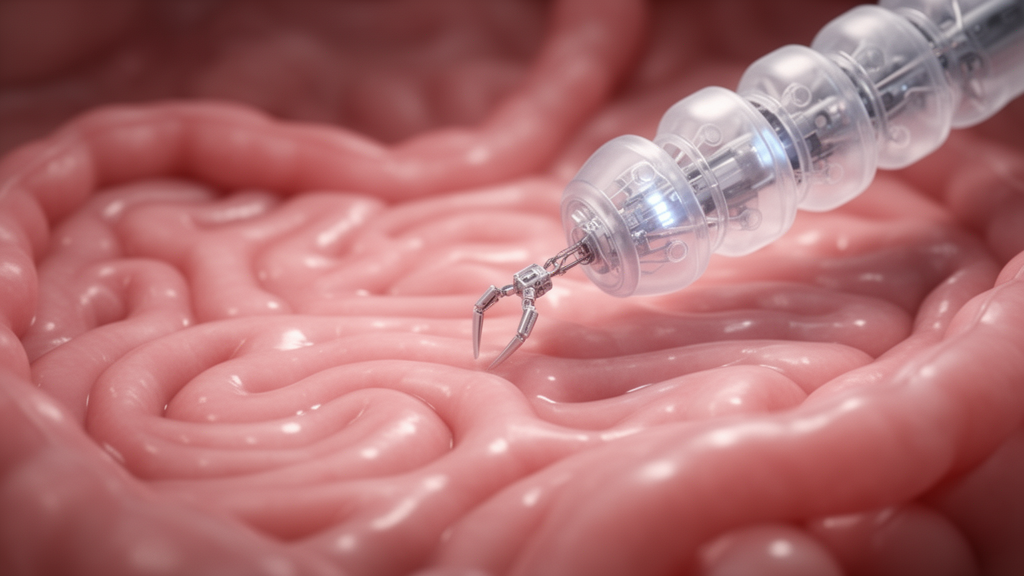
MIT engineers have developed a soft robotic enteroscope designed to navigate the narrow and difficult-to-reach small intestine, offering a potential alternative to current diagnostic and therapeutic procedures. The device, published in Science Robotics, utilizes a bioinspired locomotion strategy to move through the organ, allowing it to perform imaging, deliver drugs, and remove small polyps or take tissue samples for biopsy. This innovation addresses the significant clinical challenge of evaluating the small intestine, a segment of the digestive tract that is more than 20 feet long, only an inch in diameter, and located deep within the body, making it harder to access than the colon or stomach.
The primary motivation for this research stems from the limitations of existing medical procedures. Currently, the only method to diagnose complications in the small intestine, such as bleeding, lesions, and blockages, is double balloon enteroscopy. During this procedure, an enteroscope advances through the intestine while a healthcare worker alternately inflates and deflates two balloons to propel the device forward. This process is described as slow and laborious, prompting the MIT team to design a more automated and faster-moving alternative for evaluating the 20-to-25-foot segment of the small intestine.
To overcome the physical challenges of the intestinal environment, the researchers drew inspiration from the locomotion of snakes. Additionally, the scaly skin of snakes helps them gain traction on slippery surfaces. The MIT team applied these biological principles to the design of their robotic enteroscope, aiming to create a device that could maintain grip and move efficiently within the mucosal lining of the intestine.
The core of the robot’s movement system consists of multifunctional actuators that control its direction and extension. Each actuator contains four chambers that can be inflated in different combinations. By tuning the amount of air introduced into these chambers, the operators can adjust the direction in which the robot moves, allowing the tube to extend or bend in any direction.
Addressing the issue of traction in the slippery intestinal lining, the researchers incorporated a special textured coating inspired by kirigami, a variation of origami that involves both cutting and folding paper. The head and tail segments of the robot contain expandable anchoring balloons that take turns inflating and deflating to help propel the device forward. These segments are coated with patterned sleeves that lie flat until stretched by the balloon expansion. This stretching causes three-dimensional kirigami needles to pop out, functioning similarly to the scales of a snake to provide enhanced surface friction and localized tissue engagement without excessive stretching of the delicate intestinal tissue.
The robotic system is tethered to external controllers by a cable and is designed to enter the body through either the mouth or the rectum. It includes electronics that facilitate navigation, allowing the person operating the device to guide the robot through narrow passages and around tight corners using a wireless joystick controller. The robot is equipped with a variety of tools to detect and treat abnormalities, including a camera for imaging, a sprayer for drug delivery, and clips that can take tissue biopsies or remove polyps. This integration of diagnostic and therapeutic capabilities aims to streamline the process of evaluating and treating intestinal disorders.
In animal studies, the researchers demonstrated the robot’s ability to travel approximately six and a half feet through the small intestine. The team successfully tested the functionality of the drug sprayer, tissue clips, and camera in these porcine intestine studies. The results indicated that the robot could effectively navigate the environment and perform the intended interventions. The study, led by senior author Giovanni Traverso, a professor of mechanical engineering at MIT and a gastroenterologist at Brigham and Women’s Hospital, highlights the potential of this bioinspired approach for future clinical applications.
The research team included former MIT postdoc Binbin Ying, now an assistant professor at University of Texas Southwestern Medical Center, MIT graduate student Ahmad Mujtaba Jebran, and former MIT research scientist Sahab Babaee as lead authors.
The team is now working on improving the navigation systems to make the device more autonomous. They are also testing the approach for additional applications within the small intestine. The ultimate goal is to develop systems that can achieve more automated evaluation of the organ, reducing the time and labor required for diagnosis and treatment.
The study was funded by several sources, including the Karl van Tassel Career Development Professorship, the MIT Department of Mechanical Engineering, a Banting Postdoctoral Fellowship, an NSERC Postdoctoral Fellowship, the UT Southwestern Medical Center Startup Fund, Samsung Semiconductor, and various graduate and undergraduate fellowships at MIT. The research represents a step forward in addressing the complex challenges of small intestine access, offering a promising alternative to existing methods.
The successful demonstration of the robot in animal studies provides a foundation for further development and testing. The ability to perform imaging, drug delivery, and biopsy in a single procedure could significantly enhance the diagnostic and therapeutic capabilities for small intestine disorders.
Subject of Research: A soft robot by MIT engineers could help doctors diagnose and treat disorders of the small intestine
Article Title: A soft robot by MIT engineers could help doctors diagnose and treat disorders of the small intestine
Article References: A soft robot by MIT engineers could help doctors diagnose and treat disorders of the small intestine. Original publication (Bibliographic details unavailable.)
Image Credits: AI Generated
DOI: Not provided
Keywords: soft, robot, engineers, help, doctors, diagnose, treat, disorders, small, intestine
News Source: Denise Maddox. (November 21, 2026). MIT Soft Robot Moves Through Small Intestine for Biopsies. Scienmag.