• HOME
  • NEWS
  • EXPLORE
    • CAREER
      • Companies
      • Jobs
    • EVENTS
    • iGEM
      • News
      • Team
    • PHOTOS
    • VIDEO
    • WIKI
  • BLOG
  • COMMUNITY
    • FACEBOOK
    • INSTAGRAM
    • TWITTER
Sunday, March 29, 2026
BIOENGINEER.ORG
No Result
View All Result
  • Login
  • HOME
  • NEWS
  • EXPLORE
    • CAREER
      • Companies
      • Jobs
        • Lecturer
        • PhD Studentship
        • Postdoc
        • Research Assistant
    • EVENTS
    • iGEM
      • News
      • Team
    • PHOTOS
    • VIDEO
    • WIKI
  • BLOG
  • COMMUNITY
    • FACEBOOK
    • INSTAGRAM
    • TWITTER
  • HOME
  • NEWS
  • EXPLORE
    • CAREER
      • Companies
      • Jobs
        • Lecturer
        • PhD Studentship
        • Postdoc
        • Research Assistant
    • EVENTS
    • iGEM
      • News
      • Team
    • PHOTOS
    • VIDEO
    • WIKI
  • BLOG
  • COMMUNITY
    • FACEBOOK
    • INSTAGRAM
    • TWITTER
No Result
View All Result
Bioengineer.org
No Result
View All Result
Home Headlines

How your cells build tiny ‘train tracks’ could shed light on human disease

Bioengineer.org by Bioengineer.org
January 28, 2018
in Headlines, Health, Science News
Reading Time: 2 mins read
2
Share on FacebookShare on TwitterShare on LinkedinShare on RedditShare on Telegram
IMAGE

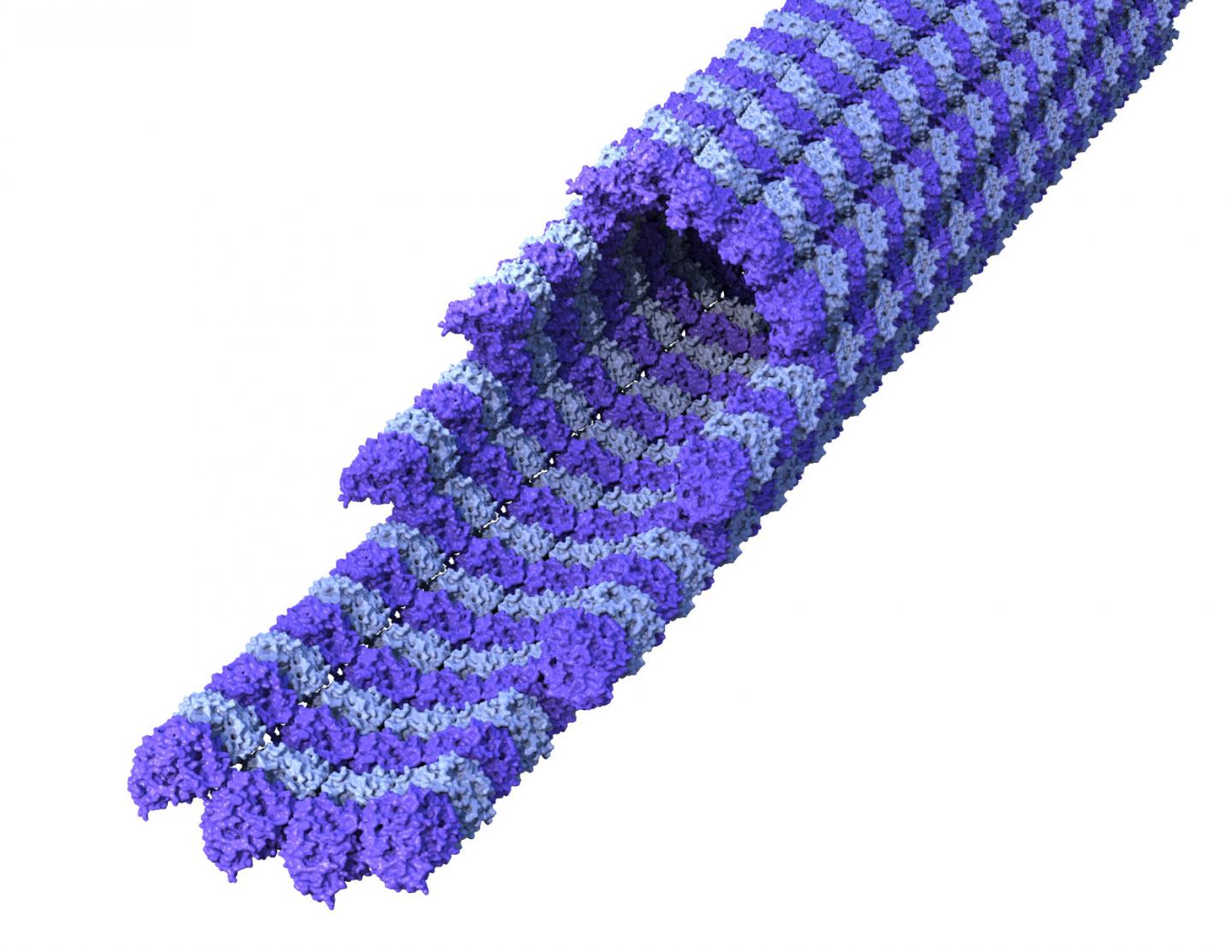
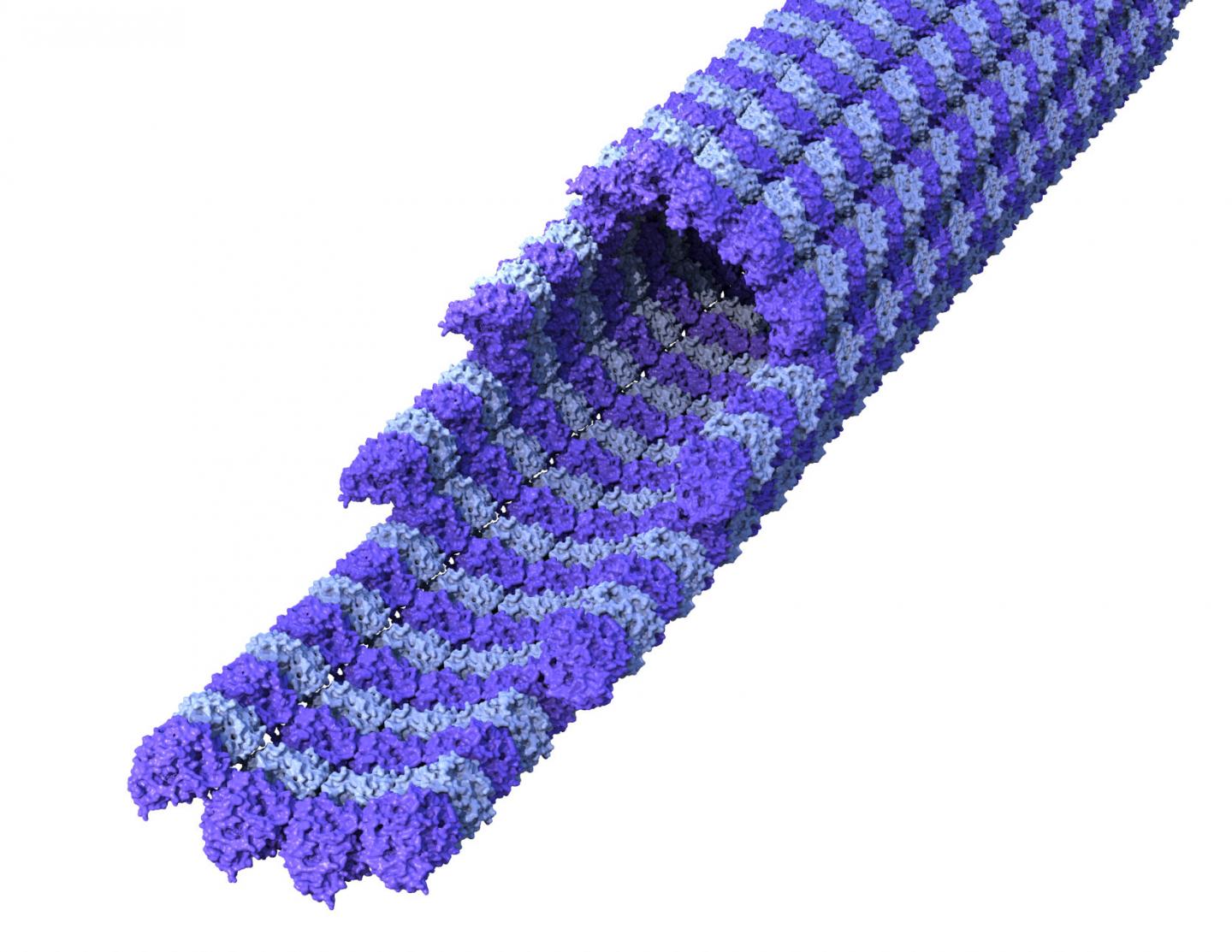
IMAGE: Graphic of microtubules, the 'railway network' within every cell of the human body

Credit: University of Warwick

Researchers from the University of Warwick have discovered how cells in the human body build their own 'railway networks', throwing light on how diseases such as bowel cancer work. The results have just been published in Nature Scientific Reports.

Professor Rob Cross, Professor of Mechanochemical Cell Biology at Warwick Medical School, said: "Every cell in our bodies contains a railway network, a system of tiny tracks called microtubules that run between important destinations inside the cell and allow cargo to be carried from one place to another. The tracks of this cellular railway are almost unimaginably small — just 25 nanometers across (a nanometer is a millionth of a millimeter). The railway is just as crucial to a well-run cell as a full-size railway is to a well-run country."

The microtubule tracks are vital for functions such as cell division and are a key target for key cancer drugs. The Cross lab is researching how these microtubule tracks are assembled.

Professor Cross said: "It has been known for some time that a team of proteins called TOGs sits on the tip of the growing microtubule track and works like a team of tiny railway workers to rapidly lay the new microtubule track. But exactly how this team works so effectively has been mysterious."

In their new work the Cross lab shows that TOGs are held in place at microtubule tips by other proteins called TACCs, and that the TOG-TACC machinery then stabilises the growing microtubule track as well as speeding up the assembly of the new track.

The tip-tracking TOG-TACC machinery acts as a catalyst of microtubule assembly, and it turns out, based on the new results, that TOG-TACC is a very unusual type of catalyst that stabilises its product (the microtubule railway) as well as speeding up its growth.

By revealing how microtubule growth is catalysed, the WMS team expect their work to throw new light on the workings of a number of human diseases (for example, bowel cancer) linked to abnormalities in TOG-TACC function.

###

Notes to editors

Alp7/TACC-Alp14/TOG generates long-lived, fast-growing MTs by an unconventional mechanism Frauke Hussmann, Douglas R. Drummond, Daniel Peet, Douglas S. Martin & Robert A. Cross. Nature Scientific Reports

For more information contact Rob Cross, 02476-151-165

Alternatively contact Kelly Parkes-Harrison, Senior Press and Communications Manager, [email protected], 02476-150838, 07824-540863

Media Contact

Kelly Parkes-Harrison
[email protected]
0247-615-0868
@warwicknewsroom

http://www.warwick.ac.uk

Share12Tweet8Share2ShareShareShare2

Related Posts

Two Salk Scientists Honored as 2025 AAAS Fellows

Two Salk Scientists Honored as 2025 AAAS Fellows

March 27, 2026
Starburst Winds Drain Supernova Energy Quickly

Starburst Winds Drain Supernova Energy Quickly

March 26, 2026

Decoding the Phosphorus Puzzle: How Microplastics and Hydrochar Transform Nutrient Dynamics in Rice Paddies

March 26, 2026

Microtubules Found to Actively Ensure Accurate Chromosome Distribution During Cell Division

March 25, 2026
Please login to join discussion

POPULAR NEWS

  • blank

    Revolutionary AI Model Enhances Precision in Detecting Food Contamination

    96 shares
    Share 38 Tweet 24
  • Imagine a Social Media Feed That Challenges Your Views Instead of Reinforcing Them

    1004 shares
    Share 397 Tweet 248
  • Uncovering Functions of Cavernous Malformation Proteins in Organoids

    54 shares
    Share 22 Tweet 14
  • Promising Outcomes from First Clinical Trials of Gene Regulation in Epilepsy

    51 shares
    Share 20 Tweet 13

About

We bring you the latest biotechnology news from best research centers and universities around the world. Check our website.

Follow us

Recent News

In-Sensor Cryptography Links Physical Process to Digital Identity

Can Psychosocial Factors Influence Cancer Risk?

Depression Factors in Elderly: Pre vs. Post-COVID Analysis

Subscribe to Blog via Email

Success! An email was just sent to confirm your subscription. Please find the email now and click 'Confirm' to start subscribing.

Join 78 other subscribers
  • Contact Us

Bioengineer.org © Copyright 2023 All Rights Reserved.

Welcome Back!

Login to your account below

Forgotten Password?

Retrieve your password

Please enter your username or email address to reset your password.

Log In
No Result
View All Result
  • Homepages
    • Home Page 1
    • Home Page 2
  • News
  • National
  • Business
  • Health
  • Lifestyle
  • Science

Bioengineer.org © Copyright 2023 All Rights Reserved.